

More news on this day
Spain’s Easter 2026 travel season is shaping up to be one of the busiest in years, with Holy Week bookings climbing to near-summer levels even as transport constraints, infrastructure concerns and simmering regional tensions pose fresh challenges for holidaymakers and authorities alike.
Get the latest news straight to your inbox!
Peak Easter Demand Arrives Early in 2026
Holy Week in 2026 runs from Palm Sunday on 29 March to Easter Sunday on 5 April, with Easter Monday on 6 April a public holiday in several regions. Recent calendars and travel guides highlight that the timing delivers an attractive long spring break for domestic and international visitors, as well as a key earnings window for Spain’s tourism industry.
Travel and tourism analyses for 2026 point to Easter week as one of the year’s most expensive periods for accommodation, with prices in major destinations often matching or exceeding summer highs. Platforms focusing on Spain’s travel costs note that demand around 29 March to 5 April is already tightening hotel availability in cities such as Seville, Málaga, Madrid and Barcelona, driven by both religious tourism and leisure travel.
City-focused Easter features, including recent guides to spending Holy Week in Madrid, Seville and across Spain, indicate that interest in processions, cultural events and spring city breaks has rebounded strongly compared with pre-pandemic years. Travel forums and booking data snapshots suggest that many central districts in Andalusia and Catalonia are close to fully booked for key nights, especially from Maundy Thursday on 2 April through Easter Sunday.
Some independent booking trackers and regional tourism portals are reporting higher-than-expected advance reservations in coastal areas such as the Costa del Sol and the Balearic Islands. With Easter falling relatively early in 2026, warmer-than-winter forecasts and the possibility of combining beach stays with urban processions appear to be amplifying demand along Spain’s Mediterranean corridor.
Transport Network Under Pressure After a Difficult Winter
The surge in Easter travel comes on the heels of a turbulent winter for Spain’s transport network. In January 2026 a high-speed passenger train derailed near Adamuz in Córdoba province, in what public records describe as the country’s most serious rail accident in more than a decade. The incident triggered investigations into infrastructure safety and led rail unions to announce industrial action in February, adding to traveler uncertainty during the early booking period for spring holidays.
Publicly available summaries of the Adamuz derailment note that the accident occurred on a recently renovated section of track and prompted renewed scrutiny of maintenance and investment priorities on the national rail network. Subsequent union calls for improved safety guarantees and staffing levels translated into short-term service disruptions and warnings of possible further stoppages if talks stall, though no nationwide strike has yet been confirmed for Easter week itself.
Spain’s wider transport outlook in early 2026 has also been shaped by volatile winter weather. The current European windstorm season brought disruptive storms and a cold snap to parts of the Iberian Peninsula, temporarily affecting roads, regional rail and some coastal services, particularly in northern Spain. While forecasts suggest more settled conditions as spring approaches, operators are emphasizing the need for contingency planning ahead of a week that traditionally sees one of the highest annual peaks in mobility.
Air capacity into Spain for late March and early April is described by aviation analytics firms as robust but tightly loaded, with many popular routes from northern Europe already reporting high load factors. Industry commentary indicates that airlines have been restoring or increasing frequencies into major hubs such as Madrid and Barcelona for the Easter period, yet slot constraints and staffing limitations in ground handling leave little slack should weather or strikes disrupt operations.
Regional Variations in Holidays and Mobility
The pattern of public holidays during Semana Santa 2026 varies across Spain’s autonomous communities, shaping where and when demand is most intense. National calendars show that Good Friday on 3 April is a public holiday throughout the country, while Maundy Thursday on 2 April and Easter Monday on 6 April are recognised in different combinations depending on the region.
According to recent overviews of regional labour calendars, communities such as Andalusia, Castilla-La Mancha and the Region of Murcia observe Maundy Thursday as a holiday, creating an extended weekend that encourages both outgoing travel and the arrival of visitors for major processions. In contrast, regions including Catalonia, Valencia and the Balearic Islands typically mark Easter Monday as a holiday, pushing peak return traffic and local leisure travel to 6 April.
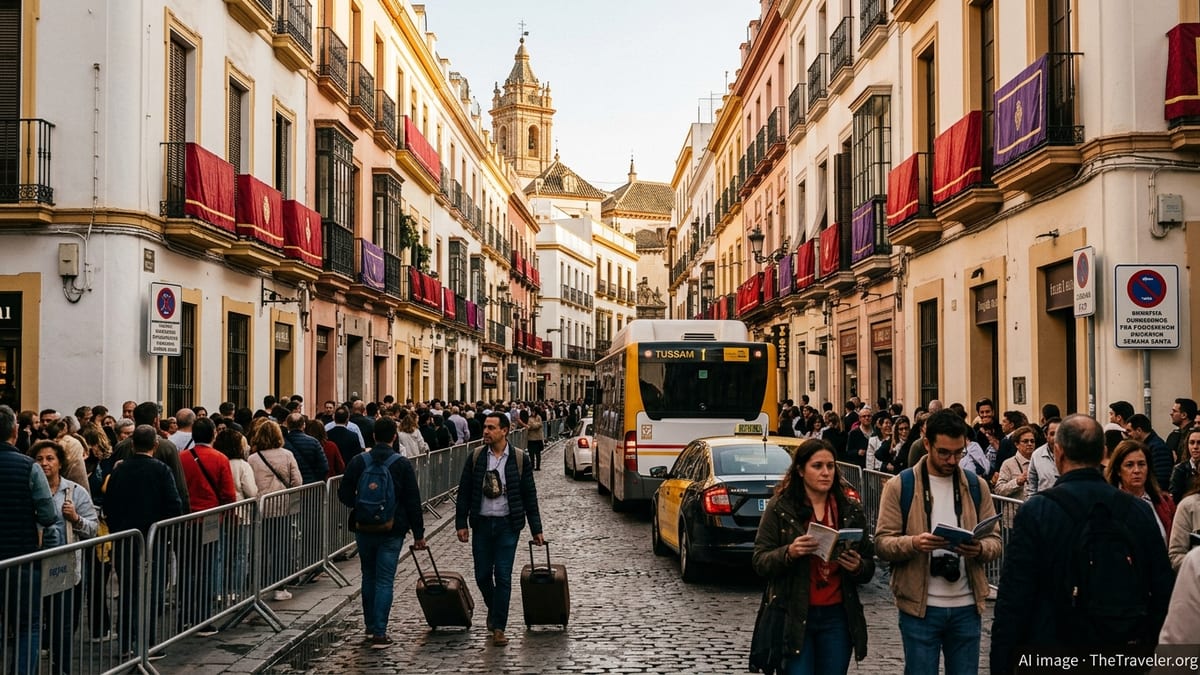
City guides for Seville and Málaga underline that processions there will run every day from 29 March to 5 April, bringing road closures and major diversions in historic centres. Tourism information for Madrid and Barcelona notes that while the religious programme is somewhat more contained than in southern cities, cultural events, concerts and family travel still generate heavy demand on urban public transport and intercity rail during the core Easter weekend.
On the country’s northern pilgrimage routes, including the Camino de Santiago, local advice and recent traveller reports indicate that Easter week now rivals summer in terms of crowding. Accommodation along popular stretches into Santiago de Compostela is booking up for the days immediately before Easter Sunday, with regional authorities and tourism boards encouraging early reservations and highlighting the strain on small-town services.
Tourism Backlash and Regional Tensions Re-Emerge
The 2026 Easter surge is unfolding against a backdrop of continuing debate over mass tourism in Spain’s most visited destinations. Public records of demonstrations in 2024 and 2025 describe large anti-tourism protests in Barcelona and coordinated actions in cities across the Canary and Balearic Islands, where residents voiced concerns over housing affordability, crowding and pressure on local services.
Academic and policy analyses of these protests note that local groups have campaigned for stricter controls on short-term rentals, higher tourist taxes and limits on cruise ship arrivals. In Barcelona, measures such as tighter licensing rules for holiday apartments and caps on hotel expansion in central neighbourhoods have been discussed or implemented, with campaigners arguing that peak periods like Semana Santa highlight the trade-off between economic gains and quality of life for residents.
In the Canary Islands and parts of the Balearics, recent coverage has pointed to growing frustration with what activists describe as uncontrolled visitor growth. The Easter holidays are seen locally as another flashpoint, particularly in smaller island communities where infrastructure and water resources are already under seasonal strain. While large-scale protests have not been specifically announced for Holy Week 2026, the tone of public debate indicates that tensions remain elevated.
In inland and northern regions, local authorities have been promoting alternative Easter itineraries that spread visitors beyond the most saturated city centres, from smaller heritage towns in Castile and León to rural routes in Galicia and Asturias. Planning documents and tourism strategies for 2026 encourage rail and bus links to these secondary destinations as a way to ease pressure on hotspots while sustaining the economic benefits of high-season travel.
What Travellers Should Expect During Easter 2026
For visitors heading to Spain over Holy Week 2026, the combination of strong demand, complex transport conditions and local sensitivities points to a need for more detailed planning than in quieter periods. Travel advisories and booking platforms consistently recommend securing accommodation and key tickets well in advance, particularly for Andalusian cities, Barcelona and island destinations during the core days from 2 to 5 April.
Rail and airline timetables for late March and early April are largely confirmed, but travellers are being urged by operators and consumer organisations to monitor updates closely, especially in the event of further industrial disputes or severe weather. On-the-ground guidance from municipalities suggests allowing extra time for airport transfers, city centre movements during processions and cross-country journeys over the pre- and post-Easter weekends.
Public-facing messaging from regional tourism bodies emphasises both the cultural richness of Semana Santa and the importance of respectful behaviour in residential neighbourhoods. Visitors are being asked to follow local rules around noise, waste disposal and use of shared public spaces, as well as any temporary restrictions related to crowd control in historic centres.
With Easter 2026 promising a powerful mix of religious tradition, early spring sunshine and intensified pressure on transport and communities, Spain is once again preparing for a Holy Week that will test how far its tourism model can stretch under peak demand.