

More news on this day
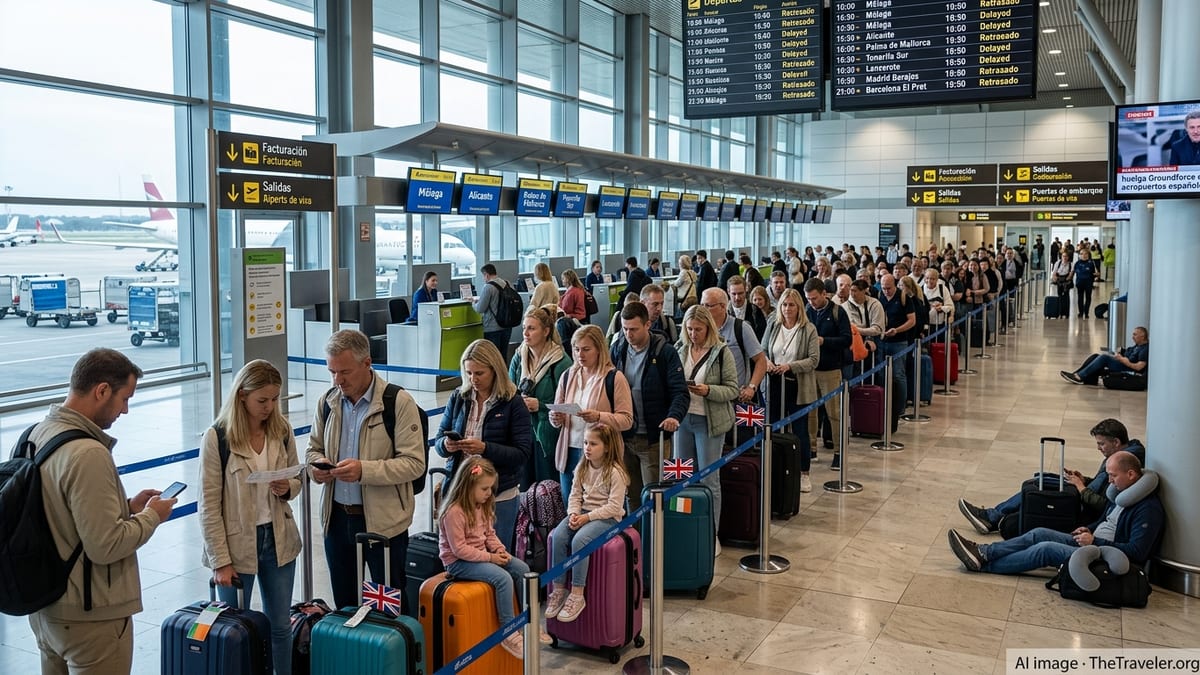
Northern Ireland holidaymakers planning Easter getaways to Spain are being urged to prepare for disruption, as ground-handling workers at some of the country’s busiest airports begin an indefinite strike from Monday 30 March.
Get the latest news straight to your inbox!
Indefinite walkout to hit 12 major Spanish airports
Published coverage in Spain indicates that staff at Groundforce, a major ground-handling company owned by the Globalia group, have called an open-ended strike affecting 12 airports across the Aena network. The industrial action is due to start on Monday 30 March, coinciding with the peak Easter travel period for visitors from the United Kingdom and Ireland.
The airports named in Spanish reports include Madrid Barajas, Barcelona El Prat, Alicante, Valencia, Málaga, Bilbao, Palma de Mallorca, Ibiza, Las Palmas, Tenerife, Lanzarote and Fuerteventura. These are among the most popular entry points for travellers from Northern Ireland heading to mainland resorts and the Canary and Balearic Islands.
The strike is described as indefinite, with walkouts scheduled every day in three time bands: early morning, late morning into the afternoon, and late evening. While flight operations are expected to continue under legally required minimum service levels, observers note that any prolonged stoppage in ground-handling can quickly ripple through airport operations, leading to delays and potential cancellations.
Groundforce provides ramp, baggage and check-in services to a wide range of airlines, including low-cost and charter carriers heavily used by UK and Irish leisure passengers. Travel analysts warn that even if an individual airline’s own staff are not striking, disruption to ground operations at a shared terminal can still affect its flights.
Why Northern Ireland travellers are being singled out for caution
Publicly available information from the UK Foreign, Commonwealth and Development Office highlights Spain as one of the top overseas destinations for travellers from both Great Britain and Northern Ireland over the Easter period. With limited direct long-haul options from Belfast, many Northern Ireland holidaymakers rely on connections via London or regional UK airports into Spain’s main hubs.
Package holidays from Belfast and Dublin to the Costa del Sol, Costa Blanca, Catalonia, the Balearics and Canary Islands remain a staple of the Easter outbound market. Industry data on seat capacity show that Malaga, Alicante, Palma de Mallorca, Tenerife and Lanzarote are particularly significant for Irish Sea catchment passengers, including those travelling from Belfast International and Belfast City via British hubs.
The timing of the strike means that both outbound and inbound legs of Easter trips could be affected. Travellers flying from Northern Ireland in the early days of Holy Week risk encountering disruption on arrival in Spain, while those already in resort at the start of the walkout face possible complications when returning home in early April.
Consumer groups note that Northern Ireland passengers may have fewer alternative routing options than those in larger UK cities if flights are rescheduled or cancelled. With school holidays compressed into a short window, rebooking capacity on later services can be limited, increasing the risk of extended delays or curtailed trips.
What the strikes could mean at the airport
Ground-handling stoppages typically affect tasks such as check-in, boarding, baggage loading and unloading, aircraft pushback and turnaround services. Reports from previous industrial disputes in Spain and elsewhere in Europe indicate that the most visible impact for passengers is often long queues at check-in and bag drop, slower boarding, and luggage delays on arrival.
Airlines usually attempt to mitigate disruption by drafting in supervisory staff, outsourcing some functions where possible, or adjusting schedules around the strike windows. However, published analysis of earlier disputes suggests that when several airports are affected simultaneously, these workarounds can only go so far, particularly during peak holiday dates when aircraft and crews are already heavily committed.
Travellers may see flights retimed to operate partially outside the main strike bands, or consolidated where demand and aircraft availability allow. Some carriers may decide to pre-emptively cancel a proportion of services in order to protect the remainder of their schedules, a pattern seen during previous European airport strikes and widely reported at the time.
Airport operators are likely to introduce crowd-management measures such as extended recommended check-in times, additional signage and staff deployed to help direct queues. However, travellers should be prepared for a slower journey through the terminal than usual, particularly at the busiest hubs of Madrid, Barcelona and Malaga.
Guidance for NI holidaymakers heading to Spain
Travel industry bodies and consumer organisations advise that the starting point for anyone due to fly from Northern Ireland to Spain over Easter is to check their airline’s latest updates before leaving for the airport. Many carriers use text alerts, app notifications and email to flag schedule changes, so it is important that contact details on bookings are current.
Passengers on package holidays from Northern Ireland are being encouraged, through operator advisories, to monitor communications from their tour operator in addition to the airline. Under UK and EU regulations, package organisers have specific responsibilities to assist customers in the event of significant disruption, including arranging alternative transport where feasible.
For those with separate flight and accommodation bookings, travel rights depend on the circumstances. Recent guidance from European consumer centres notes that strikes by airport or ground-handling staff are generally treated as extraordinary circumstances, which can limit cash compensation even if flights are cancelled. However, airlines are still expected to offer refunds or re-routing options where services do not operate.
Practical steps recommended by travel experts include bringing essential medication and valuables in hand luggage in case of checked-bag delays, allowing extra time at departure airports, and ensuring that travel insurance details are readily accessible. Policies that include cover for missed departures and disruption can be particularly useful during periods of industrial action.
Outlook for the Easter peak and beyond
Mediation efforts between Groundforce and trade unions were reported to have failed in the days leading up to the strike, leaving the Easter holiday period exposed to ongoing disruption. Union statements cited in Spanish media refer to disputes over pay updates linked to inflation and the interpretation of key clauses in the collective agreement.
Industry observers point out that Spain’s airports have experienced repeated labour tensions in recent years, affecting different parts of the aviation ecosystem, from regional airline crews to airport services. The current walkout adds pressure at a time when passenger volumes through the Aena network have been recovering and, in some cases, surpassing pre-pandemic levels, driven in part by strong demand from northern European markets.
For Northern Ireland travellers, the main uncertainty is how long the dispute will last and whether any escalation or additional strikes by other operators will follow. If negotiations resume after the initial days of disruption, there is potential for a phased return to normal operations. If talks remain stalled, rolling delays and timetable changes could continue into the wider spring and early summer season.
Travel analysts suggest that holidaymakers who have not yet booked may wish to keep a close eye on developments at Spanish airports over the coming days, especially if their plans involve tight connections or short breaks. Those already committed to Easter trips are advised to stay informed, be flexible where possible and prepare for a busier and potentially slower journey through Spanish airports than they might usually expect.