

More news on this day
Irish holidaymakers travelling to Spain over Easter 2026 are being urged to brace for disruption, as indefinite strikes by ground-handling staff at major Spanish airports coincide with one of the busiest getaway periods of the year.
Get the latest news straight to your inbox!
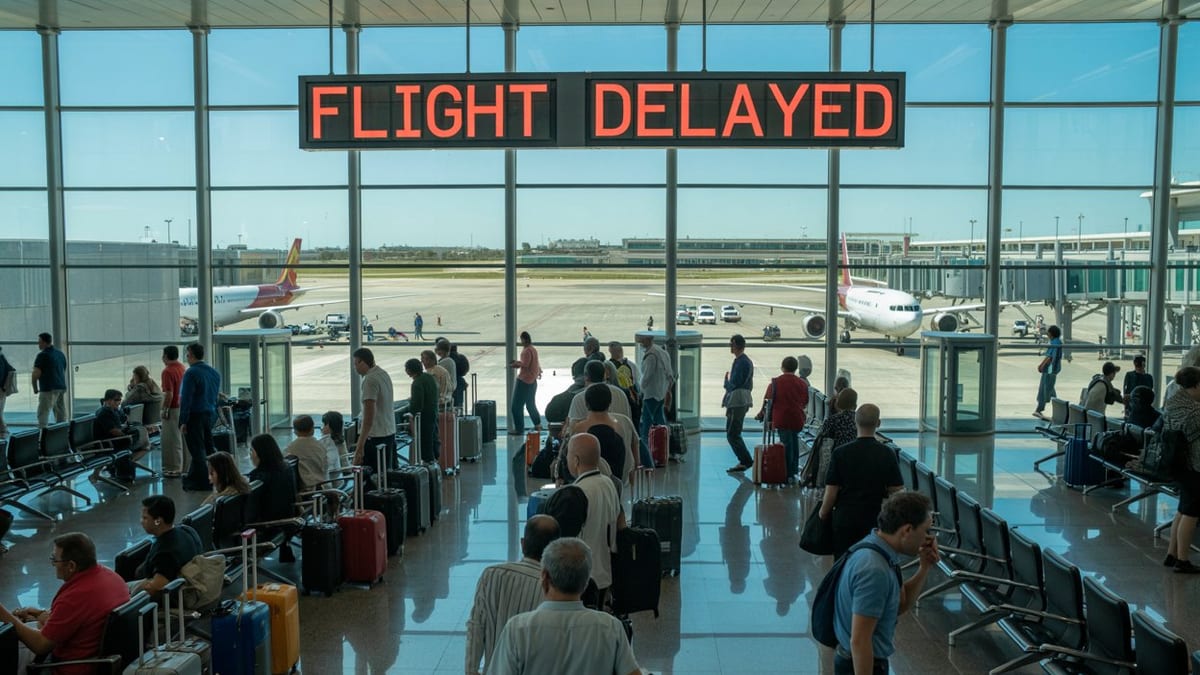
Image by Travel And Tour World
Groundforce Walkouts Hit Key Spanish Holiday Gateways
Industrial action by workers at Groundforce, a major ground-handling provider in Spain, is set to begin in earnest on Monday 30 March 2026, directly overlapping with peak Easter travel dates. Reports indicate that unions representing around 3,000 staff have called an open-ended strike with partial walkouts across the day, targeting morning, midday and late-evening operations.
The strike notice covers 12 airports in the Aena network, including Madrid-Barajas, Barcelona-El Prat, Málaga-Costa del Sol, Palma de Mallorca, Alicante, Valencia, Bilbao, Ibiza, Gran Canaria, Tenerife, Lanzarote and Fuerteventura. Many of these airports are among the most popular entry points for Irish sunseekers heading to Spanish cities, the Costa del Sol and the Balearic and Canary Islands for the Easter break.
Groundforce provides aircraft turnaround services such as check-in, baggage handling, ramp operations and pushback for a range of airlines. Publicly available information on the dispute indicates that unions and the company remain at odds over the application of the current collective agreement, including staffing levels and scheduling, increasing the likelihood that talks may not be resolved quickly.
Because the walkouts are framed as indefinite and spread over several daily time slots rather than a single 24-hour stoppage, aviation analysts note that disruption may be uneven, with some flights operating relatively normally and others facing significant delays or last-minute cancellations.
Málaga and Palma Face Pressure as Easter Flight Numbers Surge
The impact is expected to be particularly acute at Málaga-Costa del Sol and Palma de Mallorca, two airports heavily used by Irish carriers and tour operators. Local coverage from Andalucía highlights that Málaga alone has nearly 6,000 flights scheduled between Friday 27 March and Monday 6 April 2026, the core Semana Santa and Easter travel period, with the vast majority of operations on international routes.
In Palma, reports show that around 500 Groundforce workers are joining the indefinite partial strike from Monday, at a time when the Balearic capital is ramping up for a surge of spring and Easter tourism. With additional negotiations still pending at other handling providers at Palma, the risk of knock-on disruption for incoming and outgoing flights is considered high.
For Irish travellers, airports such as Málaga, Alicante and Palma are central hubs for package holidays and point-to-point services operated by Irish and UK-based airlines. Any slowdowns in baggage loading, aircraft turnaround or gate operations at these airports can quickly cascade into delays across the wider network, including flights to and from Dublin, Cork, Shannon and regional UK airports feeding Irish holiday traffic.
Travel industry observers note that even if flight cancellations remain limited, longer queues at check-in and bag drop, slower boarding, and delays in baggage delivery on arrival are likely outcomes if staffing levels are reduced during strike windows.
What the Strike Means for Irish Flights and Package Holidays
While most Irish-bound carriers have not yet published full lists of affected services, publicly available timetables show heavy Easter-season frequencies between Ireland and Spanish hotspots covered by the Groundforce strike. These include multiple daily flights to Málaga and Alicante, as well as dense weekend schedules to Palma, Ibiza, Lanzarote, Gran Canaria and Tenerife.
Industry specialists point out that the severity of disruption will depend on the airlines’ specific handling arrangements at each airport. Some carriers use in-house ground staff or alternative service providers, which could shield parts of their schedule. Others rely heavily on Groundforce, especially at secondary Spanish airports, making them more exposed to the industrial action.
Tour operators serving the Irish market typically charter capacity on these routes or package them into flight-and-hotel deals. If aircraft turnarounds are slowed by the strike, delays can accumulate across the day’s rotations, potentially affecting return flights to Ireland even when outbound legs depart on time. Travellers on tightly scheduled short breaks may be particularly vulnerable to lost time at their destination.
In past Spanish airport strikes, legal minimum service requirements have limited outright cancellations, but still resulted in extensive delays and challenging on-the-day operations. Analysts suggest a similar pattern is likely this Easter, especially on the busiest travel days around Good Friday, Easter Sunday and Easter Monday, which in Spain falls on 6 April 2026.
Advice for Irish Holidaymakers Heading to Spain
Consumer organisations and travel experts are urging passengers from Ireland to prepare for longer processing times at Spanish airports affected by the walkouts. For most Easter departures, travellers are being advised to arrive earlier than usual at the airport, ensure contact details are up to date with airlines and tour operators, and keep a close watch on flight status in the 24 hours before travel.
Publicly available guidance from passenger-rights bodies in the European Union highlights that travellers facing long delays or cancellations may have specific entitlements to rerouting, refunds and, in some cases, compensation, depending on the cause and timing of disruption. Industrial action involving an airline’s own staff is often treated differently from strikes by separate airport or handling workers, so eligibility can vary by case.
Irish visitors are also being encouraged to keep essential items such as medication, a change of clothes, chargers and important documents in cabin baggage in case checked luggage is delayed. Those with tight onward connections from Spanish hubs to ferries, internal flights or trains should consider allowing greater buffer time or flexible tickets if possible.
Travel insurers typically expect policyholders to follow airline instructions and make reasonable efforts to travel, but coverage terms differ widely. Holidaymakers are being reminded to review their policies for clauses related to strikes and industrial action ahead of departure.
Outlook for Easter Week and Potential Escalation
Union statements in Spain suggest that the Groundforce strike will continue on an open-ended basis until there is progress in talks over working conditions and the interpretation of the current agreement. The structure of the stoppages, with repeated daily time slots, indicates that disruption could extend beyond the immediate Easter period if no breakthrough is reached.
There is also the possibility of separate industrial disputes at other handling companies, which could further strain airport operations. Media coverage in Spain has pointed to ongoing negotiations at Menzies and other providers at some of the same airports targeted by the Groundforce strike, raising concerns about a broader wave of unrest in the ground-handling sector.
For now, aviation analysts describe the situation as fluid, with airlines adjusting rosters, seeking additional staffing solutions where available, and considering schedule tweaks or aircraft swaps on the busiest routes. Given the high share of international flights at airports such as Málaga during Semana Santa, even modest operational slowdowns can have outsized effects on punctuality.
Irish holidaymakers planning Easter trips to Spain are therefore being advised to monitor developments closely over the coming days, stay in contact with their airline or travel provider, and prepare for the possibility that journeys may take longer than scheduled, even if flights ultimately operate.