

More news on this day
Travellers heading to Spain for Easter are being urged to brace for airport disruption, as ground handling staff at more than a dozen major hubs begin an indefinite strike that coincides with one of the country’s busiest travel periods.
Get the latest news straight to your inbox!
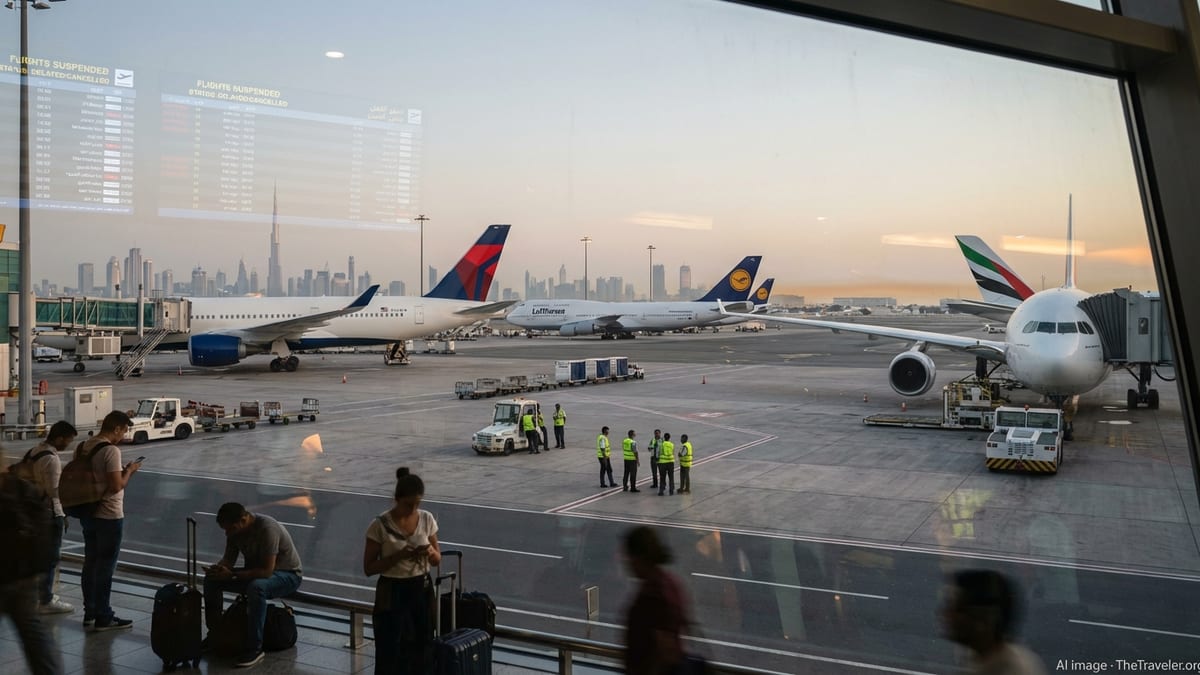
Indefinite stoppages hit key Spanish airports
Ground handling workers employed by Groundforce, one of Spain’s largest airport services companies, have called an open-ended strike that began on Monday 30 March, overlapping with Semana Santa and school holiday travel. Publicly available information indicates that the industrial action affects 12 to 13 airports across the country, including major gateways such as Madrid-Barajas, Barcelona-El Prat, Málaga-Costa del Sol, Alicante-Elche, Valencia, Palma de Mallorca, Ibiza, Bilbao, Gran Canaria, Tenerife Sur and Norte, Lanzarote and Fuerteventura.
The walkouts are structured as repeated stoppages on Mondays, Wednesdays and Fridays, typically concentrated in three peak blocks: early morning, late morning into the afternoon, and late evening. During these windows, reduced staffing for ramp operations, baggage loading, passenger check-in, boarding and aircraft turnaround is expected to slow airport processes and create knock-on delays for both domestic and international flights.
Some parallel disputes involving other handling firms, such as planned 24-hour walkouts between 2 and 6 April at selected airports, have been adjusted or partially suspended following last-minute talks. Local reporting from the Balearic Islands and the Canary Islands indicates that certain strikes at Palma de Mallorca, Ibiza and Tenerife South have been called off or scaled back, while the broader Groundforce dispute remains active at many mainland and island hubs.
The timing of the industrial action, aligned with the main Easter getaway, significantly amplifies its impact. Semana Santa is one of the peak moments in Spain’s tourism calendar, when airports typically operate near capacity as visitors arrive for processions, city breaks and beach holidays, and residents travel for family reunions.
What Easter passengers can realistically expect
Minimum service requirements set by Spanish regulations mean that most flights are still scheduled to operate, but travellers are being warned that “operating” does not necessarily mean “on time.” Ground staff shortages at critical times of day can lengthen aircraft turnaround, slow down boarding and disembarkation, and delay the delivery of checked baggage, which in turn may cause ripple effects throughout the day’s schedule.
Reports from the first strike days at Barcelona-El Prat and other airports describe longer queues at departure check-in areas and at bag-drop counters, even where overall flight cancellations remained limited. At some hubs, security and immigration have continued to function relatively normally, while landside bottlenecks have emerged around airline desks and baggage belts once flights land.
Passengers with tight connections, especially those changing planes within Spain or onward to the Canary and Balearic Islands, face a greater risk of missed onward flights if inbound services are delayed or bags take longer than usual to reach the carousel. Travel industry analyses suggest that early-morning departures in the designated stoppage windows, as well as late-evening rotations where aircraft need quick turnarounds, may be particularly vulnerable to schedule disruption.
Travel advisers note that disruption is unlikely to be uniform across all airports or all days. Where strikes have been suspended at particular locations, such as certain island airports, operations may be closer to normal, while other hubs where the indefinite Groundforce dispute continues could see more sustained delays throughout the Easter period and beyond.
Routes, airlines and travellers most at risk
Groundforce provides services to a broad mix of airlines, from Spanish carriers to low-cost and full-service international operators, which means that disruption is spread across a wide range of routes. Holiday flights between northern Europe and coastal destinations like Málaga, Alicante and the Balearic and Canary Islands are among those most exposed, simply because of high volumes and reliance on quick turnarounds during peak holiday weekends.
Short-haul European services are especially sensitive to ground delays, as aircraft often operate several rotations per day. A late departure from Madrid or Barcelona in the morning can cascade into further lateness on subsequent flights. This can be particularly problematic for travellers who rely on late evening returns after weekend breaks, or for those connecting to long-haul departures from Spanish hubs.
Domestic services between mainland cities and island destinations may also experience strain. These routes are heavily used by residents and by tourists combining a city stay with time at the beach, and they frequently operate to tight schedules. Any slowdown in baggage unloading or refuelling can narrow the margin for on-time performance, especially on days when the strike timetable overlaps with peak departure banks.
However, not all airlines at Spanish airports are handled by Groundforce or by companies involved in the current disputes. Some carriers use alternative ground handlers whose staff are not on strike, which can reduce the impact for their passengers. Even so, shared infrastructure such as stands, jet bridges, baggage systems and airspace means that wider congestion can still affect operations across the board.
Passenger rights and practical steps to limit disruption
Consumer-rights specialists emphasise that travellers flying to, from or within Spain during this period retain protections under European air passenger regulations. When a flight is cancelled, airlines are generally required to offer a choice between a refund and re-routing at the earliest opportunity, although the exact options may depend on seat availability over the busy Easter period.
Where delays or cancellations lead to long waits at the airport, passengers may also be entitled to care in the form of meals, refreshments and, if necessary, hotel accommodation. Eligibility for additional monetary compensation is more complex and hinges on factors such as the cause of the disruption, how far in advance passengers were notified, and whether the airline can argue that the problems resulted from extraordinary circumstances beyond its control.
Travel experts advise that anyone heading to Spain over Easter should treat their itinerary as flexible where possible. Checking flight status repeatedly in the 24 hours before departure, using airline apps for real-time updates, and enabling notifications can help travellers react quickly if schedules change. Where rebooking is needed, those who move early tend to have more alternative options.
Practical steps at the airport can also make a difference. Arriving well ahead of the usual check-in time, travelling with hand luggage only where feasible, and allowing extra time between separate tickets or self-made connections can reduce stress. For complex journeys involving multiple airlines or carriers not on a single booking, building in generous layovers is especially important while the indefinite strikes continue.
How long could the Easter disruption last?
The Groundforce stoppages have been announced as indefinite, meaning that, in the absence of a negotiated agreement, the pattern of repeated strike days could continue beyond the core Easter travel window. Some labour notices outline a framework in which partial strikes might extend through the rest of spring and even toward the end of the year, although the intensity and scope could change if talks progress.
For now, travellers planning trips to Spain in the weeks immediately after Easter are being advised by travel industry briefings to monitor developments rather than assume that the situation will resolve quickly. The experience of previous aviation labour disputes in Spain and elsewhere in Europe suggests that agreements can sometimes be reached at short notice, abruptly easing disruption, while in other cases industrial action has persisted in a reduced form for months.
Future travel patterns may also influence the pressure on both sides to reach a settlement. As summer schedules approach and airlines ramp up capacity to Spanish beach destinations, any continuation of strikes is likely to draw increased attention from the tourism sector, which relies heavily on reliable air access during the peak season.
Until there is clear confirmation that the indefinite strikes have been called off, anyone booking or holding Easter or spring travel to Spain is encouraged to keep plans as flexible as possible, stay informed about their specific airline and airport, and budget extra time at every stage of the journey.