

More news on this day
Easter week travelers heading to Spain are being urged to prepare for potential disruption, as strike action affecting key airport services threatens delays, baggage issues and missed connections during one of the country’s busiest holiday periods.
Get the latest news straight to your inbox!
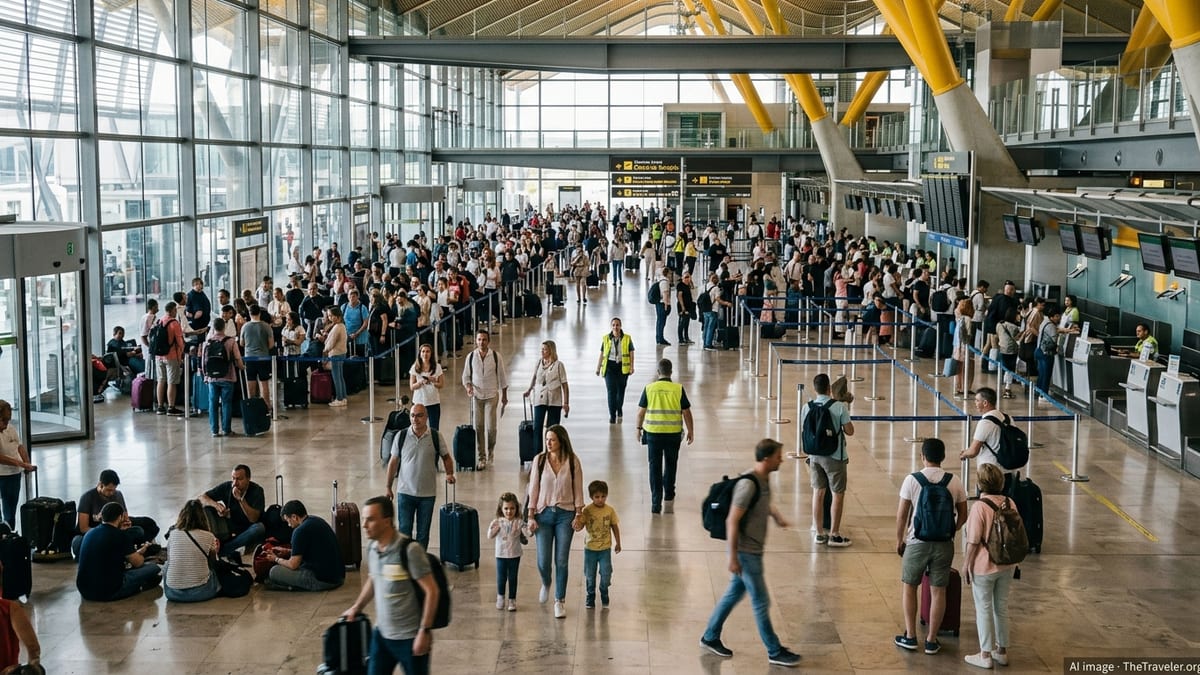
Airport Strike Calls Coincide With Peak Easter Travel
Publicly available alerts in Spain indicate that industrial action involving airport staff has been scheduled to overlap with the Easter travel rush in late March and early April 2026. Spain’s Easter week, or Semana Santa, is traditionally one of the heaviest travel periods of the year, with passenger traffic at Aena-operated airports already trending above 2025 levels in January and February 2026.
Aena, which manages 46 airports and two heliports in Spain, reported more than 25 million passengers in both January and February 2026, a year-on-year increase of over 3 percent each month. This expansion underscores how even limited work stoppages can quickly amplify into long queues and operational bottlenecks when coinciding with peak demand.
Union calls referenced in recent travel alerts focus on essential airport support services rather than flight crews, meaning aircraft are likely to continue operating while passengers experience slowdowns at critical points in their journey. These include security screening, baggage handling and the processing of checked luggage, all of which are particularly sensitive during compressed peak travel windows such as Easter week.
Travel forums and Spanish-language alert services have begun warning that strike dates are expected to overlap with the main exodus ahead of Good Friday and the return wave on Easter Monday, prompting airlines and airports to review contingency plans and adjust staffing where legally possible.
Key Pressure Points: Madrid, Barcelona and Holiday Hotspots
Madrid’s Adolfo Suárez Madrid-Barajas Airport and Barcelona-El Prat are expected to be among the most affected hubs if planned strikes go ahead. Both serve as primary gateways for international visitors and as major transit points for domestic connections to coastal and island destinations popular over Easter.
Recent history at Madrid-Barajas highlights the potential impact. Previous security and ground-handling disputes at the airport in late 2025 and early 2026 led to congested terminals, lengthened check-in and security queues, and a higher incidence of delayed departures, even when the majority of flights ultimately operated. Reports from that period describe passengers missing flights despite arriving well in advance, particularly at peak morning and evening waves.
Barcelona-El Prat, along with Palma de Mallorca and Málaga-Costa del Sol, is expected to carry substantial Easter leisure traffic from across Europe. Seat plans for Spain’s 2025–2026 winter season already show a strong bias toward international holiday demand, with airlines scheduling more than 137 million seats across the Aena network. Any disruption to security lines or baggage operations at these airports tends to reverberate quickly, especially for short breaks where travelers rely on tight timings.
Secondary airports that handle seasonal traffic to beach and city-break destinations, from Alicante and Valencia to the Canary and Balearic Islands, may also feel knock-on effects if strike participation extends to local ground services or if aircraft rotations are disrupted higher up the network.
Baggage Handling and Security Services in the Spotlight
The most immediate operational risk for Easter travelers appears to center on baggage and airport support services. A current strike in the maintenance of the automated baggage handling system at Madrid-Barajas, reported to be taking place every Thursday and Sunday until the end of May 2026, illustrates the vulnerability of these systems. While the existing action is limited in scope, it raises concern over how quickly minor technical slowdowns can compound during holiday peaks.
Industrial disputes involving ground handlers at Spanish airports have been a recurring issue, with earlier walkouts by baggage and ramp staff contributing to turnaround delays, slow luggage delivery and disruption for connecting passengers. Information published by consumer bodies in Spain during previous Ryanair-related ground staff strikes noted that even when minimum service rules were applied, noticeable disruption still occurred at affected airports.
Security screening staff have also been involved in high-profile disputes in Spain in recent years. A protracted security strike at Madrid-Barajas in 2025 produced queues lasting up to 90 minutes in some terminals, according to media reports at the time. Similar action during Easter week in 2026, even if limited to certain shifts or terminals, would likely increase waiting times, particularly for non-Schengen flights where additional checks and new border systems can already extend processing.
Because Spanish law typically requires minimum services during strikes, complete shutdowns are not expected. However, reduced staffing at security checkpoints or at baggage systems during peak Easter flows could translate into longer processing times, creating a higher risk of missed departures and misplaced luggage for travelers who arrive without adequate buffer time.
Airlines Adjust Capacity as Fee Disputes Deepen
The strike risk is unfolding against a backdrop of mounting tension between airlines and Spain’s airport operator over rising charges, a dispute that is already reshaping route planning for 2026. Low-cost carrier Ryanair has announced plans to cut around 10 percent of its capacity across regional Spain for summer 2026, including the closure of all flights to and from Asturias Airport, in protest at what it describes as uncompetitive fee increases.
Ryanair had previously confirmed it would remove about one million seats from Spain in winter 2025 as part of the same dispute, reallocating aircraft to markets such as Italy and Morocco. Aviation industry coverage notes that these cuts disproportionately affect smaller regional airports, but they also have implications for travelers using Spain as a connecting hub, as route diversity and frequency decline.
In early March 2026, the International Air Transport Association publicly criticized plans to raise Aena’s airport tariffs, arguing that higher charges would ultimately be borne by passengers and could dampen demand just as the air travel recovery is consolidating. Spain’s competition authority has already approved a tariff increase of more than 6 percent for 2026, reinforcing airline concerns about cost pressures within the Spanish network.
Although the planned Easter strikes are rooted primarily in labor conditions and local workplace disputes, the broader fee environment may indirectly influence how carriers respond. Airlines that already perceive Spain as a higher-cost market may be less inclined to add buffer capacity or backup aircraft around Easter, potentially limiting their ability to absorb delays or to rebook disrupted passengers on alternative same-day departures.
What Easter Travelers to Spain Should Expect and How to Prepare
With strike dates still subject to negotiation and legal minimum service requirements, the exact level of disruption over Easter week remains uncertain. However, the combination of record passenger volumes, contentious tariff increases and ongoing industrial action in key support functions suggests that travelers should prepare for a more challenging airport experience than in a typical holiday season.
Passengers flying into or out of Spain during the core Easter window, particularly between the Wednesday before Good Friday and Easter Monday, are likely to face longer queues at check-in and security, slower baggage reclaim and a higher chance of schedule changes. Travelers with tight connections within Spain, or onward flights to long-haul destinations via Madrid or Barcelona, are especially exposed to missed connections if processes slow down.
Travel industry guidance drawing on previous Spanish airport strikes recommends arriving significantly earlier than usual, especially at Madrid-Barajas and Barcelona-El Prat, and building generous buffer time for any domestic connections. Where possible, travelers may wish to travel with carry-on luggage only to reduce dependence on baggage handling systems that are more prone to disruption during industrial action.
Publicly available consumer-rights information in Spain also stresses the importance of knowing passenger entitlements in the event of delays or cancellations, particularly for flights operated by European carriers or departing from EU airports. While strikes by airport or ground staff can complicate compensation rules, travelers are generally entitled to care provisions such as meals and accommodation in the case of extended disruption, even when compensation is not payable. Being aware of these distinctions before departure can help travelers navigate what is shaping up to be a testing Easter period for Spain’s aviation system.