

More news on this day
Spain is bracing for extensive disruption across its busiest airports as ground handling workers stage strikes coinciding with the peak of the Semana Santa holiday rush from March 27, 2026, raising the prospect of long queues, delays and cancellations for tens of thousands of travelers.
Get the latest news straight to your inbox!
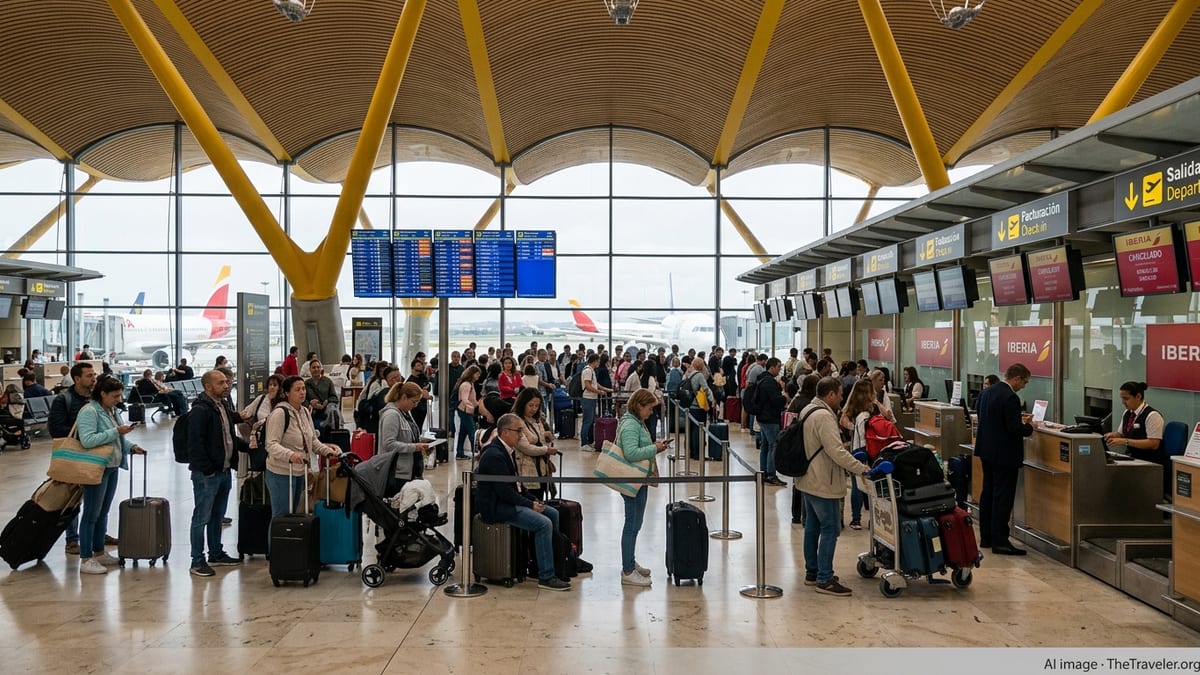
Walkouts Timed With Start of Easter Travel Peak
The industrial action has been called by major union federations representing ground staff at multiple handling companies, targeting the long Easter weekend when passenger volumes typically surge across Spain’s airports. Publicly available information indicates that the first wave of stoppages is scheduled to begin on Friday, March 27, just as outbound leisure and family travel for Semana Santa accelerates.
The strike call covers baggage handlers, ramp workers and check-in and boarding agents at a wide network of airports in the Aena-operated system, including Madrid-Barajas, Barcelona-El Prat, Málaga, Palma de Mallorca and key Canary and Balearic island gateways. These airports handle a large share of Spain’s international holiday traffic at this time of year, amplifying the potential impact on both domestic and inbound travelers.
Although terminals, security screening and air traffic control are not part of this specific dispute, the walkouts affect the ground operations needed to turn aircraft around. Any sustained reduction in ramp and check-in staffing risks creating bottlenecks that can quickly cascade into wider schedule disruption, particularly on high-frequency short-haul routes common during Easter.
Some carriers with their own in-house ground services may be less exposed than airlines relying entirely on third-party handlers, but widespread participation across several companies means knock-on effects are expected across much of the flight program during the opening Easter weekend.
Unions Push Over Pay, Staffing and Job Security
Union statements and recent press coverage show that the strikes are rooted in a combination of pay, staffing and job-security concerns within Spain’s liberalized handling market. Worker representatives argue that wage growth has failed to keep pace with inflation since 2022 and that employers are interpreting collective agreements in ways that erode purchasing power and limit automatic salary updates.
Another theme running through union communications is frustration over workload and scheduling pressures following recent handling contract tenders. The reshuffling of airport service concessions has seen some operators expand rapidly while others lose ground, and unions contend that the winning companies are stretching existing staff to cover denser flight programs, split shifts and peak-heavy rosters.
Job stability also features in the dispute. Ground handling is often characterized by a mix of permanent, temporary and part-time contracts, and union groups have warned that increased outsourcing and subcontracting may weaken long-term security for core frontline teams. The Semana Santa strike is being framed as part of a longer-running campaign to secure clearer guarantees on contract types and staffing levels in upcoming sector agreements.
Employers have publicly pointed to cost pressures in a highly competitive market, arguing that maintaining airport service quality while absorbing higher wages and operating costs is increasingly challenging. Negotiations in the run-up to the walkouts are reported to focus on narrowing differences over how existing pay clauses are applied and what commitments can be made on future salary reviews.
Major Airports Prepare Contingency Plans
With Easter traffic forecasts pointing to near-record passenger numbers at several Spanish airports, operators and airlines are preparing contingency measures to keep essential services running. Spanish regulations classify air transport and airport management as essential services, which typically leads to the imposition of minimum service levels during strikes. These obligations are intended to protect a core schedule, particularly on routes considered socially or territorially vital.
In practice, minimum services often mean that a proportion of flights must still operate, but with reduced staffing and greater strain on the system. Handling firms can be required to assign part of their workforce to cover priority operations, including certain domestic routes, island connections and flights at times of peak demand. This can limit the number of outright cancellations but may not prevent significant delays, especially where turnaround times are tight.
Airlines are expected to thin out their programs on the most affected days by consolidating frequencies, retiming services or switching aircraft types to concentrate capacity on fewer flights. Public information from previous Spanish airport labor disputes suggests that carriers commonly preempt the worst disruption by cancelling a share of flights in advance, giving travelers the option to rebook or claim refunds before heading to the airport.
Airport operators are likely to reinforce passenger information teams in terminals, extend customer-service hours and coordinate closely with police and security services to manage potential congestion at check-in halls and baggage reclaim. However, travelers should still anticipate longer-than-normal queues, particularly in early morning and midday peaks when many of the partial stoppages are expected to coincide with busy departure waves.
High Risk of Delays for International Holidaymakers
The timing of the strikes hits a period when many European visitors travel to Spain for spring sunshine and religious processions, with Málaga, Seville, Madrid, Barcelona and the islands all seeing heightened demand. Forecasts for Málaga, for example, point to nearly 6,000 scheduled flight operations over the broader Semana Santa window, underlining how even modest operational disruption can affect large numbers of passengers.
International point-to-point routes from Northern and Central Europe, as well as short-haul services linking Spanish cities and island destinations, are seen as particularly exposed. While long-haul hubs can sometimes absorb delays through aircraft swaps and spare capacity, dense intra-European schedules allow less recovery time between rotations, so a missed slot or slow boarding can ripple through multiple flights over the day.
Passengers with tight connections within Spain or onward journeys beyond the country should be especially cautious. Travel industry observers note that misaligned ground operations at origin airports often lead to missed onward flights, baggage misrouting and increased pressure on customer service desks, all of which tend to escalate during public holiday peaks.
Travel insurers and passenger-rights groups are already drawing attention to the complex compensation rules that apply when strikes occur. Where disruption stems from third-party ground handling strikes rather than airline-internal disputes, eligibility for financial compensation can vary, and in many cases, travelers may only be entitled to rerouting, meals, and hotel accommodation rather than cash payouts.
What Travelers Should Do Before and During the Strike
Air travelers booked to or from Spain between March 27 and the end of the Semana Santa period are being advised by industry bodies and consumer organizations to monitor their flight status closely in the days before departure. Airlines typically update schedules progressively as the impact of minimum service orders and staffing availability becomes clearer.
Checking in as early as possible online, traveling with hand luggage where feasible and allowing substantial extra time at the airport are widely recommended strategies for those who cannot reschedule. Families, elderly passengers and those with reduced mobility may wish to build in even longer buffers, as assistance services can also come under pressure when staffing is stretched.
Travelers with flexible tickets or the ability to shift dates might consider avoiding the first strike days, when disruption is often most acute while operators adjust to new staffing patterns. For some, rerouting through less affected Spanish airports or alternative European hubs could reduce risk, although this may involve longer journey times or additional connections.
Passenger advocates also stress the importance of keeping documentation such as booking confirmations, boarding passes and evidence of expenses incurred during disruption. These records can be important when seeking refunds, reimbursement of costs or clarifying rights under applicable air passenger protection rules once the immediate travel disruption has passed.