

More news on this day
Travelers heading to Spain for Easter Week are being urged to monitor their flight status closely, as newly announced strike action by airport staff threatens to disrupt one of the busiest travel periods of the year.
Get the latest news straight to your inbox!
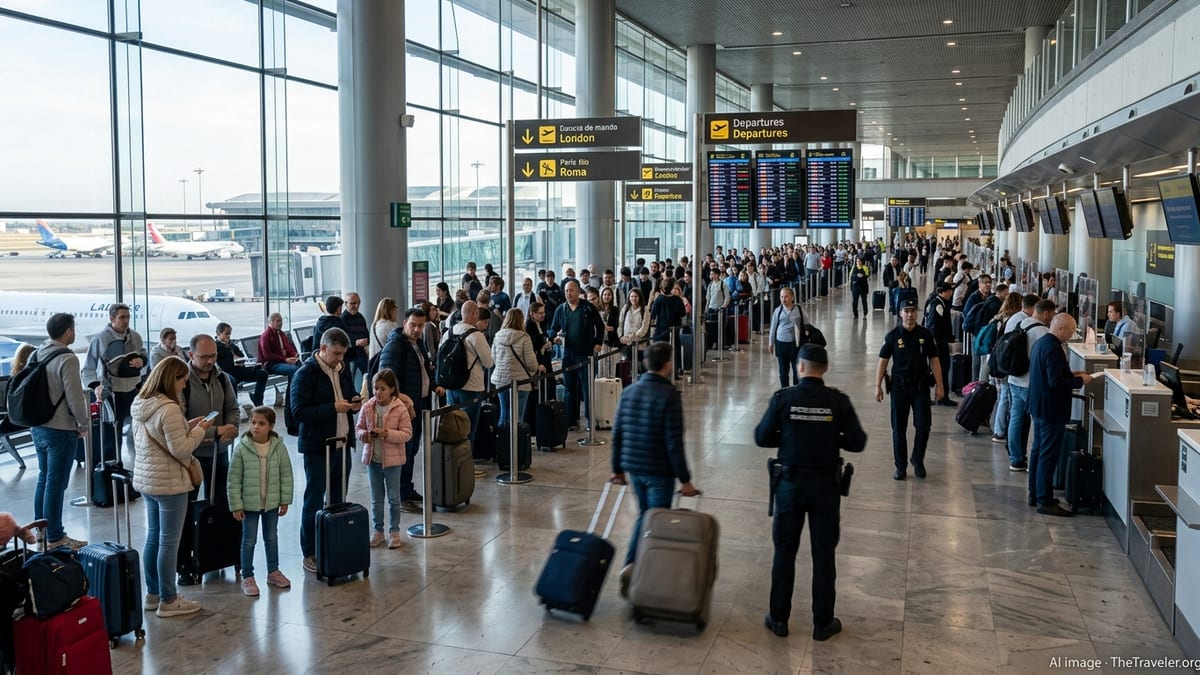
Strike Calls Target Peak Easter Travel Window
Published coverage from Spanish and international outlets indicates that unions representing airport ground handling and support staff have called a series of walkouts that coincide with the Easter holiday period, traditionally one of the heaviest weeks for domestic and international air travel in Spain. The action is timed around Holy Week, when traffic to major cities and coastal destinations surges as residents and visitors converge for religious processions and spring breaks.
Reports suggest that stoppages are planned at multiple airports operated within the wider Spanish network, with union announcements focusing on staff responsible for baggage handling, aircraft turnaround, check-in support and other ground operations. These roles are critical to keeping flights on schedule, which means even partial walkouts could create knock-on delays that spread through the daily timetable.
Early indications point to staggered strike days rather than a single, continuous shutdown. However, the overlap between the planned industrial action and key Easter travel dates is expected to heighten pressure on airport operations, particularly around the long holiday weekend and the preceding days when outbound traffic is strongest.
While Spanish legislation on minimum service levels requires a certain proportion of staffing to be maintained during strikes in essential transport sectors, prior episodes of disruption in the country show that reduced teams can still translate into queues at check-in, slower baggage delivery and isolated flight cancellations when systems are under peak strain.
Major Hubs and Holiday Hotspots Most Exposed
Publicly available information points to the greatest potential impact at Spain’s busiest hubs, including Madrid Barajas and Barcelona El Prat, which handle a large share of international connections and domestic links to the islands and regional cities. Secondary airports serving popular Easter destinations, such as Malaga on the Costa del Sol, Valencia, Alicante and key Canary and Balearic Islands gateways, are also mentioned in strike coverage.
These airports experience a pronounced spike in demand during Semana Santa, as visitors arrive to watch processions in historic centers such as Seville, Malaga and Granada or head directly to coastal resorts. With many leisure travelers on fixed dates connected to school holidays, there is limited flexibility to rebook outside the busiest days, which could amplify crowding if schedules are compressed by industrial action.
Airlines that rely heavily on Spanish bases and ground services contracts at affected airports may face the most complex operational challenges. If ground handlers working for multiple carriers participate in the strikes, disruptions could cut across full-service and low-cost operators alike, with both point-to-point and connecting passengers exposed to delays.
Travel industry commentary notes that even airports not directly listed in early strike bulletins could feel indirect effects if aircraft and crew are displaced from their planned rotations by problems at larger hubs, especially at the start and end of the Easter week wave.
Travelers Advised to Prepare for Delays and Schedule Changes
Consumer travel advisories circulating in recent days recommend that passengers booked on flights to, from or within Spain over Easter build in additional time at the airport and monitor their bookings closely through airline apps and notifications. Where possible, travelers are being encouraged to check in online, travel with carry-on luggage only and avoid tight connections between flights or onward train services.
Given the risk of last-minute schedule adjustments, some travel experts suggest avoiding same-day plans that depend on punctual arrival, such as ticketed events immediately after landing or long-distance road transfers with little buffer time. Travelers with nonrefundable accommodation or tour reservations are being urged to review their terms and conditions and consider whether additional travel insurance coverage is appropriate.
Published guidance from passenger rights organizations reminds visitors that European Union rules provide compensation and assistance in some circumstances when flights are canceled or significantly delayed, although eligibility can depend on whether disruption is considered within the airline’s control. Industrial action involving third-party airport staff can complicate these assessments, making it important for travelers to keep records of official notifications and reasons given for any cancellations.
Families traveling with children or older passengers may wish to anticipate longer lines at security, boarding gates and taxi ranks outside terminals if staffing levels are reduced. Packing essential items such as medication, snacks and entertainment in hand luggage may help manage potential waits if flights are held on the ground or boarding is delayed.
Airlines and Airports Outline Contingency Measures
According to open statements and operational updates, airlines serving Spain are working on contingency plans to limit the impact of the strikes, including schedule adjustments, aircraft swaps and increased use of self-service options at airports. Some carriers have already started issuing flexible rebooking policies for customers scheduled to travel on announced strike days, allowing changes without standard penalty fees within specified date ranges.
Airport operators are expected to coordinate with ground handling companies and public agencies to prioritize key services during the industrial action. Minimum staffing rules typically aim to preserve a baseline of operations for essential flights, such as those serving remote regions or with limited alternative transport options, though this can mean that other services experience greater delays.
Travel forums and recent strike case studies in Europe show that early-morning flights sometimes fare better during labor actions if walkouts are concentrated in later shifts, but this pattern is not guaranteed and can vary from one airport to another. Passengers are therefore being advised to rely on direct communication from their airline rather than general assumptions about which times of day are safest.
Ground transport links around airports, including urban rail and bus services, may also experience heavier usage if passengers arrive earlier than usual or are rebooked across different times of day. Travelers connecting through Spanish hubs to onward long-haul flights may wish to explore options to overnight near the airport if their itinerary allows, reducing the risk that a missed connection disrupts an entire trip.
Key Planning Steps for Easter Week Trips to Spain
For travelers still arranging Easter journeys to Spain, industry observers recommend checking strike dates against proposed travel days before booking and considering flying on non-peak days if flexible. Midweek flights that fall outside the core holiday weekend may offer a slightly lower risk of congestion, though they are not immune from the effects of industrial action.
Those who have already purchased tickets are encouraged to confirm that airlines and online travel agencies hold up-to-date contact details, including mobile numbers and email addresses, to ensure they receive real-time alerts about any schedule changes. Keeping boarding passes and booking references accessible across devices can speed up rebooking if gate agents or call centers come under pressure.
Travel planners further suggest that visitors build alternative scenarios into their itineraries, such as identifying later flights on the same route, checking timetables for high-speed rail as a backup on some domestic corridors, or being prepared to adjust plans within Spain if arrival times shift. While most Easter travelers are still expected to reach their destinations, a more flexible, contingency-minded approach may reduce stress if strike-related disruptions materialize.
With Spain poised once again to be a focal point for European Easter tourism, the interplay between heightened demand and industrial action at airports is likely to be closely watched in the days ahead by airlines, regulators and passengers alike.