

More news on this day
Millions of travelers heading to Spain for Easter 2026 face a difficult start to the holiday season, as airport strikes, traffic operations and new EU border checks converge to create a high risk of queues, cancellations and missed connections.
Get the latest news straight to your inbox!
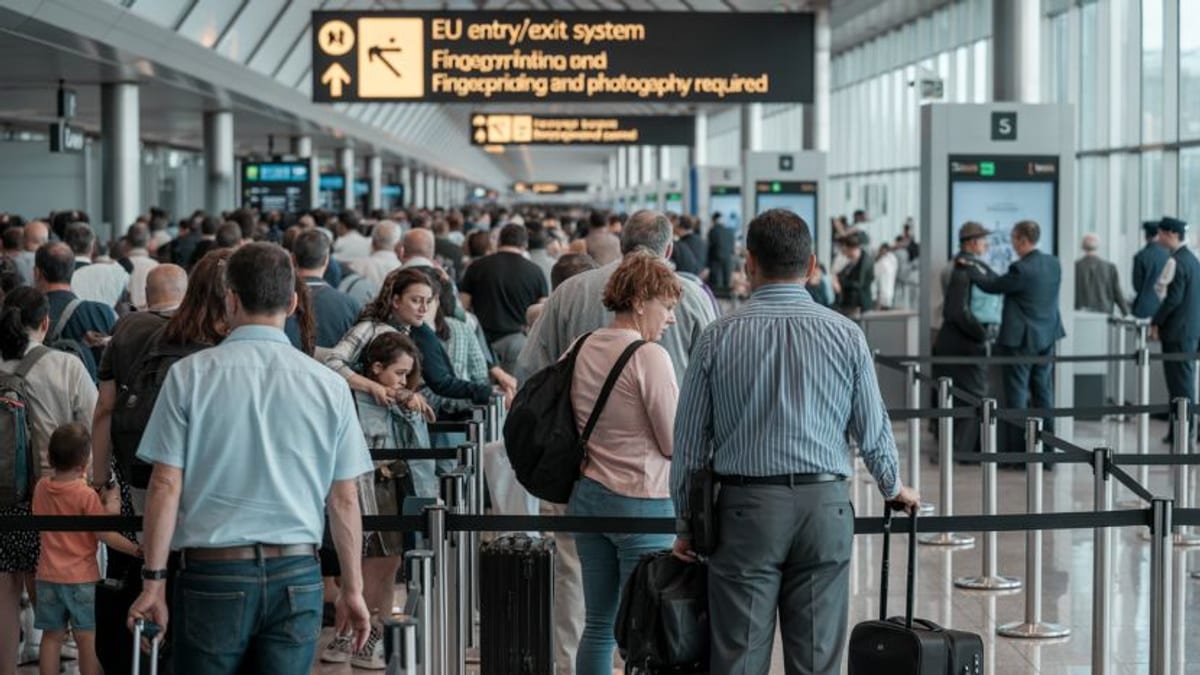
Image by Travel And Tour World
Ground Staff Walkouts Hit Major Spanish Airports
A wave of industrial action by airport ground handling staff is emerging as one of the biggest threats to smooth Easter travel in Spain. Unions representing workers at Groundforce, a key handling company, have called an indefinite strike that begins on Monday 30 March, overlapping directly with peak Semana Santa departures.
According to published coverage, the walkouts affect around 3,000 Groundforce employees across 12 of Spain’s busiest airports, including Madrid Barajas, Barcelona El Prat, Málaga, Valencia, Alicante, Palma de Mallorca, Ibiza, Bilbao and several Canary Islands gateways. The action is structured as partial stoppages in three daily blocks, covering early morning, midday and late evening, which correspond to some of the heaviest traffic periods for both domestic and international flights.
Reports indicate that unions are contesting the company’s implementation of wage and working time provisions in the current collective agreement. While minimum service levels are likely to be imposed to protect some operations, early union statements suggest that rolling action could continue beyond the Easter week if no compromise is reached, raising the risk of ongoing disruption into the spring and summer season.
Travel industry briefings suggest that airlines relying heavily on outsourced handling, particularly low cost and charter operators, are most exposed to baggage delays, slow aircraft turnaround and potential last minute schedule changes. Passengers booked through Madrid and Barcelona hubs are being advised by consumer bodies to monitor their flight status closely and allow additional time for check in and bag drop.
Air Traffic Control Tensions Add to Uncertainty
The pressure on holiday operations is not limited to ground services. Regional reports highlight mounting tension within Spain’s air traffic control system, with staff at some smaller airports warning of possible strike action if staffing and rostering disputes are not resolved. A Coruña has been cited in specialist aviation coverage as one location where a walkout over Easter is described as highly likely without a last minute agreement.
While no nationwide shutdown has been announced, the combination of localized air traffic control stoppages and broader ground handling strikes could create knock on effects across the Aena airport network. Even short disruptions at one control center can trigger delays and diversions elsewhere, especially at a time when airlines are operating near capacity on popular leisure routes.
Travel analysts note that Spain is entering Easter 2026 with a dense flight schedule, following announcements from major carriers of record seat offerings for the spring and summer. That expansion leaves little spare capacity to re accommodate passengers if large numbers of flights are delayed or cancelled due to industrial action, increasing the likelihood that some travelers may face overnight stays or extended rebooking windows.
Publicly available guidance from consumer organizations in Spain and other European countries is already encouraging passengers to familiarize themselves with compensation and care rules in the event of strike related disruption, and to keep all documentation in case claims are needed later.
EU Entry/Exit System Drives Longer Border Queues
On top of strike risks, new entry requirements for non EU visitors are slowing traffic at some Spanish border checkpoints. The European Union’s Entry/Exit System, which began operating in late 2025, requires biometric registration of most third country nationals entering and leaving the Schengen area. This has introduced extra steps at passport control for travelers from countries such as the United Kingdom, the United States and Canada.
Reports from regional Spanish media and traveler accounts point to long lines already forming at several airports as staff and passengers adjust to the system. At Alicante Elche Airport, a police union has warned of potential “collapse” at border control during the Easter surge, citing understaffing and the additional time needed to process fingerprints and facial images for first time registrants.
Travel coverage in the United Kingdom this week has highlighted warnings to British holidaymakers about possible delays when entering popular destinations including Spain, France and Germany under the new regime. While border authorities across the bloc insist the system will ultimately speed up checks once databases are fully populated, expert commentary stresses that the early phases tend to be the slowest and are particularly challenging when combined with peak seasonal traffic.
Consumer advocates are recommending that non EU travelers arriving in Spain for Easter allow significant extra time to clear border formalities, particularly at busy resorts and city gateways where inbound flights from several countries converge in short time windows. Families with children and travelers on tight onward connections are considered especially vulnerable to missed trains and domestic flights if queues lengthen unexpectedly.
Road and Rail Networks Also Under Seasonal Strain
Spain’s Easter travel disruption is not confined to the skies and borders. The national traffic authority has launched a major special operation on the roads for Semana Santa 2026, warning of heavy congestion on key motorway corridors into and out of major cities, as well as along coastal routes popular with domestic holidaymakers.
Official forecasts cited in local press indicate that millions of vehicle journeys are expected over the two main Easter weekends, prompting reinforced controls, temporary restrictions on heavy goods vehicles and stepped up enforcement of speed and drink driving rules. Motorists are being urged to plan routes carefully, avoid peak departure times where possible and follow real time traffic advisories to minimize delays.
On the rail side, Spain’s network is still adapting to the aftermath of serious incidents earlier in the year, and to ongoing infrastructure works on certain high speed lines. Although the rail operator has added extra services on some leisure corridors, capacity constraints mean that many long distance trains around the key Easter days are reported to be close to fully booked, limiting alternatives for air passengers who might seek to switch modes at short notice.
Travel specialists note that the combination of full trains, busy roads and stressed airport operations reduces the system’s overall resilience. When one mode of transport experiences disruption, shifting large numbers of travelers to another mode becomes more difficult, increasing the likelihood of bottlenecks in multiple parts of the network simultaneously.
What Travelers Can Do Ahead of Easter Departures
With multiple, overlapping sources of disruption, planning and flexibility are emerging as the main tools available to travelers heading to Spain over Easter. Aviation and consumer experts quoted in recent coverage advise passengers to check whether their flights rely on airports affected by the Groundforce or other handling strikes, and to sign up for airline alerts that provide real time information about gate changes and delays.
Travel insurance policies are also coming under renewed scrutiny. Some products offer limited or no coverage for delays caused by strikes or operational problems at border control, while others may provide compensation for missed connections, extra accommodation costs or trip curtailment. Policy wording varies widely, and travel advisers recommend that passengers review exclusions before departure rather than discovering gaps in cover when problems arise.
For non EU citizens, particularly those traveling from the United Kingdom and North America, practical suggestions circulating in travel advisories include allowing more time at departure airports, carrying printed confirmations of accommodation and onward travel, and keeping fingerprints and facial images unobstructed to speed biometric capture. Families are encouraged to brief older children on border procedures to reduce confusion when they reach the front of the queue.
Although many Easter journeys to Spain are still expected to proceed without major incident, the convergence of industrial action, new border technology and traditional holiday traffic peaks means that 2026 stands out as a year when travelers face a higher-than-usual risk of disruption. Those prepared to build extra margin into their itineraries and to respond quickly to changing conditions are likely to navigate the season with fewer headaches than those who treat Easter as business as usual.