

More news on this day
Travellers heading to Spain for Easter 2026 face a turbulent holiday period as airport strikes, rail disruption and the phased rollout of the European Union’s new border control regime combine to threaten significant delays on some of the country’s busiest routes.
Get the latest news straight to your inbox!
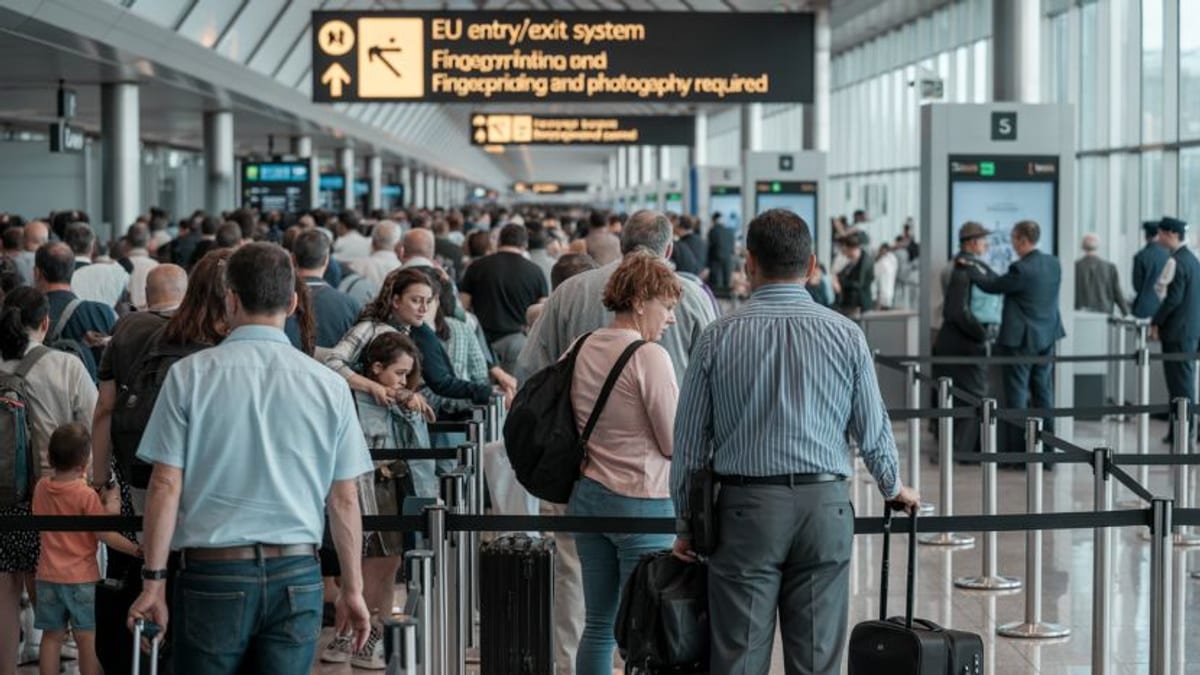
Image by travelandtourworld.com
Airport Strikes Hit Busiest Easter Getaways
Spain’s airports are preparing for a difficult Semana Santa, with ground handling staff at multiple hubs staging industrial action that coincides with the peak Easter getaway. Reports from European travel outlets indicate that unions representing workers at major handlers, including Groundforce and Menzies-linked operations, have called stoppages at a wide network of airports from late March into early April, covering much of Holy Week.
The walkouts affect many of Spain’s most important tourism gateways. Coverage from Spanish and European media lists Madrid Barajas, Barcelona El Prat, Málaga Costa del Sol, Alicante Elche, Palma de Mallorca, the Canary Islands airports, Valencia, Ibiza and Bilbao among the locations where services such as check in, baggage handling and aircraft turnaround may be disrupted. While core flight operations are expected to continue under legally required minimum service levels, passengers are being warned to expect queues, schedule changes and slower ground handling.
Ground staff strikes are structured around partial stoppages across several time bands on key days, along with 24 hour strike calls on others. Aviation focused publications describe plans for repeated action through the Easter period and into the rest of 2026 if no agreement is reached on pay and working conditions. This pattern raises the risk of knock on disruption, as delayed aircraft and crew rotations can affect flights well beyond the immediate strike window.
Publicly available guidance from travel companies and consumer organisations is advising passengers to arrive earlier than usual at affected airports, allow extra time for check in and security, and to travel with cabin baggage only where possible to reduce exposure to baggage handling delays. Airlines are also updating schedules and warning that short notice changes may be necessary if staffing levels deteriorate.
Rail Disruption Adds Pressure on Domestic Routes
On the ground, Spain’s rail network is facing its own challenges over Easter. Regional media covering Andalusia report that the high speed line between Málaga and Madrid remains closed following serious infrastructure damage earlier this year, with rail infrastructure manager Adif indicating that services will not resume before the end of April. The closure removes one of southern Spain’s key long distance arteries at precisely the moment demand typically peaks.
Business and labour market coverage from outlets in Málaga notes that the suspension of the high speed link is already weighing on seasonal employment, with forecasts pointing to fewer Easter jobs in hospitality and services compared with 2025. The lack of direct high speed trains is pushing travellers onto slower conventional services and domestic flights, increasing pressure on an aviation system that is itself subject to strike action.
Reports about Spain’s wider rail network in early 2026 also highlight heightened sensitivity around safety and staffing after a series of serious accidents and a subsequent nationwide strike by train drivers. Although that strike was called off in February following negotiations, commentators point out that it has left operators wary of renewed unrest if safety and working condition concerns resurface. In practical terms, travellers planning complex multi leg rail journeys around Easter are being urged by travel advisers to build in longer transfer times and to monitor timetables closely.
To compensate for the Málaga Madrid closure during Semana Santa, local transport reporting indicates that national operator Renfe is working to reroute certain services onto conventional tracks and adjust timetables to protect capacity on the busiest days. However, these contingency plans are constrained by infrastructure limits and are unlikely to fully absorb peak holiday demand, particularly if weather or other operational issues emerge at the same time.
New EU Entry/Exit Rules Create Border Bottleneck Fears
At Spain’s external Schengen borders, preparations for the European Union’s Entry/Exit System are adding a further layer of uncertainty for Easter visitors, especially those arriving from non EU countries such as the United Kingdom and the United States. The digital scheme, which will record the entry and exit of non EU nationals using biometric data instead of passport stamps, is being introduced progressively following a political agreement reached in 2025 on its phased rollout.
According to public briefings from EU institutions, member states have up to six months to move from testing to full deployment once the system formally starts. Specialist visa and mobility services report that Spain has already begun stress testing biometric kiosks at major hubs including Madrid, Barcelona and Málaga, running them alongside traditional checks to identify bottlenecks before mandatory use.
Although officials at European level argue that the system should eventually speed up processing and strengthen security, experience at early adopter airports elsewhere in the bloc has included reports of significantly longer queues during the initial registration phase. Commentary in European media and traveller accounts shared online describe peak waiting times of up to several hours at some border points after EES technology went live, driven by the need to capture fingerprints and facial images for each eligible traveller on their first crossing.
Spain’s Interior Ministry has previously stressed, in public statements cited by European news outlets, that domestic trials have not yet produced major queues. However, local authorities and consular advisories in neighbouring territories such as Gibraltar have warned that the start of widespread EES use is likely to lengthen border checks in the early months, particularly at land crossings and high volume holiday airports. For Easter 2026, that means travellers who have not yet been enrolled in the system could face longer than expected waits even if no technical glitches occur.
UK and Long Haul Visitors Most Exposed to Delays
The combination of industrial action and new border technology is expected to be felt unevenly across different categories of traveller. Holidaymakers from the United Kingdom, one of Spain’s largest inbound markets, are among those most exposed. As non EU, non Schengen nationals, UK citizens must undergo full external border checks and will be required to register under the EES scheme once it is fully applied at Spanish airports and ferry ports.
Travel industry analysis referenced in British and Spanish media notes that UK demand for Easter sun in destinations such as the Costa del Sol, the Balearic Islands and the Canary Islands remains strong, even as airfares have risen. These flows concentrate large numbers of non EU passengers at precisely the airports affected by both ground handling strikes and EES testing. Travel insurers and consumer rights groups have warned that long queues at passport control are usually not covered as an insurable cause of missed departures, increasing the personal risk borne by travellers if they cut arrival times too fine.
Long haul visitors from markets such as North America, Latin America and parts of Asia face similar challenges, with many connecting through EU hubs before reaching Spain. Aviation analysts point out that disruption at Spanish airports can ripple across wider route networks, particularly where aircraft and crew are shared between Schengen and non Schengen services. With French air traffic control also experiencing periodic strikes in recent years, routings that cross French airspace on the way to Spain may be vulnerable to additional delays unrelated to events inside Spain itself.
In response, airlines and tour operators are updating pre departure guidance, urging passengers to arrive well in advance of flight times, complete online check in whenever possible and pay close attention to gate information and potential schedule changes. While these measures cannot eliminate the risk of disruption, sector observers argue that informed passengers who allow generous time buffers at both departure and arrival are more likely to avoid the worst bottlenecks.
How Travellers Can Reduce Easter Disruption Risk
With multiple sources of potential delay converging on the same holiday window, travel specialists are focusing on practical steps that visitors can take to minimise disruption. Consumer organisations and independent travel advisers commonly recommend arriving at Spanish airports at least three hours before scheduled departure for short haul flights during the strike period, and even earlier for long haul services or when travelling with checked luggage.
For those entering Spain from outside the EU or Schengen area, particularly first time visitors since the latest border changes, planning for extended passport control processing is advised. That includes allowing extra time for onward connections within Spain, whether by domestic flight, rail or bus. Travellers are also encouraged to ensure that passport validity and entry documentation comply with EU rules, as any discrepancy could be harder to resolve swiftly once border procedures are tied to biometric records.
On domestic legs, travel planners suggest that visitors build flexibility into itineraries that rely on the currently disrupted high speed rail link between Málaga and Madrid. Alternatives such as conventional rail routes, long distance buses or flights may be necessary, and prices can spike close to departure as capacity tightens. Booking key segments early, avoiding last train or last flight of the day connections, and monitoring operator updates in the days before departure can reduce the chance of being stranded.
Ultimately, public information available in late March points to an Easter season in Spain characterised by higher than usual uncertainty rather than system wide breakdown. Most flights and trains are still expected to operate, but with elevated risk of queues, delays and occasional cancellations. For travellers willing to adapt plans, travel light and factor in generous time margins, Spain’s Easter processions and spring sunshine remain accessible, albeit with more patience required at check in desks and border booths than in previous years.