

More news on this day
Spain’s air travel network faced fresh turmoil today as hundreds of travelers were left stranded at Barcelona, Tenerife, Madrid, and Malaga airports, with 513 flights delayed and 10 canceled, disrupting operations for carriers including Ryanair, Air France, easyJet, KLM and others across Valencia, Seville, Bilbao and a string of regional hubs.
Nationwide Disruption Hits Spain’s Busiest Hubs
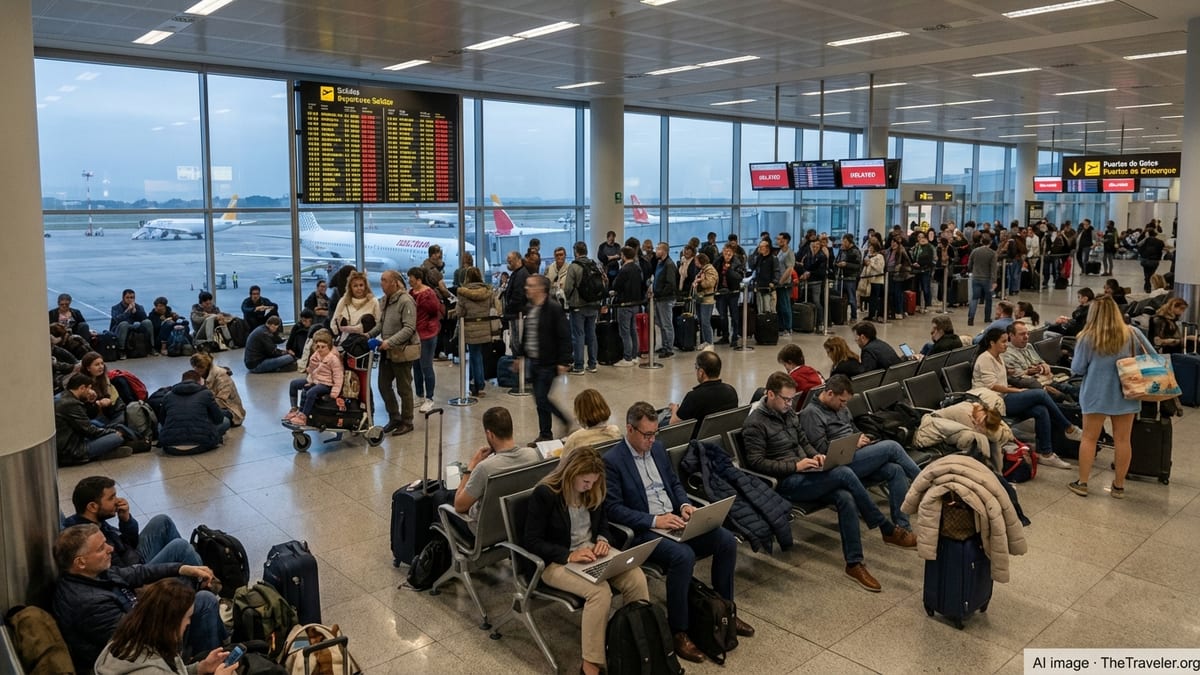
The latest wave of disruption swept simultaneously through some of Spain’s most heavily used airports, snarling both domestic and international traffic at the height of the winter city break and sun-seeking season. Long queues snaked through departure halls at Barcelona El Prat, Madrid Barajas, Malaga Costa del Sol and Tenerife’s airports, as departure boards filled with red-labeled delay notices and a smaller but still painful number of outright cancellations.
Operational data compiled from flight tracking and industry reporting indicates that 513 flights were delayed and 10 canceled within Spanish airspace and at Spanish airports over the course of the day. That tally covers main gateways such as Madrid and Barcelona as well as secondary and regional airports serving Valencia, Seville, Bilbao and other cities. The disruption affected both point to point low cost routes and full service connections to major European hubs.
At Madrid Barajas, which routinely handles close to a thousand movements per day, delays rippled across both short haul and long haul services. Barcelona El Prat, a critical gateway for both holidaymakers and business travelers, reported heavy congestion in its Schengen and non Schengen piers. Malaga and Tenerife, essential links for passengers traveling to and from Spain’s coastal resorts and island destinations, saw late running aircraft compound scheduling challenges throughout the afternoon and evening.
Airport operator Aena and air traffic managers have not attributed the disruption to a single incident, describing instead a combination of capacity constraints, staffing pressures and weather related flow controls across parts of Europe that slowed traffic entering and exiting Spanish airspace. The result was a patchwork of rolling delays that left many travelers stuck in terminals for hours.
Major European Airlines Caught in the Turbulence
The operational shock was felt across a wide spread of airlines, underscoring how interconnected Europe’s aviation network has become. Low cost carrier Ryanair, which operates one of the densest route maps into Spanish airports, faced a series of late departures and arrivals as aircraft arriving from elsewhere in Europe missed their scheduled slots and pushed back the rest of the day’s rotations.
easyJet, likewise heavily exposed to leisure routes into Barcelona, Malaga and island airports including Tenerife, saw its orange liveried aircraft repeatedly posted with one or two hour delays. For budget conscious travelers attempting tight weekend itineraries, even modest schedule slips led to missed hotel check ins, lost ground transport connections and abandoned plans in cities across Spain.
Full service carriers were not spared. Air France and KLM, which funnel passengers through Paris and Amsterdam to intercontinental destinations, reported delays on services into Madrid, Barcelona and regional cities. Knock on effects spread into their wider long haul networks as connecting passengers missed onward flights, with some rebooked via alternative hubs or forced to overnight in Spain or at hub airports.
Other European and transatlantic airlines operating into Spanish airports also encountered pushbacks from stands, longer than usual waits for takeoff slots and late evening arrivals that stretched airport staffing in ground handling, security and customer service. The breadth of the impact highlighted Spain’s role as both a destination and a through point in Europe’s air transport system.
Stranded Travelers Face Long Queues and Limited Information
For passengers, the operational statistics translated into long hours in departure lounges and crowded gate areas. At Barcelona and Madrid, travelers described scenes of families camped out on the floor, with children trying to sleep against backpacks while adults queued at customer service desks seeking rebooking or meal vouchers.
In Malaga and Tenerife, many of the affected passengers were tourists at the end of winter sun holidays, anxious not to miss work or school commitments back home. As departure times were repeatedly pushed back in 30 or 60 minute increments, frustration grew among travelers who struggled to understand whether they should wait at the gate, return to the check in hall or look for overnight accommodation.
Regional airports such as Valencia, Seville and Bilbao, which typically have more limited late night capacity, offered fewer same day alternatives once delays stacked up. Some passengers found themselves rebooked on flights the following day or rerouted through other Spanish cities, turning relatively short journeys into multi leg odysseys with connections through Madrid or Barcelona.
Passenger advocacy groups reiterated that European Union regulations require airlines to provide care, assistance and, in some circumstances, compensation when flights are substantially delayed or canceled. However, travelers frequently reported inconsistent application of these rules, with some carriers proactively handing out vouchers and others leaving passengers to fend for themselves in crowded terminals.
Operational Factors Behind the Wave of Delays
Aviation analysts pointed to a familiar combination of structural and day specific factors behind the latest disruption. Winter weather systems across parts of northern and central Europe triggered air traffic flow restrictions that reduced capacity along key corridors feeding into Spain. When aircraft depart late from origin airports affected by fog, low visibility or deicing procedures, their delayed arrival in Spain cascades into the rest of the schedule.
Spain’s air traffic control system, like those in several other European countries, continues to grapple with staffing limitations and high workload periods. Even when weather over Spain itself remains flyable, upstream constraints in neighboring airspace can force controllers to meter arrivals and departures into congested hubs such as Madrid and Barcelona, stretching taxi and holding times.
Ground handling and airport staffing remain another pressure point. Despite strong post pandemic recovery in passenger volumes, many airports are still rebuilding experienced teams in security, ramp operations and baggage handling. When schedules become compressed by earlier delays, these teams struggle to turn aircraft quickly enough to recover punctuality, especially during evening peaks.
The strong rebound in leisure demand to Spain’s coastal and island resorts has further tightened margins. Airlines are running schedules that leave little slack for disruption, so any operational hiccup can reverberate throughout the day. Industry observers note that while today’s tally of 513 delayed flights and 10 cancellations is notable, it fits a broader pattern of frequent high impact disruption days across the European network.
Regional Airports from Valencia to Bilbao Feel the Strain
While the headline focus was on major hubs, regional airports across Spain also faced significant disruption. Valencia, a key gateway for both tourists and business travelers, saw multiple services to northern Europe and domestic trunk routes depart behind schedule, as aircraft arriving from Madrid, Barcelona or foreign hubs turned late and ground teams scrambled to keep operations moving.
Seville, which has grown rapidly as a city break destination, experienced similar ripple effects. Flights that normally shuttle efficiently between Seville and Spanish or European cities were forced into holding patterns or queued on the ground waiting for departure slots. The delayed turnaround of aircraft reduced flexibility to accommodate disrupted passengers, particularly on thinner routes with limited daily frequencies.
Bilbao and other northern airports also recorded irregular operations, especially on services to and from major European hubs used by corporate travelers. With fewer spare seats available on alternative flights, some passengers bound for meetings or events faced the choice of lengthy rail journeys or last minute changes of plan.
The spread of delays into regional airports underlined how dependent these gateways are on the punctuality of inbound services and the wider state of European airspace. Even when local conditions are favorable and airport teams are fully staffed, their performance is constrained by factors often far beyond their control.
Airlines Race to Recover Schedules and Support Customers
As delays mounted, airlines activated their disruption management protocols. Carriers including Ryanair, easyJet, Air France and KLM sought to swap aircraft, reassign crews and adjust rotations in an effort to stabilize schedules for the late evening and next morning’s departures. In some cases, lightly loaded flights were consolidated, freeing aircraft to operate higher demand services where large numbers of passengers were waiting.
Customer communications, however, remained a sore point for many travelers. While some airlines pushed regular updates through mobile apps and text messages, others relied on sporadic gate announcements and departure board changes that left passengers uncertain about real departure times. In crowded terminals, it was often difficult to hear announcements or find staff able to provide clear guidance.
Accommodation and meal provision varied by carrier and by airport. Passengers on canceled flights or on services delayed beyond the evening curfew in some airports reported being provided with hotel rooms and transport, while others described long waits to secure basic refreshments. Social media posts from stranded travelers showed lengthy queues at airline service counters in Madrid and Barcelona stretching across concourses.
Industry experts note that there is growing pressure on airlines to invest further in robust disruption handling, including clearer digital communication, prearranged hotel inventory and better coordination with airport authorities. With European skies expected to remain busy and sensitive to weather and staffing shocks, the need for resilient passenger support systems is increasingly critical.
What Today’s Chaos Signals for Spain’s Busy Travel Year
The latest day of mass delays adds to a series of recent disruption incidents across Europe, reinforcing concerns about the resilience of the continent’s aviation system heading into another heavy travel year. Spain, which consistently ranks among the world’s most visited countries, is particularly exposed because of its dense network of holiday, city break and business routes connecting to virtually every major European market.
For travelers, today’s events will serve as a reminder to build extra contingency into itineraries involving Spanish airports, especially when connecting to cruises, rail journeys or long haul flights. Travel advisors increasingly urge clients to avoid extremely tight connections, opt for earlier departures where possible and ensure that accommodation and onward transport bookings are flexible.
For airports and airlines, the disruption highlights the urgency of addressing structural bottlenecks. Investments in staffing, air traffic control modernization and more flexible scheduling practices could help to reduce the impact of days when weather and network constraints collide. However, such changes will take time to implement, and occasional large scale disruption days are likely to remain a feature of European air travel.
As operations gradually normalize across Barcelona, Tenerife, Madrid, Malaga and the country’s regional gateways, thousands of delayed passengers are finally making their way to destinations across Spain and beyond. For many, the experience will linger as another illustration of how quickly modern air travel plans can unravel when a complex system comes under strain.