

More news on this day
Spain is heading into the 2026 peak season with a powerful tailwind, as European holidaymakers rebook trips away from conflict-adjacent hotspots such as Cyprus and Greece and shift en masse to the safer-feeling shores of the western Mediterranean.
Get the latest news straight to your inbox!
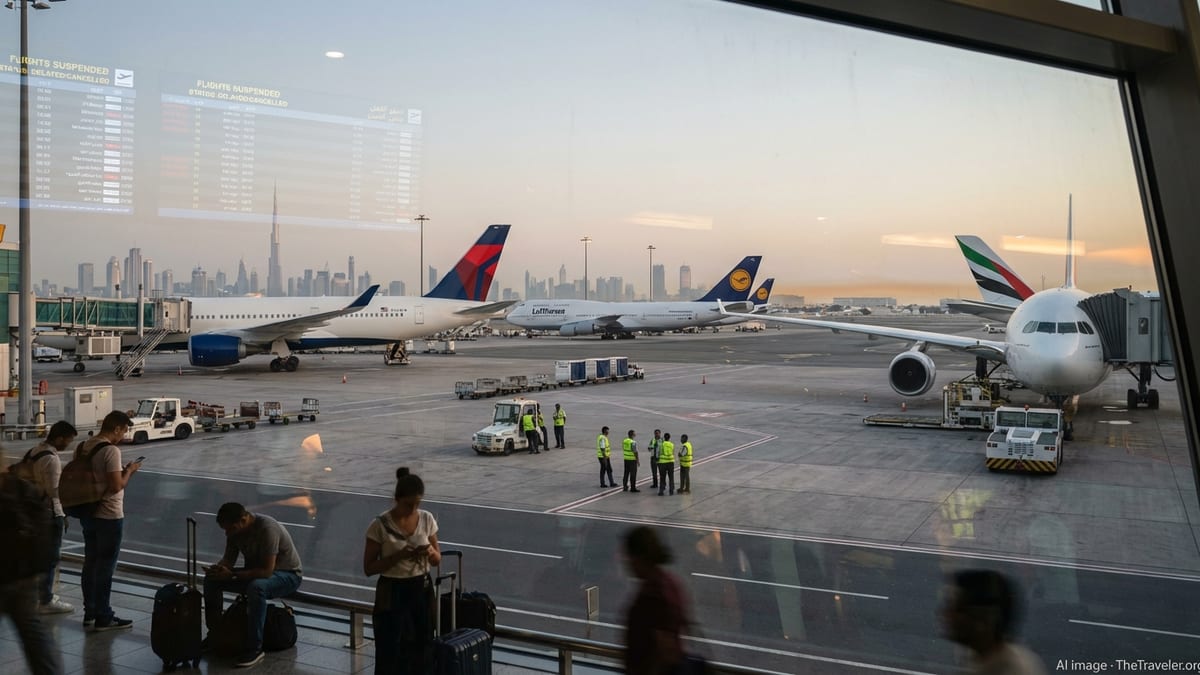
Middle East Conflict Reshapes Europe’s Beach Map
Escalating tensions involving Israel, Iran and allied forces are reshaping traditional summer travel patterns across Europe. Published coverage in outlets such as the Guardian and Euronews indicates that tour operators are reporting weaker demand for Cyprus, Greece and Turkey in the wake of airspace disruptions, drone incidents and travel advisories referencing the wider eastern Mediterranean corridor.
Cyprus, located close to regional flashpoints, has seen a slowdown in bookings since the latest phase of the conflict and the reported drone strike on British facilities on the island. Reports indicate that cancellations of flights linking Cyprus with Israel, Lebanon, Qatar and the United Arab Emirates, combined with heightened security warnings, are undermining its image as a carefree sun-and-sea destination for summer 2026.
Greece, which relies heavily on visitors from Israel and other nearby markets, is also navigating uncertainty. Industry analyses highlight concerns over air capacity plans to and from the eastern Mediterranean, with travel firms monitoring whether skittish consumers will opt for alternatives perceived as further removed from the conflict zone.
Travel trade publications describe a clear pattern: holidaymakers that once defaulted to the eastern Mediterranean are now actively seeking destinations that offer similar climate and beach appeal but are seen as politically more distant from the Middle East theatre. That search is pushing Spain to the top of many booking engines for 2026.
Spain Builds on Record Visitor Numbers
Spain enters this shifting landscape from a position of considerable strength. National statistics and recent economic research show that the country welcomed roughly 97 million international visitors in 2025, setting a new record and marking its third consecutive year of all-time highs after the pandemic slump.
Tourism now accounts for well over 13 percent of Spanish gross domestic product according to industry-backed forecasts, with think tanks such as CaixaBank Research and Exceltur describing 2025 as the year the sector moved from “post-pandemic rebound” to a more sustainable growth phase. Visitor spending has grown even faster than arrivals, reflecting a trend toward higher-value trips and longer stays.
Forward-looking analyses for 2026 point to a moderation in growth rates compared with the double-digit surges of 2023 and early 2025, but the baseline is significantly higher. With core markets such as the United Kingdom, Germany and France maintaining strong demand for Spanish holidays, analysts suggest that even a slight diversion of traffic away from Cyprus and Greece could translate into millions of additional nights in Spanish resorts.
Industry groups tracking sentiment across accommodation providers note that, while the broader European economy is slowing, Spain continues to outperform. The combination of perceived safety, diversified regional offerings and robust air connectivity positions the country to absorb displaced demand from the eastern Mediterranean.
Western Mediterranean Emerges as “Safe Bet”
Across the travel trade, Spain is increasingly grouped with Italy, Malta and parts of the western Balkans as the main beneficiaries of the east-to-west shift in Mediterranean tourism. Reports from tour operators and booking platforms describe Spain as one of the top “switch” destinations for customers who initially reserved packages in Cyprus, Rhodes or Crete and then changed plans as conflict headlines intensified.
Travel and tourism analysts highlight several reasons Spain is capturing this redirected demand. Airlines already operate dense networks of flights linking Spanish airports with major European cities, making schedule changes and re-routings relatively straightforward. In addition, Spain’s long-established resort infrastructure allows large operators to move capacity at scale without compromising on product standards.
Another factor is risk perception. While no destination can claim to be completely insulated from geopolitical shocks, Spain is widely portrayed in consumer-facing coverage as removed from the immediate radius of the Middle East conflict. That perception, combined with familiar brands, established safety protocols and eurozone consumer protections, appears to reassure cautious families and older travelers.
At the same time, Spain benefits from a diverse tourism mix that includes cultural city breaks, gastronomy, rural retreats and active travel, reducing its dependence on any one source market or travel style. This diversity is particularly attractive for travelers who are rethinking crowded resort hubs and seeking itineraries that feel both safer and more experiential.
Pressure on Prices and Capacity Along Spain’s Coasts
The reorientation of demand is already feeding into concerns about pricing and capacity along Spain’s key coastal regions for summer 2026. With many travelers booking later than in previous years as they monitor geopolitical developments, hoteliers and tour operators on the Costa del Sol, Costa Blanca and the Balearic and Canary Islands are preparing for a compressed, high-intensity booking window.
Analysts quoted in Spanish business media suggest that room rates in prime beachfront areas could edge higher than in 2025, particularly in July and August, as operators attempt to balance strong demand with the rising costs of energy and labor. Higher jet fuel prices linked to the conflict, and longer flight paths to avoid sensitive airspace, are also pushing up package prices across Europe. Spain, while not immune, may still appear relatively affordable compared with long-haul alternatives.
Local authorities are simultaneously trying to keep growth manageable. National and regional plans for 2026 place new emphasis on regulating short-term rentals and tackling overcrowding in popular urban and coastal hotspots. Publicly available policy documents outline efforts to shift more arrivals into shoulder seasons and less-saturated regions, aiming to protect residents’ quality of life while still capitalizing on the tourism boom.
Industry observers warn that if the conflict-driven diversion lasts throughout 2026, some Spanish destinations could face renewed debates over over-tourism, particularly in communities that have recently tried to limit the spread of vacation rentals. The challenge for policymakers will be to harness the additional revenue without reigniting local tensions over housing and public space.
Uncertain Outlook for Cyprus and Greece
For Cyprus and Greece, the evolving situation presents a more complicated picture. Prior to the latest escalation, both destinations were celebrating record or near-record arrivals in 2025. Cyprus, for example, reported more than 4.5 million visitors in 2025, with particularly strong growth from the United Kingdom and Poland according to its official statistics service.
Since the start of 2026, however, regional instability has begun to weigh more heavily. Euronews and other outlets have highlighted a slowdown in bookings for Cyprus following the US-Israel attack on Iran, alongside reports of flight cancellations from key Middle Eastern hubs. In Greece, tourism bodies are described as “cautious” about the Israeli market and other nearby source countries, watching closely for signs of a broader dip.
Some sector representatives in both countries continue to stress that the impact is not yet equivalent to the collapse seen during the pandemic years, and that bookings from core European markets remain resilient. However, with travel advisories referencing potential risks across parts of the eastern Mediterranean, nervous holidaymakers are clearly re-evaluating their options.
How long this shift will last remains unclear. If tensions ease and airspace restrictions are lifted, value-conscious travelers could quickly return to Cyprus and Greece, where competitive pricing and established resort brands remain powerful draws. For the 2026 season now taking shape, though, all available indicators point to Spain as one of the principal winners of a tourism realignment driven by security anxieties far beyond Europe’s beaches.