

More news on this day
Plans for an indefinite airport ground handling strike across Spain are casting uncertainty over Holy Week travel, with unions targeting some of the country’s busiest tourist gateways just as Easter traffic peaks.
Get the latest news straight to your inbox!
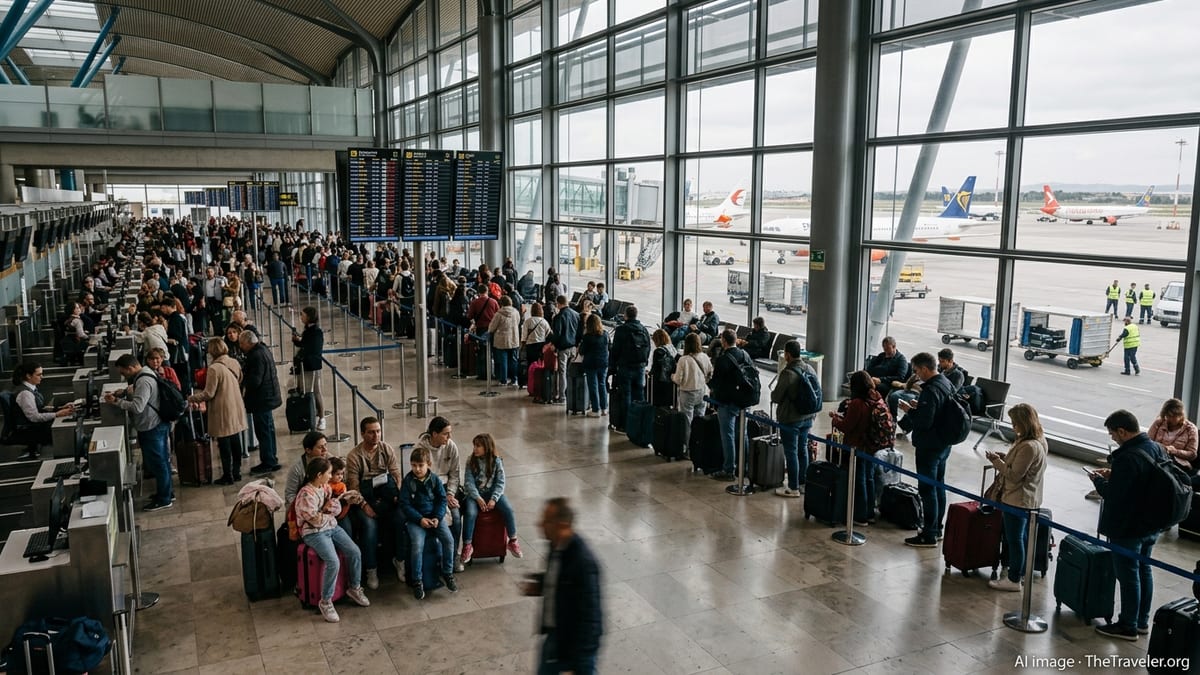
Groundforce and Menzies walkouts timed for peak Easter rush
According to published coverage, unions representing ground handling staff at Groundforce and Menzies have called partial, indefinite stoppages beginning in the lead-up to Palm Sunday and continuing through Holy Week. The industrial action focuses on wage recovery and the application of existing collective agreements after years of inflation and restructuring in Spain’s aviation sector.
Groundforce, part of the Globalia group, provides baggage handling, check in, ramp operations and other services at 12 airports in the Aena network, including Madrid Barajas, Barcelona El Prat, Malaga, Valencia, Bilbao, Palma de Mallorca, Ibiza, Las Palmas, Tenerife, Lanzarote and Fuerteventura. Reports indicate that the strike pattern covers three daily windows, from early morning to midnight, and is set to continue on an open-ended basis if no compromise is reached.
Separate industrial action at Menzies, another major handling provider, is scheduled to start shortly after the Groundforce stoppages. While the two disputes are distinct, their overlap during Holy Week heightens the risk of cascading disruption across Spain’s main holiday and city-break destinations, where aircraft turnarounds depend heavily on outsourced ground services.
Holy Week, which in 2026 runs from March 29 to April 5, is traditionally one of the busiest travel periods of the year in Spain, combining outbound holiday demand, domestic trips and a surge of international visitors drawn by religious processions in cities such as Seville, Malaga and Valladolid.
Key airports face pressure as Holy Week schedules ramp up
Aena data cited in regional media show just how tight operations already are ahead of the walkouts. At Malaga Costa del Sol, nearly 6,000 flights are scheduled between March 27 and April 6, the vast majority of them international services feeding the Costa del Sol and Andalusian interior. Daily movements at the airport are expected to hover around or above 500 flights during the central days of Holy Week.
Similar patterns are reported at other tourist and hub airports in the network, from Palma de Mallorca and the Canary Islands to Barcelona and Madrid. Many of these facilities rely heavily on Groundforce and Menzies teams for ramp handling, aircraft loading, and passenger services, meaning that even partial stoppages could slow turnarounds and lengthen queues at check in, bag drop and boarding.
On top of the ground handling unrest, air traffic controllers at Seville’s San Pablo Airport have previously threatened strike action over staffing levels, with warnings that any walkout could coincide with Holy Week. While mediation efforts have been ongoing, such overlapping disputes highlight the fragile equilibrium in Spain’s aviation system at a time of strong demand recovery.
Publicly available flight scheduling data suggest that most carriers are planning to operate close to full Easter programmes. That leaves limited slack in aircraft rotations and crew rosters, increasing the risk that localised delays at one airport could disrupt services across wider route networks serving Spain.
Potential impact on airlines and passenger experience
Ground handling staff are responsible for a wide range of airport services, from unloading baggage and guiding aircraft on the apron to staffing check in desks and assisting passengers with special needs. When these teams stage partial strikes, flights can often still operate, but with slower processing and a greater likelihood of delays or missed connections.
Experience from previous Spanish airport strikes indicates that baggage delivery is typically one of the first areas to suffer, with reports of long waits at carousels and increased instances of bags arriving late on connecting services. Queues at security and boarding can also lengthen when fewer staff are available to manage flows or turn aircraft around within allocated time slots.
Low cost and leisure airlines that depend on rapid turnarounds at coastal airports could be particularly exposed, as even small delays may accumulate across a full day of tightly timed rotations. However, full service carriers at hubs such as Madrid and Barcelona also face challenges, especially on high frequency European routes where turnaround buffers have been kept short.
Spain’s transport authorities customarily impose minimum service levels during aviation strikes, which can require a proportion of flights to operate despite industrial action. While that can limit outright cancellations, it does not remove the potential for disruption in the form of re-timed services, longer ground times and reduced on board service as airlines adapt to staffing constraints on the ground.
Unions highlight pay and conditions after years of pressure
Union statements referenced in Spanish media describe the Holy Week strike call as a response to stalled negotiations over pay and conditions in handling companies that have faced intense cost pressure since the pandemic. Labour groups argue that real wages have fallen behind inflation and that staffing levels at some bases leave teams overstretched during peak travel periods.
At Groundforce, union federations report disputes over how the existing collective agreement is interpreted and implemented across the company’s different stations. In the case of Menzies, the focus is reported to be on wage recovery and guarantees around future pay reviews, following a period of restructuring and contract competition in the handling market at several Spanish airports.
The timing of the walkouts during Easter is likely intended to maximise visibility of the disputes, given the symbolic and economic importance of Holy Week in Spain. Tourism bodies routinely highlight the period as a crucial driver of hotel occupancy, restaurant trade and cultural spending, particularly in Andalusia and the islands.
Handling companies have pointed in previous disputes to rising operating costs and competitive tendering processes at Aena airports, which they say constrain their ability to offer substantial pay increases. The current stand-off suggests that the balance between cost control and service reliability in Spain’s liberalised ground handling market remains unsettled.
What travellers can do as Holy Week approaches
With the start of Holy Week now days away, travel advisories from several European countries are already drawing attention to the risk of disruption at Spanish airports and urging passengers to monitor their flights closely. Airlines are expected to update schedules and send notifications as operational plans for the strike period become clearer.
Consumer organisations recommend that travellers build additional time into journeys to and from the airport, particularly at busy coastal gateways and main hubs. Checking in online where possible, travelling with carry on baggage instead of checked luggage, and arriving earlier than usual for departure are among the steps widely suggested to reduce the risk of missed flights.
Passengers whose journeys are significantly delayed or cancelled may have rights to rebooking, refunds or care under European air passenger regulations, depending on the precise circumstances and whether airlines can demonstrate that disruption is outside their control. Publicly available guidance encourages travellers to retain boarding passes, receipts and written communications from carriers in case they need to submit claims after their trip.
For now, the prospect of indefinite industrial action by airport ground staff at the height of the Easter peak is adding a new layer of uncertainty to travel plans across Spain. Unless talks between unions and handling companies yield progress in the days ahead, Holy Week could test the resilience of the country’s aviation system and the patience of thousands of holidaymakers and homebound travellers.