

More news on this day
The International Air Transport Association and Spain’s main airline association have joined forces to urge regulators to impose a near five per cent annual cut in airport charges, setting up a high-stakes clash with Spanish airport operator AENA over how to fund a massive investment programme while safeguarding the country’s competitiveness as a global tourism hub.
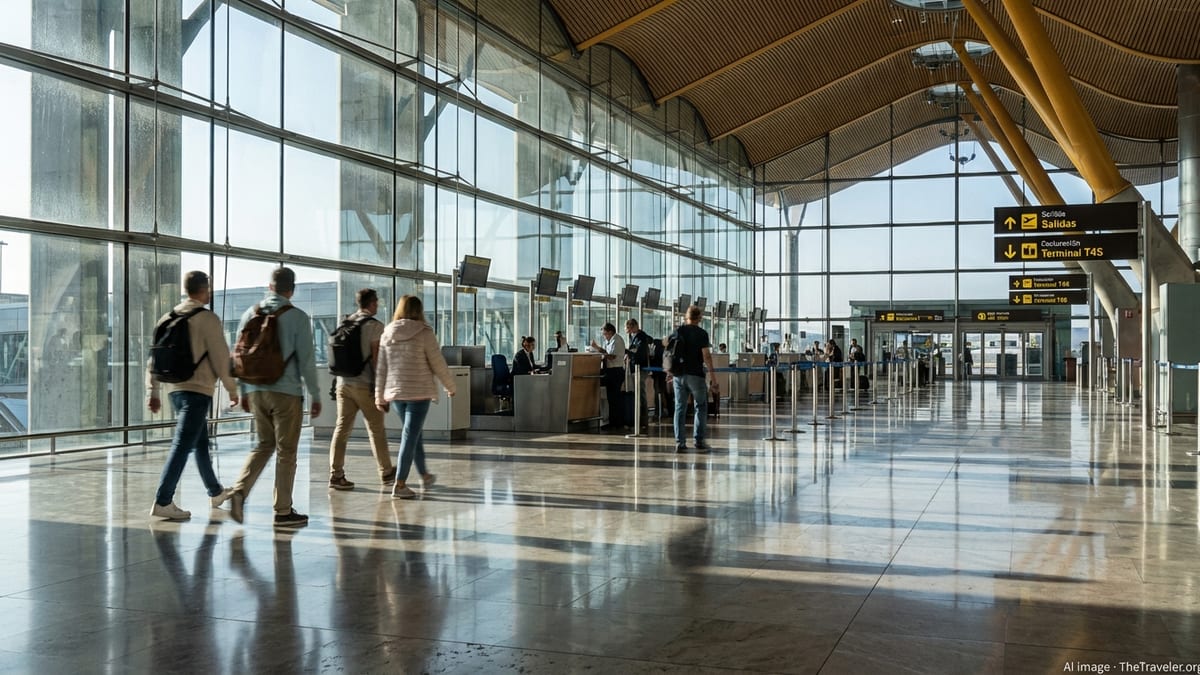
Airlines Challenge AENA’s Plan for Higher Charges
The joint call from the International Air Transport Association and the Spanish Airline Association centers on a proposed 4.9 per cent annual reduction in airport charges across the Spanish network between 2027 and 2031. The associations argue that such a cut, excluding inflation, would correct years of what they describe as excessive returns for AENA while still allowing the operator to move ahead with a sweeping programme of upgrades.
AENA has put forward a contrasting plan that would see charges rise by an average of around 3.8 per cent per year over the same period, equivalent to an increase of roughly 0.43 euro per passenger. The company says this trajectory is necessary to support close to 13 billion euros of investment in capacity, safety, technology and sustainability projects at airports across Spain.
The gap between the two visions highlights an intensifying battle over who should shoulder the costs of rebuilding aviation infrastructure after the pandemic shock and amid renewed growth in passenger demand. For airlines, the prospect of higher charges translates directly into pressure on ticket prices and route economics, especially for price-sensitive leisure traffic that forms the backbone of Spain’s tourism market.
For AENA, however, maintaining robust investment is presented as essential to avoid future bottlenecks that could cap growth, reduce quality of service and ultimately harm the same tourism sector airlines seek to protect. The debate is now moving squarely into the regulatory arena, where Spanish authorities will need to adjudicate before the next five-year Airport Regulation Document, known as DORA III, is finalised.
Overpayments and Traffic Forecasts at the Heart of the Dispute
Central to the airline groups’ case is their contention that AENA has consistently underestimated traffic growth in past regulatory cycles, resulting in higher-than-planned regulated returns. Between 2017 and 2025, excluding the two main pandemic years, actual passenger numbers were on average more than 15 per cent above the forecasts set out in the first two DORA frameworks.
This discrepancy, airline representatives argue, allowed AENA to generate about 1.3 billion euros in excess regulated returns, with airlines and passengers effectively footing the bill through higher charges than would otherwise have been necessary. In 2024 alone, regulated returns reportedly reached just over 10 per cent, around four percentage points above the intended level, which industry figures translate into close to 400 million euros of overpayments in a single year.
These figures underpin IATA and ALA’s argument that there is ample financial headroom to cut fees while maintaining a healthy return on capital for the airport operator. Independent studies commissioned by the airline side project average annual passenger growth closer to 3.6 per cent through the DORA III period, compared with AENA’s more conservative forecast of roughly 1.3 per cent.
On those traffic assumptions, the airline associations insist that a 4.9 per cent annual reduction in charges would still leave AENA in a position to deliver its investment plans and earn a return that they characterise as more than reasonable. The dispute over forecasting is thus more than a technical disagreement; it is a proxy for a deeper question about how much risk and reward should be borne by the operator versus its airline customers.
Billions Earmarked for Capacity, Sustainability and Passenger Experience
While airlines press for cuts, AENA has been keen to underline the scale and scope of its proposed airport investment programme. The company has outlined a plan worth close to 13 billion euros for the 2027 to 2031 period, of which the vast majority would be regulated investment covered by the DORA III framework.
The spending would be spread across Spain’s extensive airport network, which includes major hubs such as Madrid Barajas and Barcelona El Prat as well as dozens of regional gateways that are vital to domestic connectivity and tourism. Projects include terminal expansions, airfield upgrades, digital systems, environmental initiatives and enhanced passenger services, all designed to handle projected traffic of nearly 1.7 billion passengers over the five-year span.
AENA stresses that its guiding philosophy is that every airport counts, arguing that even smaller airports require significant investments in safety, technology and sustainability to remain resilient and attractive to airlines. The operator also highlights tighter quality indicators, ranging from satisfaction and waiting times to environmental performance, which it says are built into its regulatory commitments.
The question now is whether regulators and policymakers will accept AENA’s argument that modest per-passenger increases are a necessary price to pay for a modern, sustainable and high-capacity airport system, or whether they will side with airlines in insisting that efficiency gains and stronger-than-expected demand should be used to ease the cost burden on carriers and travellers.
Tourism Competitiveness and Consumer Impact in the Spotlight
Spain’s dependence on international tourism adds a powerful economic dimension to the debate over airport charges. The country ranks among the world’s most visited destinations, with air connectivity playing a pivotal role in drawing millions of holidaymakers to its beaches, cities and cultural sites each year.
IATA and ALA argue that keeping charges in check is a strategic necessity to preserve Spain’s appeal in a crowded global tourism marketplace. They contend that higher charges ultimately filter through to ticket prices, especially on short and medium haul routes where margins are thin and competition intense, leaving Spain vulnerable to losing traffic to rival destinations in the Mediterranean and beyond.
Airlines also frame the issue as one of consumer fairness, pointing to the period in which airport fees have declined in real terms while airfares have risen due to broader cost pressures. Their position is that correcting what they see as past overcharging by AENA would help stabilise costs and support growth in both inbound tourism and outbound travel for Spanish residents.
Airport and infrastructure advocates counter that robust, well-funded airports are themselves a cornerstone of tourism competitiveness, and that underinvestment today risks service degradation, congestion and delays that could do longer term damage to Spain’s reputation with travellers. As regulators weigh the competing claims, the potential impact on visitor numbers, regional economies and employment will be closely watched by both industry and government.
Regulators Face Complex Balancing Act Under DORA III
The decision on airport charges for 2027 to 2031 will ultimately rest with Spain’s Directorate General of Civil Aviation and the National Commission on Markets and Competition, with the final version of DORA III expected to go to the Council of Ministers later this year. The process follows months of formal consultation between AENA, airlines and user groups.
Regulators must balance several overlapping objectives. They are tasked with ensuring that AENA can maintain safe, efficient and modern infrastructure while promoting fair competition and protecting users from unjustified cost increases. They must also take into account macroeconomic conditions, demand forecasts and the strategic role of air transport in Spain’s broader mobility and climate agendas.
The airlines’ call for a nearly five per cent annual reduction, rather than a smaller one-off adjustment, underscores their desire for long term predictability and structural change in how AENA’s returns are calibrated. From the regulator’s perspective, the challenge is to set a path that preserves incentives for investment and operational efficiency, without granting what critics describe as windfall profits at the expense of airlines and passengers.
Once DORA III is approved, its parameters will be locked in for five years, leaving relatively little room for mid-course correction unless there is a major external shock. That makes the current negotiations particularly consequential for carriers planning fleets and networks, for airports scheduling works and expansions, and for tourism businesses assessing future demand.
European Context and Industry Reactions
Spain’s row over airport fees is unfolding against a broader European backdrop in which airports, airlines and regulators are wrestling with how to finance the green and digital transition of aviation infrastructure. Industry groups on the airport side have already pushed back strongly against IATA’s stance, warning that deep cuts in charges could derail needed projects and undermine financial stability.
Some airport representatives point out that charges at AENA facilities have fallen in real terms over the past decade, even as airlines have seen ticket prices rise on many routes. They argue that this trend shows that reductions in airport fees are not always passed directly on to consumers, and caution against assuming that further cuts would automatically result in cheaper travel.
IATA and allied airline associations reject that reasoning, insisting that competitive market forces in the airline sector, particularly in Spain where low cost carriers play a prominent role, tend to drive savings back into fares, frequency or network expansion. They also highlight the role of balanced regulation in preventing what they see as the accumulation of excessive returns at the expense of downstream sectors.
The outcome in Spain will be watched closely by other European countries that are preparing similar multi year regulatory reviews. A decision to endorse significant cuts could embolden airlines elsewhere to mount parallel campaigns, while a firm endorsement of AENA’s investment and charging model could strengthen the hand of airport operators who argue that higher user fees are unavoidable as Europe’s aviation system modernises.
What It Means for Routes, Fares and Future Travel to Spain
For travellers and tourism businesses, the dispute may feel abstract today, but its consequences are likely to be tangible over the medium term. If regulators ultimately back the airlines’ proposal for a 4.9 per cent annual reduction, carriers could see lower operating costs at Spanish airports just as demand continues to recover and grow.
That combination would create scope for airlines to open new routes, increase frequencies on existing ones or sharpen pricing on competitive leisure markets, potentially broadening access to Spanish destinations. Lower structural costs might be particularly impactful for regional airports that rely heavily on seasonal international services, where small variations in charges can influence route viability.
If, on the other hand, AENA’s proposal for annual increases is largely upheld, airlines will face higher per-passenger charges at a time when fuel, staffing and environmental costs remain elevated. Some carriers may absorb part of the increase, but others could adjust capacity, shift aircraft to markets with lower charges or raise fares on selected routes into and within Spain.
Either way, the decision will help shape the cost and connectivity landscape for travel to Spain through the end of this decade. For a country whose economy is deeply intertwined with aviation and tourism, the stakes of a seemingly technical argument over a few percentage points in airport fees could hardly be higher.