

More news on this day
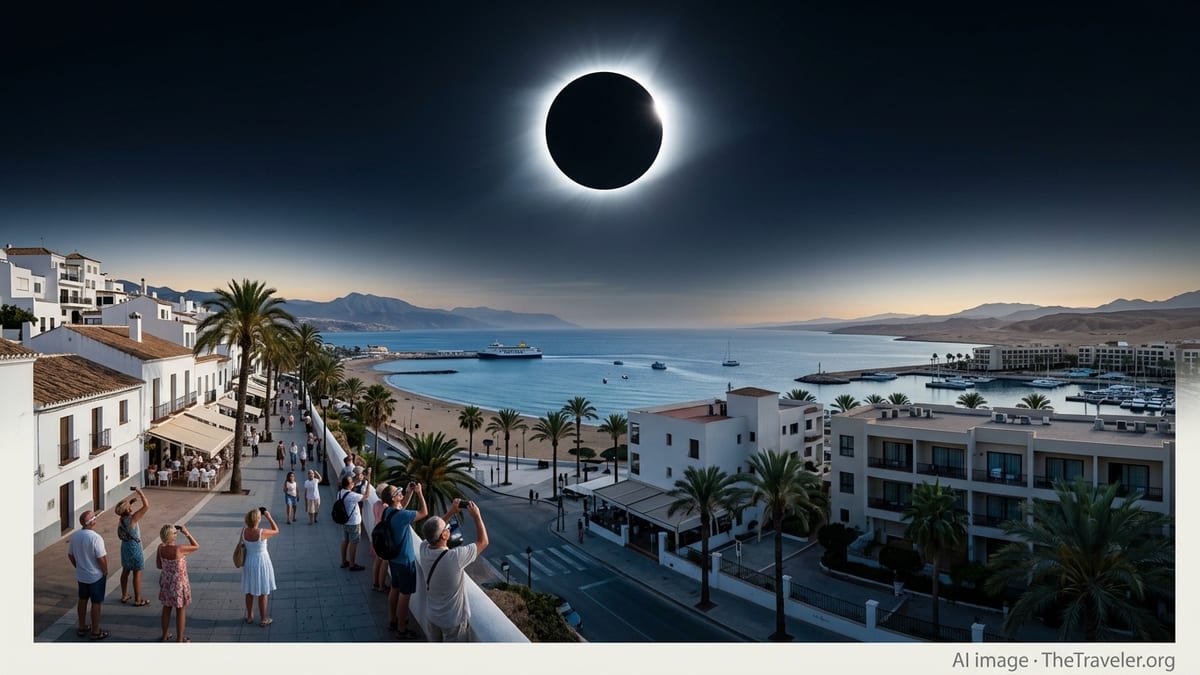
One of the longest and most accessible total solar eclipses of the century will sweep across Spain, Morocco, Egypt and Saudi Arabia on August 2, 2027, and destinations along the path of totality are already positioning themselves for what is widely expected to be a landmark moment for astro-tourism.
Get the latest news straight to your inbox!
A Rare Celestial Event Over a Classic Travel Corridor
According to data from NASA and other scientific bodies, the 2027 total solar eclipse will trace a band of totality roughly 250 kilometers wide across parts of Europe, North Africa and the Middle East, giving Spain, Morocco, Egypt and Saudi Arabia several of the most accessible vantage points for international travelers.
Publicly available eclipse maps indicate that the Moon’s shadow will first make landfall over southern Spain before crossing northern Morocco and heading east across North Africa toward Egypt and the Arabian Peninsula. The maximum duration of totality is forecast at more than six minutes near Luxor in Egypt, a notably long interval in modern eclipse observing.
Travel and astronomy outlets are already describing the event as a once-in-a-generation opportunity, not only because of the eclipse’s duration, but also because it coincides with established tourism infrastructure in Mediterranean beach resorts, historic desert cities and major air hubs. This combination is expected to make 2027 one of the most significant years yet for dedicated eclipse travel.
Spain and Morocco See Early Eclipse Tourism Momentum
Coastal cities in Andalusia are expected to feature prominently in eclipse itineraries. Forecasts from eclipse specialists show the path of totality crossing near popular resort areas on the Costa del Sol, including stretches close to Málaga, Marbella and Estepona, where clear summer skies and existing hotel capacity are key selling points.
Reports from travel forums and tour operators suggest that some package holidays and cruise departures tied to the eclipse week in late July and early August 2027 are already on sale, with certain itineraries adjusted to ensure time within the path of totality. Industry commentary indicates that southern Spain could see an unusual blend of traditional summer holidaymakers and dedicated eclipse chasers converging on the same coastline.
Across the Strait of Gibraltar, northern Morocco is emerging as another strategic viewing zone. The path of totality is projected to cross parts of the country’s northern belt, offering potential viewing bases around cities that are already popular with European visitors. Tourism analyses highlight Morocco’s strong post-pandemic growth, and the 2027 eclipse is increasingly cited as an additional catalyst for high-season demand in the country’s northern regions.
Egypt Positions Itself as a Prime Totality Destination
Egypt sits near the heart of the 2027 eclipse path, and astronomical forecasts show some of the longest durations of totality occurring along the Nile Valley near Luxor and further east across the desert plateau. Travel publications are already promoting the prospect of watching the midday Sun vanish above ancient temples and archaeological sites, framing the event as a dramatic fusion of science and heritage tourism.
Recent tourism statistics show that Egypt has rebounded strongly in international arrivals, with record visitor numbers reported in 2024 and 2025. Sector analysts note that this recovery has encouraged renewed investment in hotel upgrades, river cruising and airport capacity, particularly in classic cultural destinations such as Cairo, Luxor and Aswan.
Specialist eclipse travel companies are beginning to highlight Egypt in early promotional material, often combining viewing arrangements with multi-day cultural itineraries along the Nile. Travel industry commentary suggests that demand for rooms in key viewing locations could tighten well before 2027, particularly around riverside properties and desert lodges that offer clear horizons and minimal light pollution.
Saudi Arabia Taps Astro-Tourism in a Rapidly Growing Market
Further east, the eclipse track continues across southwest Saudi Arabia, including areas near Jeddah and inland regions where the midday sky is expected to darken for several minutes. Maps produced by astronomy organizations show that the Kingdom will have multiple vantage points within the path of totality, some of them a relatively short distance from major Red Sea gateways.
In parallel, Saudi Arabia has reported some of the fastest tourism growth rates in the world since 2019, supported by large-scale investment in new resorts, airports and cultural attractions. International organizations tracking global tourism flows point to the Kingdom’s strong rise in both visitor numbers and spending, setting the stage for hosting large-scale niche travel events such as a total solar eclipse.
Emerging Red Sea destinations and inland cultural sites are already part of broader national tourism strategies, and analysts suggest that the 2027 eclipse will offer an opportunity to showcase these new developments to a global audience. Market observers expect a mix of regional visitors and long-haul eclipse enthusiasts to look to Saudi Arabia for clear desert skies and modern infrastructure.
Surging Demand Tests Capacity Across the Region
International tourism has largely recovered to, and in some regions surpassed, pre-pandemic levels, with UN Tourism data showing robust growth in both North Africa and the Middle East. This backdrop is shaping expectations that the 2027 eclipse will arrive at a time of strong underlying travel demand, rather than during a downturn.
Industry reports and traveler discussions already point to rising interest in eclipse-focused cruises, escorted tours and independent itineraries that combine several countries along the path of totality. Observers note that cruise lines have begun adjusting 2027 Mediterranean routes to maximize eclipse viewing at sea, while tour operators are mapping overland journeys that link Spain, Morocco and Egypt in a single trip.
Travel planners caution that peak-season heat, limited road capacity in some rural areas and high demand for accommodation near prime viewing sites could all pose logistical challenges. As a result, many advisory pieces recommend that prospective eclipse travelers secure transport and lodging well in advance, and build flexibility into their plans to respond to local weather forecasts in late July and early August 2027.
For Spain, Morocco, Egypt and Saudi Arabia, the eclipse is increasingly framed as both an astronomical milestone and a major tourism test. How destinations manage crowds, infrastructure and sustainability during a single afternoon of darkness may influence how travelers perceive this corridor of the Mediterranean and Middle East for many years to come.