

More news on this day
Spain is heading into Easter 2025 with notably strong tourism bookings, as travelers wary of geopolitical tensions in other regions redirect their holiday plans toward the country’s coastal resorts and island destinations.
Get the latest news straight to your inbox!
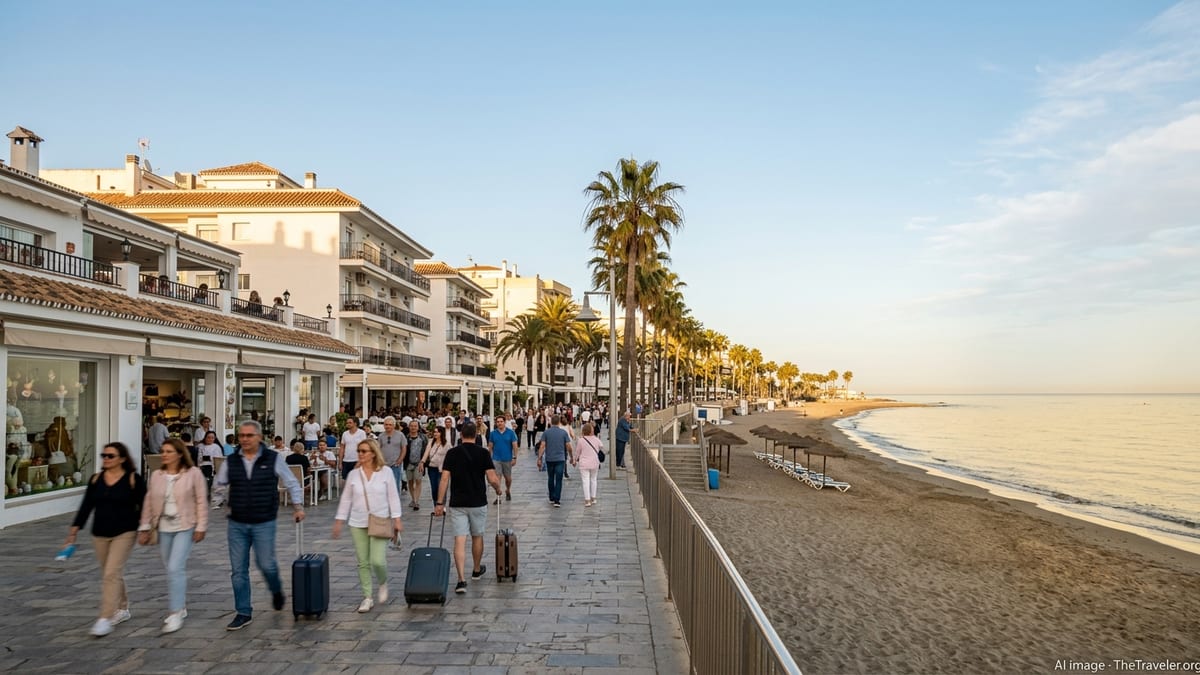
Bookings Rise Sharply for Easter Travel Period
Industry data and recent coverage indicate that Spanish travel agencies are recording a significant increase in reservations for the Easter 2025 holiday window compared with last year. Surveys of travel agencies reported by Spanish media point to around 15 percent more bookings than in Easter 2024, reflecting how the later April holiday and a favorable calendar are encouraging longer trips and full-week stays.
The improvement is evident in both domestic and international segments. Reports highlight that Spanish residents are showing a strong preference for trips within the country, particularly to traditional sun-and-sea destinations, while visitor flows from key European markets remain solid. This pattern reinforces Spain’s status as one of Europe’s most resilient tourism players, even in a more uncertain global environment.
Travel platforms tracking global demand describe Spain among the standout Southern European markets for the Easter period, alongside Portugal and Italy. Higher search volumes for accommodation and flights into Spanish airports ahead of Holy Week, combined with rising average daily room rates, underline how demand is tightening in many popular resort areas.
Geopolitical Tensions Redirect Long-Haul Demand
Published coverage from industry associations and tour operators points to geopolitics as a significant driver behind the shift in Easter travel patterns. Agencies in Spain report softer interest in trips to certain long-haul destinations, including the United States and parts of the Middle East, amid ongoing global tensions and higher perceived risks.
This cooling in demand for some intercontinental routes appears to be benefiting nearer and more familiar destinations, especially Southern Europe. Spain, with its extensive air links, established resort infrastructure and reputation for political stability, is capturing a share of travelers who might previously have opted for destinations in North Africa, the Eastern Mediterranean or transatlantic city breaks.
Analysts note that the re-routing of demand toward Spain is part of a broader recalibration in global tourism. While long-haul travel has recovered significantly since the pandemic, European travelers in particular are showing a renewed preference for destinations perceived as secure, accessible and well equipped with healthcare and transport services. For many, Spain fits that profile, especially during a family-oriented holiday period such as Easter.
Coastal Hotspots and Islands Lead Occupancy Gains
On the ground, coastal regions and island destinations are emerging as the main winners from the strong Easter trend. Forecasts from hotel associations on the Costa del Sol suggest occupancy around or above the upper 70 percent range across the full Holy Week period, with peak nights climbing into the 80 percent bracket. These levels are higher than in 2024 and approach those seen in the strong pre-pandemic seasons.
In Malaga city and along the wider Costa del Sol, recent reporting points to particularly intense demand for centrally located hotels and seafront properties that allow visitors to combine Holy Week processions with beach time. Local coverage following last year’s Easter period already described hotel performance as “spectacular,” with occupancy in some boutique properties rising from around three-quarters at the start of the week to near full capacity on the main holiday nights, and the 2025 outlook appears even firmer.
The Balearic and Canary Islands are also benefiting. Company disclosures from major Spanish hotel groups highlight double-digit improvements in occupancy at resort properties in both archipelagos in early 2025 compared with the previous year, alongside higher average room rates. Tourism statistics for the Canary Islands show consistently high occupancy across different categories of accommodation, while recent rural tourism data from the archipelago indicate that even non-traditional segments are approaching or surpassing 80 percent on key festive dates.
With airlines adding capacity into Palma de Mallorca, Tenerife, Gran Canaria and other gateways, advance indicators suggest that island airports will handle substantially more Easter traffic than in 2024. This aligns with broader trends seen through 2025, where Spain repeatedly set new highs for visitor numbers during shoulder seasons such as spring and autumn.
Domestic Travelers Favor Safer, Shorter-Haul Options
Another defining feature of this Easter season is the behavior of Spanish travelers themselves. According to agency surveys cited in local media, residents are increasingly opting against long-haul breaks, instead choosing the Balearic Islands, Canary Islands and Mediterranean coast as their preferred Easter destinations. The reported double-digit rise in bookings has been coupled with a noticeable decline in demand for trips to the United States and other far-flung markets.
Several factors appear to be shaping these decisions. Alongside concerns about geopolitical risks in certain regions, cost considerations are playing a role, with airfares to some long-haul destinations remaining elevated. By contrast, competition on routes within Spain and across short-haul European networks has kept prices more contained, especially for travelers booking early.
The timing of Easter in 2025 is also influential. Falling fully in April, the holiday offers milder and more predictable weather across much of Spain than in years when Holy Week takes place in March. This has encouraged families to commit to week-long stays in coastal resorts, whereas earlier Easters can sometimes limit plans to shorter city breaks.
Opportunities and Pressures for Spain’s Tourism Model
The strong Easter outlook reinforces Spain’s role as a default safe harbor for European travelers when uncertainty rises elsewhere. However, it also brings renewed attention to debates within the country about how to manage high visitor volumes, especially in destinations that have experienced overtourism pressures. Recent seasons have seen a growing number of protests in Spanish cities and islands, with residents expressing concern about housing affordability, congestion and the strain on local services.
Authorities at national and regional levels are responding with a mix of regulatory measures and strategic planning aimed at spreading demand more evenly across the year and territory. Higher demand in shoulder periods such as Easter fits with that objective, since it can alleviate the intensity of peak summer pressure while supporting stable employment and investment in tourism regions.
Industry analysts suggest that the redirection of demand away from some conflict-affected areas gives Spain a window of opportunity to consolidate a more sustainable tourism model. Investments in transport, environmental protection and community-focused tourism initiatives are being framed as essential to maintaining Spain’s attractiveness at a time when travelers are increasingly sensitive to both safety and social impact.
For now, all signs point to a busy Easter 2025 across Spain’s main holiday regions, with hotel operators, airlines and travel agencies preparing for one of the strongest spring seasons in recent years as global tensions subtly reshape where and how people choose to travel.