

More news on this day
Spain has consolidated its status as Europe’s tourism powerhouse, topping the continent with more than 513 million overnight stays in 2025 and outpacing rivals such as Poland, Italy, France, the United Kingdom, Germany and Malta, while also posting some of the strongest tourism revenue gains in the European Union.
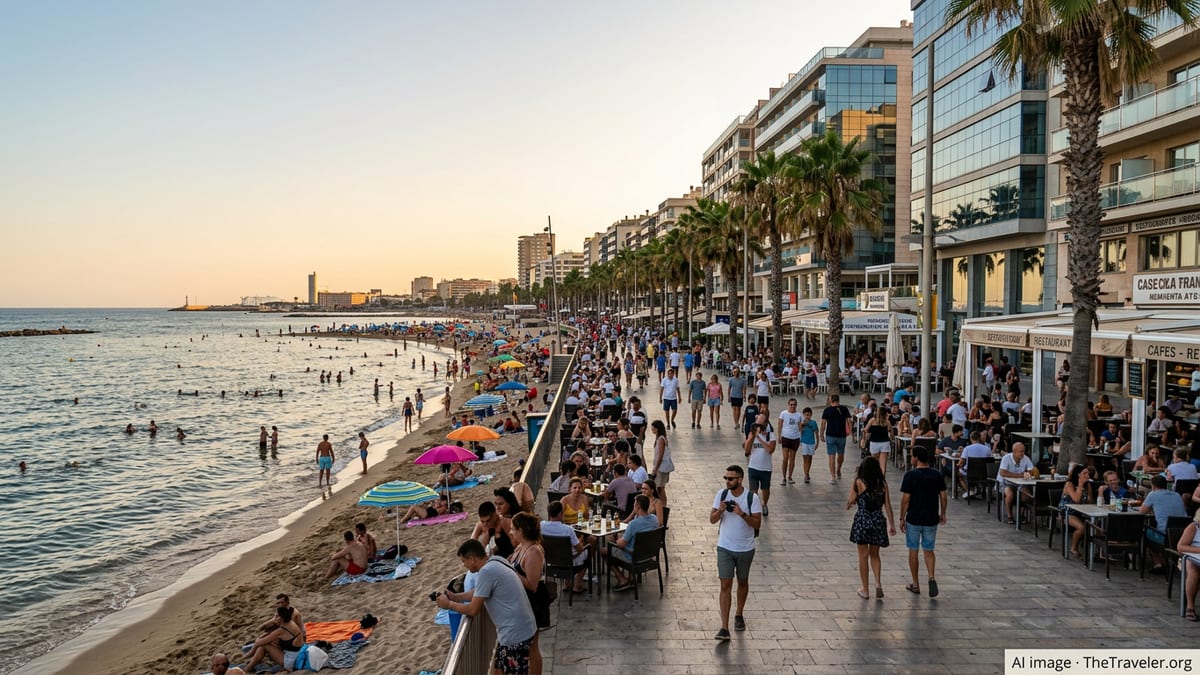
Eurostat Confirms Spain at the Top of Europe’s Tourism League
Fresh Eurostat estimates for 2025 show Spain leading all EU countries with around 513.6 million nights spent in tourist accommodation, a new national and European record that underscores the country’s enduring appeal to both domestic and international visitors. The figure comfortably places Spain ahead of Italy, France and Germany, which together with Spain account for well over half of all tourism nights recorded across the bloc.
The milestone comes in a year when total nights spent in tourist accommodation across the European Union climbed to about 3.08 billion, itself a historic high. Within that record, Spain alone represents more than one in every six overnight stays registered in the EU, confirming the country’s structural advantage in tourism capacity, connectivity and brand recognition.
Spain’s lead is not confined to comparisons with large traditional destinations. Data from recent EU and industry reports indicate that Spain has also pulled away from fast-growing markets such as Poland and Malta, which posted some of the sharpest percentage increases in tourism nights in 2024 and 2025 but still remain far behind Spain in absolute volume.
From Volume to Value: Tourism Revenue Surges Ahead of Peers
Beyond raw visitor numbers and overnight stays, Spain is increasingly distinguishing itself on the revenue front. Official statistics from Madrid show that foreign visitors’ spending has risen faster than arrivals, lifting total tourism receipts to new peaks and improving the sector’s contribution to national income. Tourism now accounts for roughly one in eight euros of Spain’s gross domestic product, an unusually high share among large European economies.
Recent figures from Spain’s National Statistics Institute and the Tourism Ministry indicate that inbound tourism revenue has been growing at a healthy mid to high single-digit pace, consistently outstripping the wider euro area. That trajectory has allowed Spain to widen its tourism earnings gap with several competitors, including Poland and Malta, which rely heavily on rapid volume growth but generate lower total receipts.
Spain’s performance also stands out when set against Western European peers. While France and the United Kingdom remain global leaders in international tourism receipts, Spain is closing the gap thanks to successive years of record arrivals and longer average stays. Analysts say that higher per-visitor spending, as tourists opt for upgraded accommodation, gastronomy and cultural experiences, is supporting revenue growth that now rivals or surpasses other major continental destinations on a per capita basis.
Competitive Edge Over Poland, Italy, France, Germany and Malta
The latest European data illustrate how decisively Spain has pulled ahead of its regional competitors in overnight stays. Italy and France each recorded fewer than 500 million tourism nights in 2025, while Germany remained just above 440 million, leaving Spain alone above the 500 million threshold. This numerical lead gives Spanish tourism operators and policymakers significant scale advantages in areas such as air connectivity, hotel investment and marketing power.
By contrast, countries like Poland and Malta, while highlighted for double-digit annual growth in some recent Eurostat releases, still account for only a small fraction of the EU’s overall overnight stays. Their rapid expansion underscores a broader European tourism boom, but the absolute numbers remain far below Spain’s, reinforcing its benchmark status within the bloc.
Industry observers note that Spain’s diversified tourism offer is a major factor behind its dominance. Mediterranean beaches, cultural capitals such as Barcelona, Madrid and Seville, year-round city breaks, rural tourism and increasingly popular nature and gastronomy routes allow the country to capture visitors across multiple seasons and price points. This mix contrasts with more seasonal or niche-focused markets elsewhere in Europe, helping explain why Spain consistently outperforms even when external conditions are volatile.
Strategic Shift Toward Higher-Quality, More Sustainable Tourism
Spanish authorities have spent recent years trying to shift from a model based purely on volume to one that prioritises quality, higher spending and sustainability. The national tourism strategy running to 2030 explicitly targets longer stays, greater regional dispersion of visitors and a stronger focus on cultural, rural and nature-based tourism, in an effort to relieve pressure on crowded coastal hotspots.
Official communications from the Tourism Ministry emphasise that recent revenue gains, combined with modest but steady increases in overnight stays, suggest this reorientation is beginning to bear fruit. Visitors are spending more per day and choosing higher-value experiences, from food and wine tourism in regions like La Rioja and Andalusia to heritage routes in Castile and León.
Spain’s policy focus contrasts with some Central and Eastern European markets, including Poland, where recent growth in overnight stays has been driven largely by expanding low-cost air links and price competitiveness. While these markets are quickly increasing their tourism footprint, Spain’s strategy aims to consolidate its European leadership by building a more resilient, higher-yield sector less exposed to short-term price swings and overcrowding.
Economic Ripple Effects Across Regions and Cities
The surge in overnight stays and tourism revenue is reverberating across Spain’s regions. Traditional coastal destinations in the Balearic and Canary Islands continue to attract millions of visitors annually, but large inland cities are increasingly important growth engines. Madrid and Barcelona, in particular, have reported record hotel occupancy and overnight stays, driven by a mix of international leisure travel, conferences, cultural events and city breaks.
Secondary cities and rural areas are also benefiting. Eurostat’s breakdown of regional tourism nights, alongside Spain’s own accommodation statistics, show strong momentum in regions such as Andalusia, Valencia and parts of northern Spain, where investments in transport links and boutique accommodation have broadened the tourism map beyond classic resorts.
Economists point out that this momentum is helping Spain outperform many EU partners in overall economic growth, jobs and services exports. Tourism supports a wide ecosystem of employment, from hospitality and retail to transport and cultural industries, and the latest record in overnight stays suggests that this engine will remain central to Spain’s economic narrative even as it seeks to diversify into higher-value manufacturing and technology.