

More news on this day
Spain has closed its airspace to United States military aircraft involved in ongoing operations against Iran, widening a diplomatic rift with Washington and forcing planners to redraw key routes between North America, Europe and the Middle East.
Get the latest news straight to your inbox!
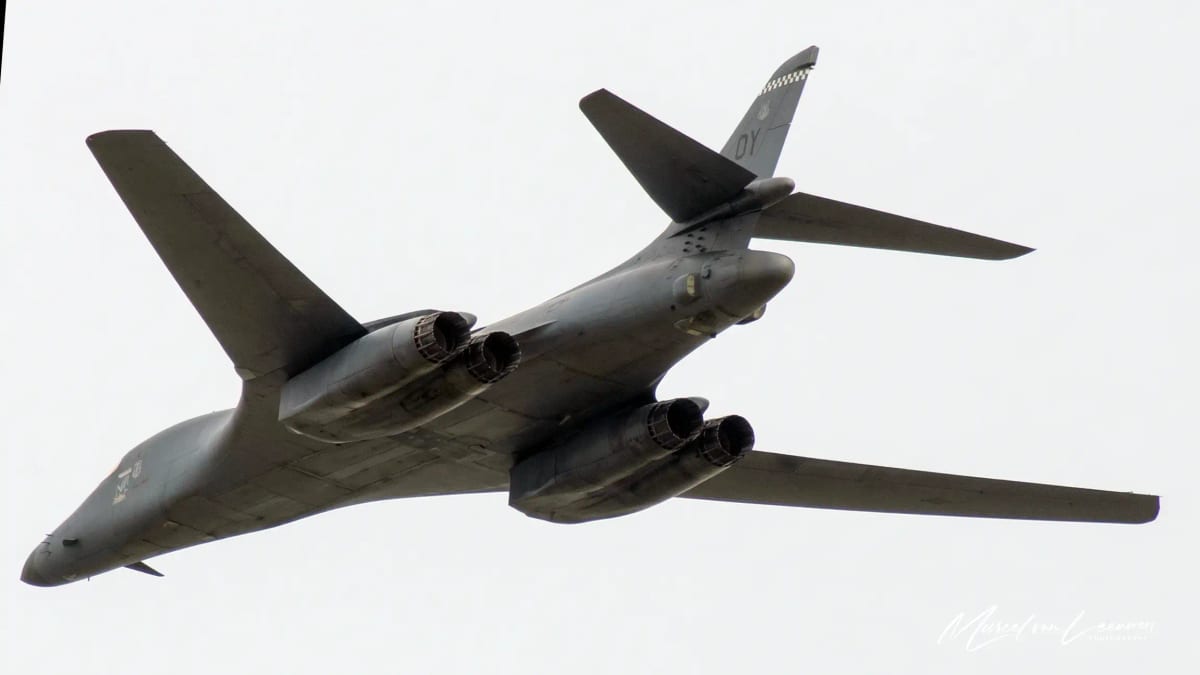
Image by Aviation News
From Base Restrictions to Full Airspace Ban
The airspace decision announced on March 30 follows earlier moves by Madrid to prevent U.S. forces from using the jointly operated Rota and Morón bases in southern Spain for offensive missions connected to the Iran war. Publicly available information shows that U.S. refueling and support aircraft began departing those facilities in early March, after Spain rejected requests to employ them in the campaign.
Reports from international and Spanish outlets indicate that the new measure goes a step further by denying overflight permissions to U.S. military aircraft taking part in the conflict, even when those planes are operating from bases in third countries such as the United Kingdom, France or Germany. Spanish media describe the restriction as covering bombers, refueling tankers and other aircraft directly linked to operations against Iran.
The decision aligns with the position taken by Prime Minister Pedro Sánchez’s government since the first U.S. and Israeli strikes on Iranian targets in late February. Publicly available statements from Madrid have characterized the campaign as contrary to international law and have stressed Spain’s intention not to contribute military assets or infrastructure to the conflict.
Coverage in European and North American media suggests that the announcement is the most far‑reaching step by any European Union member to distance itself militarily from the U.S.-led effort, underlining the depth of disagreement inside the Western alliance over how to respond to Iran.
Operational Impact on U.S. Military Flight Routes
The ban affects a critical geographic gateway for flights moving between U.S. bases and the Middle East. Spain’s position on the Iberian Peninsula gives its airspace particular importance for long-range missions headed toward the eastern Mediterranean, the Gulf region and beyond. With Spanish skies now closed to U.S. aircraft tied to the Iran war, flight planners are adjusting routes to avoid the country’s territory and territorial waters.
Reports in Spanish newspapers indicate that U.S. bombers and aerial refueling aircraft have been compelled to adopt more northerly or southerly corridors, adding distance and complexity to missions already constrained by regional airspace warnings over Iran and neighboring states. Aviation tracking data cited in recent coverage points to greater use of airspace over central Europe and parts of the North Atlantic as alternative paths.
Analysts quoted in European press accounts note that longer flight times can affect tanker planning, crew duty limits and maintenance schedules, even if they do not fundamentally alter the U.S. capability to conduct operations. The practical outcome, according to these assessments, is not an immediate halt to sorties against Iran but an increase in logistical friction and cost.
Civilian air traffic is also adjusting to a shifting map created by the broader conflict. Earlier advisories from European aviation authorities had already urged commercial airlines to avoid Iranian skies because of air defense risks. Spain’s latest move adds another layer of complexity for carriers and cargo operators that design routes to share or steer clear of corridors used by military traffic.
Diplomatic Fallout Between Madrid and Washington
The airspace closure comes against the backdrop of a steadily escalating diplomatic dispute between Spain and the United States over the Iran war. Publicly available information on bilateral ties shows that Washington has criticized Madrid’s refusal to provide access to Spanish bases, while Spanish officials have framed their stance as a defense of international law and national sovereignty.
U.S. political commentary reported in international media has included threats of economic retaliation, including references to possible trade measures directed at Spain over its non-cooperation. At the same time, White House responses highlighted in press coverage have played down the operational importance of Spanish facilities and airspace, portraying the decision as politically symbolic rather than militarily decisive.
Inside Spain, the government’s approach has become a major point of domestic debate. National outlets report broad support for keeping Spanish forces out of direct involvement in the conflict, particularly among left-leaning voters, but also note concerns from opposition parties about the potential economic and diplomatic costs of an extended clash with a key ally.
Observers in European policy circles quoted across regional media suggest that Madrid’s firm line could complicate coordination within NATO and the European Union, especially if other members continue to support or quietly facilitate aspects of the U.S. campaign while Spain moves in the opposite direction.
Implications for European Security and Travel
Spain’s decision resonates beyond the immediate operational impact on U.S. aircraft, feeding into a wider reassessment of European roles in conflicts involving Iran and the broader Middle East. Analysts writing in European and North American outlets point out that Madrid is positioning itself as a leading voice for restraint at a time when several European governments have emphasized solidarity with Washington and Tel Aviv.
The move may encourage other states to clarify their own overflight and basing policies. Switzerland, for example, has recently been reported as weighing requests for U.S. military overflights in light of its neutrality laws, while other European countries have tightened advisories on the use of Iranian and neighboring airspace for civilian traffic. Spain’s hard line could add momentum to calls for a more unified European framework on how military flights linked to regional wars are handled.
For travelers, the most visible effects are likely to be indirect. Commercial airlines had already begun rerouting long-haul services to avoid Iranian skies because of the risk of miscalculation between civilian flights and air defense systems. Spain’s closure of its airspace to certain U.S. military aircraft adds another variable to route planning, but early indications in industry reporting suggest limited disruption to passenger schedules, with most changes absorbed through adjustments in flight paths and timings.
Tourism operators monitoring developments note that Spain remains open to civilian traffic and continues to promote its destinations as safe and accessible. However, industry figures cited in local business coverage acknowledge that prolonged geopolitical tension in the Middle East can influence traveler sentiment, booking patterns and fuel costs, all of which ultimately shape the broader travel environment across Europe.
A Test Case for Future Conflict-Related Overflight Rules
The Spanish airspace ban is emerging as a test case for how medium-sized powers respond when allied military operations clash with domestic political priorities and legal interpretations. Commentators across Spanish and international media describe Madrid’s stance as an assertion of greater control over how national territory is used during conflicts that do not involve a direct attack on the country or its treaty allies.
Legal experts featured in public debate point to long-running arguments over whether support functions such as refueling, basing and overflight constitute participation in hostilities under international law. Spain’s decision to restrict not only bases but also the skies above its territory suggests a more expansive reading of responsibility, one that could influence future policy discussions in other democracies.
For the United States, the episode underscores the importance of diversified access to infrastructure and airspace in Europe and beyond. Military analysts writing in specialist outlets have long noted that reliance on a limited number of strategic hubs can create vulnerabilities when political circumstances shift. The current rerouting around Spain provides a concrete example of how those risks materialize in real time.
As the Iran conflict continues, travel watchers and security analysts alike are tracking whether additional countries follow Spain’s lead, whether Madrid and Washington find a way to deescalate their dispute and how the evolving patchwork of airspace restrictions reshapes both military operations and global mobility.