

More news on this day
Spain has vaulted into the top tier of global tourist taxation after Catalonia approved steep hikes on overnight stays, positioning Barcelona alongside or above European hotspots such as Amsterdam and Rome, and reinforcing a wider trend of using visitor levies to curb overtourism and channel money into housing and sustainability projects.
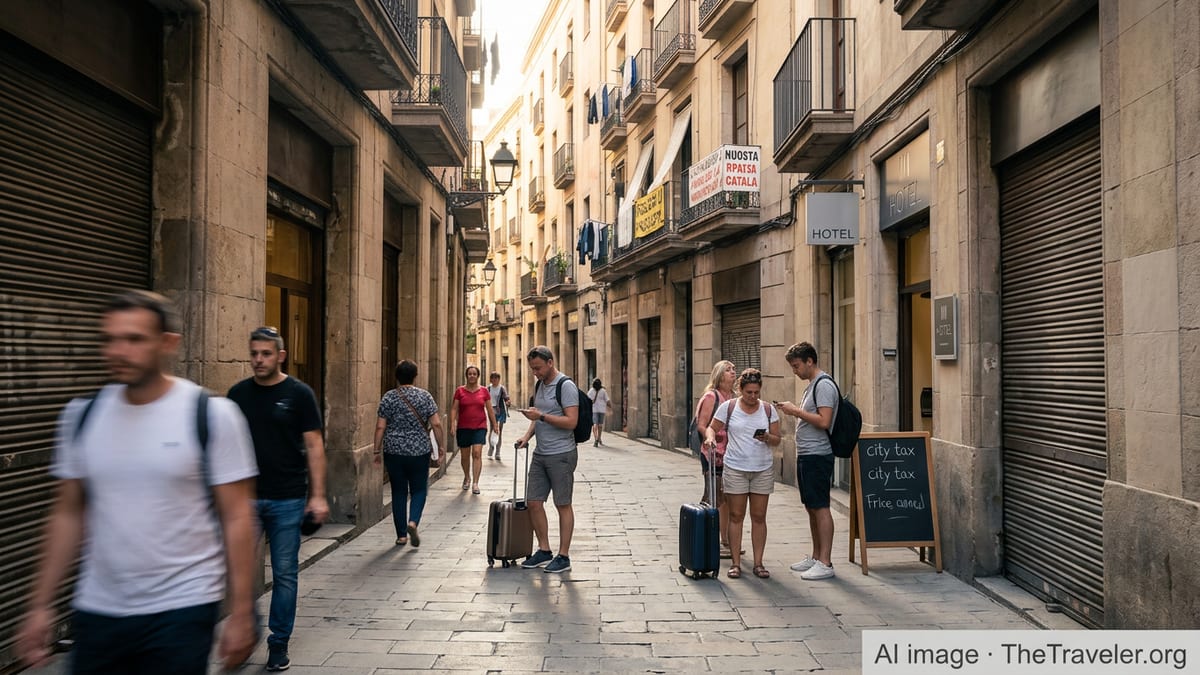
Barcelona’s Tourist Bill Rises Toward European Peak
The regional parliament in Catalonia has endorsed a sharp increase in tourist taxes that will begin taking effect from April 2026, doubling the levy and pushing nightly charges in Barcelona toward some of the highest levels in Europe. Depending on the combination of regional tax and municipal surcharge, visitors staying in certain centrally located hotels, licensed apartments and holiday rentals could see nightly add-ons approach, and in some cases exceed, double-digit euro amounts per person.
Barcelona already applied a layered system in which guests pay both a regional tax and a city surcharge, with the municipal portion having been raised in stages in recent years. Under the latest reforms, authorities have cleared the way for substantial further increases, with high-end accommodation and tourist apartments bearing the brunt of the jump. Local officials frame the move as a necessary correction after years in which visitor numbers grew faster than the city’s capacity to absorb them.
The Catalan government and Barcelona City Council argue that the rise is calibrated to target short-stay, higher-spending visitors while attempting to shield residents from having to shoulder the full cost of tourism-related pressures on infrastructure. Industry groups, however, warn that the cumulative effect on hotel and rental prices could alter booking patterns, especially among budget-conscious city-break travelers weighing Barcelona against rival destinations.
Housing, Sustainability And Anti‑Overtourism Drive The Policy
Officials in Catalonia have explicitly linked the tourist tax overhaul to the city’s housing crisis and growing resident anger over overtourism. A defined share of the new revenue is earmarked for affordable-housing schemes, with the remainder expected to fund transport, street cleaning, security and urban-renewal projects in neighborhoods that host the bulk of visitors. City leaders say tourists should contribute more directly to the public services and housing pressures their presence helps intensify.
The higher charges also complement a broader strategy to rebalance the visitor economy, which includes tighter licensing rules for short-term rentals and a politically sensitive timeline to phase out tourist apartments by the end of the decade. By making short-stay tourism more expensive, policymakers hope to ease demand in the most saturated districts, reduce speculative pressure on housing stock and encourage longer stays that generate higher per-visitor economic value.
The tax debate has unfolded against the backdrop of high-profile protests in Barcelona and other Spanish destinations, where demonstrators have called for limits on cruise arrivals and tighter controls on holiday rentals. Authorities insist the new levies are not an attempt to turn tourists away, but rather to secure what they describe as a fairer contribution from visitors to the cities they enjoy.
How Spain Now Compares With Italy, Greece, Japan And The Netherlands
Spain’s new measures place Barcelona in direct comparison with other high-profile destinations that have leaned on tourist taxes to manage visitor flows. In Italy, Rome applies a long-standing “contributo di soggiorno” with rates that climb for higher-category hotels and are capped at a fixed number of nights, adding a noticeable but still more limited supplement to central accommodation bills. Venice has gone further by piloting a separate day-tripper fee on certain dates for visitors who do not stay overnight.
Across the Mediterranean, Greece has also introduced a revamped climate-resilience levy on accommodation, with higher rates in peak season and at upscale properties in islands such as Santorini and Mykonos. The measure is billed as a way to fund responses to extreme weather events and infrastructure upgrades in destinations struggling with water shortages and congestion at the height of summer.
Further afield, Japan’s nationwide “sayonara tax” on departing passengers and Amsterdam’s long-established per-night city levy and cruise visitor charges were until recently often cited as benchmarks for aggressive tourist taxation. With Catalonia’s overhaul, Spain’s flagship city now moves into the same conversation, and for some categories of stay, begins to edge beyond those peers in absolute nightly cost.
Tourism economists point out that headline nightly figures tell only part of the story, since caps on the number of taxed nights and differences in national tax systems complicate direct comparisons. Even so, the direction is clear: Spain, historically seen as a relatively low-cost sun and city-break destination, is now actively using fiscal tools to reshape its visitor profile.
Balancing Tourism Revenue With Resident Backlash
The timing of Spain’s shift reflects a wider European recalibration as cities wrestle with record visitor numbers after the post-pandemic travel rebound. Barcelona has repeatedly ranked among the continent’s most visited urban destinations, and officials say the current model has left local residents bearing the environmental and social costs while landlords redirect homes into more lucrative short-term rentals.
In public statements, Catalan and municipal leaders have stressed that tourism will remain a pillar of the regional economy, but one that must be “rebalanced” to preserve liveability. Higher tourist taxes are being presented as part of that balancing act, alongside stricter enforcement against unlicensed rentals and discussions over cruise-ship limits in the city’s port.
Business associations and hotel groups are divided. Some argue that clearer, predictable taxation earmarked for visible urban improvements could help maintain Barcelona’s appeal, while others fear that the city’s rising cost base will drive visitors toward alternative European hubs, including mid-sized Spanish cities that currently levy lower or no tourist taxes. For now, bookings have remained robust, but analysts say the true impact will only become evident once the new rates have been in place for several peak seasons.
What Travelers Should Expect In Barcelona And Beyond
For visitors planning trips to Spain from 2026 onward, the practical impact of the reforms will be most visible on accommodation bills in Barcelona and other Catalan hotspots. Travelers booking hotels, licensed apartments or holiday rentals can expect to see separate line items for the regional tax and any municipal surcharge, often collected on arrival or at check-out and charged per person, per night.
Travel advisers recommend factoring these charges into overall budgets, particularly for family groups or longer city stays where the cumulative cost can be substantial. Prospective visitors are also being urged to pay close attention to whether a property is fully licensed, as authorities continue to step up enforcement against illegal rentals that sidestep both regulation and local taxation.
Elsewhere in Europe and Asia, similar moves in Rome, Amsterdam and Kyoto underscore a growing consensus that mass tourism must be more tightly managed and more visibly contribute to the cities it affects. With Spain now at the forefront of that shift, the debate over how far tourist taxes can go without eroding a destination’s allure is likely to intensify across the global travel industry.