

More news on this day
Spain is experiencing an accelerating tourism boom, with record-breaking international arrivals increasingly fueled by expanded nonstop routes from the United States into Madrid and Barcelona, according to recent traffic and tourism data.
Get the latest news straight to your inbox!
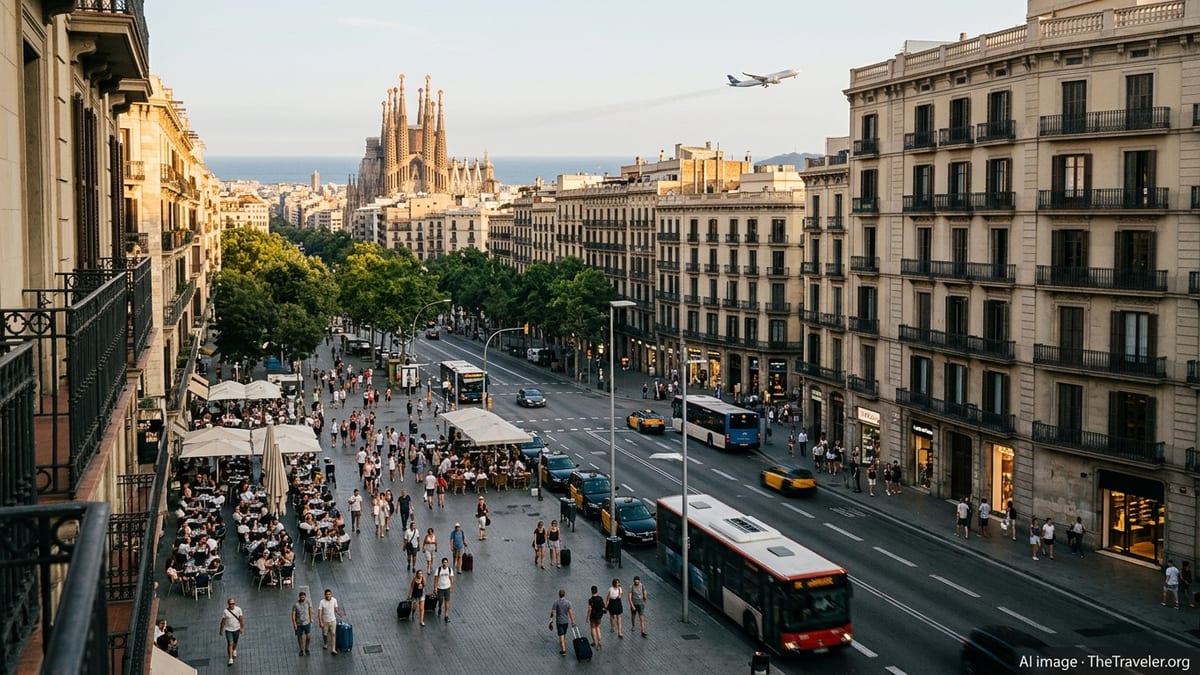
Record Visitor Highs Cement Spain’s Tourism Momentum
Spain has consolidated its position as one of the world’s most visited destinations, with international arrivals reaching fresh records in both 2024 and 2025, according to data from Spain’s National Statistics Institute and the Ministry of Industry and Tourism. Provisional figures indicate that Spain welcomed around 93.8 million international visitors in 2024, an all-time high, followed by roughly 97 million in 2025, underscoring a strong and sustained recovery beyond pre-pandemic levels.
Published coverage of official statistics shows that the tourism upswing has been broad-based, spanning traditional European source markets as well as long-haul segments. However, non-European markets have grown in strategic importance, with observers highlighting the United States as one of the standout contributors to higher visitor spending and longer stays.
Tourism now represents a central pillar of Spain’s economic performance, with reports indicating that foreign visitor spending has risen faster than arrivals. Media analyses of tourism accounts estimate that revenue from international tourists climbed well into the range of 130 billion euros in 2025, helping to support one of the strongest growth rates among major advanced economies.
At the same time, the rapid expansion of tourism has renewed debate inside Spain about visitor pressure on major cities and resort areas. National and regional authorities have pointed to the need to balance record volumes with measures that protect housing affordability, local services, and environmental sustainability in destinations such as Barcelona, Madrid, the Balearic Islands and the Canary Islands.
Madrid and Barcelona Airports Set New Traffic Benchmarks
The aviation gateway role of Madrid and Barcelona has expanded sharply alongside the tourism boom. Airport operator data compiled for 2025 indicate that Adolfo Suárez Madrid Barajas handled more than 68 million passengers, while Josep Tarradellas Barcelona El Prat surpassed 57 million, both marking new records and confirming their status as the two busiest airports in Spain.
According to passenger statistics published by Aena and summarized by industry outlets, 2024 had already set a high bar, with Spain’s airport network processing more than 369 million passengers. Subsequent figures for 2025 and early 2026 show further growth, even amid capacity adjustments by some low-cost carriers, reflecting strong demand on both European and long-haul routes.
Barcelona’s airport in particular has seen sustained summer peaks, with local media reporting record monthly passenger totals that have revived long-running discussions about terminal and runway expansion. Madrid, meanwhile, continues to function as Iberia’s primary long-haul hub, reinforcing its role as a key connecting point for transatlantic and Latin American traffic.
Industry analysts note that the concentration of long-haul demand through these two airports has knock-on effects for hotel occupancy, urban mobility and tourism investment in their metropolitan areas. In Madrid, higher volumes of US and Latin American travelers have spurred upgrades in premium hotel supply, while Barcelona continues to juggle strong demand with resident concerns over congestion in its historic center and waterfront districts.
US Airlines Add Capacity and Cities on Spain Routes
The surge in North American arrivals has been closely linked to an aggressive expansion of direct air connectivity between the United States and Spain. Publicly available schedule data and airline announcements compiled by aviation news outlets show that American Airlines, Delta Air Lines and United Airlines have all added capacity into Madrid and Barcelona over the past several summer seasons.
Reports indicate that American Airlines has reinforced Madrid and Barcelona from hubs such as Dallas Fort Worth, Philadelphia and Charlotte, while maintaining long-standing services from major East Coast gateways. Delta Air Lines has expanded its seasonal and year-round offerings from New York and Atlanta, and United Airlines has increased frequencies and seasonal routes from cities including Newark, Washington and Chicago, according to published coverage of transatlantic schedules.
In parallel, Spanish and European carriers have also tapped stronger US demand. Iberia has expanded its North American network from Madrid, complemented by joint venture partners in the oneworld and SkyTeam alliances, while low-cost long-haul operators have experimented with seasonal service between secondary US cities and Barcelona. These moves collectively increase seat supply and provide more price and schedule options for US travelers heading to Spain.
Industry commentary suggests that the combination of robust US consumer demand, favorable exchange rates for dollar-based travelers and the enduring appeal of Spanish culture, food and climate has encouraged airlines to prioritize capacity on Spain routes. The result is a denser web of transatlantic links feeding directly into Madrid and Barcelona at historically high levels.
American Tourists Drive Higher Spending and Longer Stays
Tourism statistics cited in recent analyses show that visitors from the United States, while still fewer in number than those from nearby European countries, have become increasingly important in terms of spending. Data from the Frontur and Egatur surveys, referenced by local media, indicate that US travelers typically register higher per-capita daily expenditure and often opt for longer itineraries that combine several Spanish regions.
Reports highlight that the growth in US arrivals has accelerated in the past two years, aided by more nonstop flights and a proliferation of multi-city itineraries linking Madrid, Barcelona and coastal or wine regions. Travel trade commentary notes strong interest in cultural and gastronomic tourism, including museum visits in Madrid’s art triangle, architectural tourism around Gaudí landmarks in Barcelona, and excursions to nearby historic cities.
Hotel groups and tourism boards are responding to the shift by tailoring more English-language services and curated experiences for long-haul visitors. Industry coverage points to rising investment in upscale properties and experiential offerings in both Madrid and Barcelona, including boutique hotels in rehabilitated historic buildings and higher-end dining concepts targeted at international guests.
Meanwhile, the spread of remote and hybrid work has also boosted medium-stay and off-season travel from North America. According to travel market analyses, a growing share of US visitors are combining business meetings or remote workdays with extended leisure stays, particularly in shoulder months when airfares and hotel prices can be more competitive than in peak summer.
Managing Growth Pressures in Spain’s Urban Hubs
The rapid influx of visitors through Madrid and Barcelona has sharpened focus on how Spain manages tourism growth across its major urban hubs. Local and national debates, reflected in Spanish and international media, center on subjects such as short-term rentals, congestion in historic neighborhoods, and the strain on public transport and urban services during peak travel periods.
In Barcelona, resident groups and city authorities have raised concerns over the density of tourists in central districts, particularly around Las Ramblas, the Gothic Quarter and the Sagrada Família area. Policy discussions include stricter regulation of vacation rentals, caps on new hotel licenses in saturated zones and measures to disperse visitors toward less crowded neighborhoods and nearby towns.
Madrid faces somewhat different dynamics as a capital city and airline hub, but it is also grappling with pressures on housing and mobility in central districts popular with visitors. Urban planners and tourism strategists are debating ways to leverage record arrivals while encouraging travel patterns that are less concentrated in time and space, such as promoting cultural events outside peak months and highlighting alternative areas beyond the historic core.
National strategies published by Spain’s tourism authorities emphasize a long-term vision that seeks to maintain international leadership while strengthening environmental and social sustainability. Within that framework, the expanding flow of US visitors via Madrid and Barcelona is seen as both an economic opportunity and a test of how effectively Spain can adapt its infrastructure, regulations and destination management practices to a new era of record tourism volumes.