

Spain remains one of the most in-demand destinations in the Schengen Area, with more than one and a half million short-stay visa applications annually and growing volumes of long-stay residence visa files. This popularity is matched by rigorous scrutiny. Refusal rates for Schengen visas to Spain are estimated in the mid-teens as a percentage of applications, and long-stay visas for study, remote work, or retirement are also frequently refused when documentation or intent is unclear. Understanding the main rejection patterns and aligning an application with legal and procedural expectations is critical for anyone considering relocation.
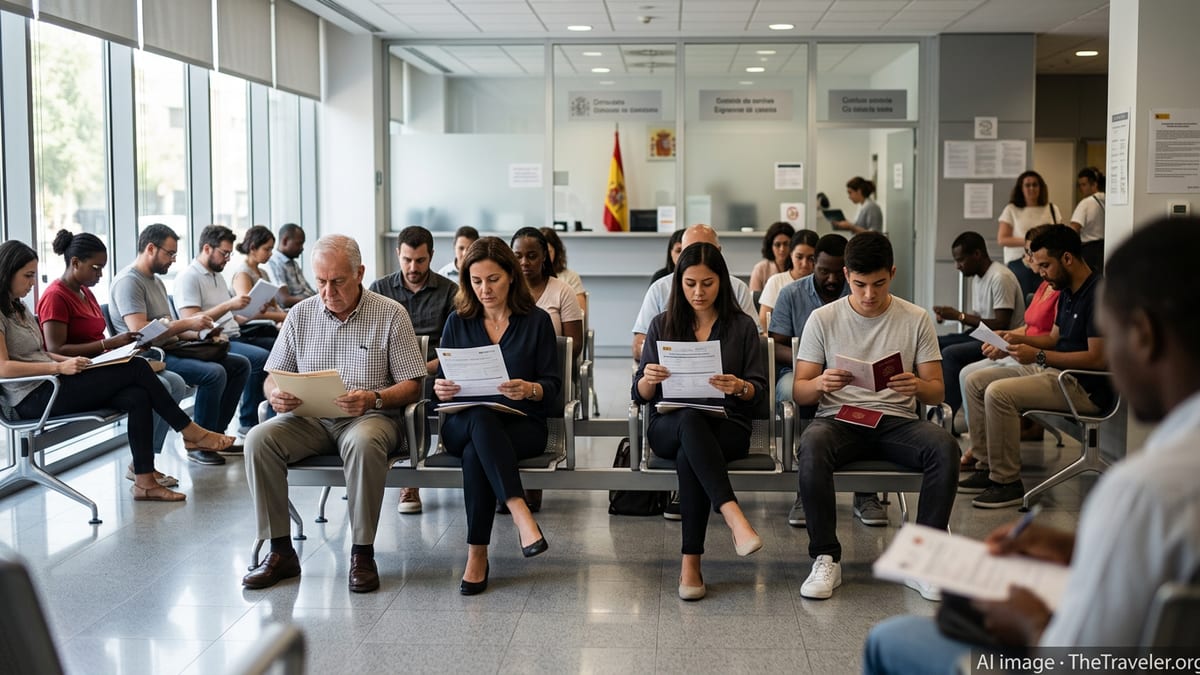
Overview of Spain Visa Refusal Landscape
Spain processes a high volume of short-stay Schengen visa applications and a steadily increasing number of national long-stay visas for study, investment, retirement, and remote work. Recent Schengen statistics indicate that Spain’s short-stay refusal rate has hovered around 15 percent of applications, close to the overall Schengen average. This translates to hundreds of thousands of denials per year and signifies that even apparently straightforward tourism or family visit files can be refused if they do not convincingly meet the rules.
Rejections have financial and timing implications. Each refused Schengen application means a lost visa fee and often unrecoverable costs for travel bookings or legal support. At Schengen level, analysts estimate that visa refusals cost applicants well over one hundred million euros in a recent year when application numbers exceeded 11 million, with Spain among the top three issuing states by both volume and absolute number of rejections. While long-stay national visas are not included in these Schengen statistics, practitioners report that popular residence categories such as non-lucrative visas, student visas, and digital nomad visas show meaningful denial rates when evidence of funds, insurance, or genuine intent is weak.
For relocation planning, refusal risk should be treated as a material factor rather than an edge case. Applicants who understand the main grounds of refusal, prepare documentation accordingly, and align their profile with the chosen visa category can significantly improve their prospects. This article focuses on the most common reasons for both short-stay and long-stay Spanish visa refusals, along with practical mitigation measures.
It is important to note that individual consulates may interpret and emphasise requirements differently within the EU and Spanish legal framework. Nationality, local fraud patterns, and appointment pressure all influence how strictly officers review files. Consequently, the same type of file may face a higher refusal probability in some jurisdictions than in others, even though the underlying rules are harmonised.
Procedural and Documentation Errors
The most frequent and avoidable cause of Spanish visa refusal is basic procedural non-compliance. This includes incomplete application forms, missing signatures, outdated or incorrectly formatted photographs, and omissions in mandatory supporting documents. Consulates typically operate under strict checklists that reflect both EU-level rules for Schengen visas and Spanish national regulations for long-stay visas. When items are missing or inconsistent, officers are often required to refuse rather than request clarifications, especially for short-stay applications.
Typical documentation issues include failing to provide full travel history, omitting prior Schengen visas or refusals, supplying bank statements that are not stamped or translated where required, or submitting police clearance certificates and medical documents that are older than the validity period accepted by the consulate. For long-stay residence visas, common oversights are unlegalised or unauthorised translations of marriage or birth certificates, missing apostilles, or presenting tenancy agreements that do not meet the minimum duration or registration standards set by Spanish authorities.
Applicants can reduce this risk with a procedural approach similar to a compliance audit. This means using the official consulate or external visa provider checklist as the primary reference, confirming whether originals, copies, or notarised versions are needed, and aligning timelines so that time-sensitive documents are valid throughout the expected processing period. For complex family situations or non-standard documents, obtaining sworn translations and legalisations well in advance is critical.
An additional procedural source of refusal is applying for the wrong visa category or at the wrong consulate. Spain expects applicants to file at the consulate of legal residence and to choose a visa type that matches their primary purpose. For example, using a short-stay Schengen visa for what is effectively a medium-term remote work stay, or filing a non-lucrative visa while intending to work, are patterns that can trigger denial on grounds of misrepresentation or incorrect purpose of stay.
Insufficient Financial Means and Economic Credibility
Demonstrating adequate and lawful financial means is a core requirement for both Schengen and Spanish national visas, and one of the leading documented reasons for refusal. For short-stay Schengen visas to Spain, applicants must show that they can cover accommodation, daily living costs, and return travel. While the exact minimum amount per person per day is periodically adjusted by Spanish authorities, consulates commonly assess bank balances, income regularity, and access to funds in practice rather than relying on theoretical minimums alone.
Long-stay residence visas apply more stringent economic thresholds. The non-lucrative visa typically requires passive income or savings at a level linked to a Spanish benchmark such as the public income index, resulting in an annual income expectation running into tens of thousands of euros for a principal applicant, plus additional amounts for each dependant. Digital nomad visas require verifiable remote employment or freelance income above a minimum salary floor, while student visas expect proof that tuition and living expenses are covered for the duration of the course, often via bank balances, scholarships, or formal sponsorship commitments.
Refusals occur not only when funds are objectively too low, but also when financial documentation appears inconsistent, unstable, or not clearly linked to the applicant. Sudden large deposits without clear origin, use of multiple third-party accounts without proper sponsorship letters, or statements from obscure financial institutions can raise doubts. Additionally, consular officers may question affordability if declared income does not plausibly cover both travel costs and ongoing obligations in the country of residence.
The mitigation strategy is to provide a coherent, traceable financial picture. This usually involves six months of bank statements, tax returns or employer payslips, clear sponsorship letters where relevant, and, for retirees or investors, portfolio statements that show stable assets rather than one-off transfers. Applicants should avoid last-minute movements that could be interpreted as attempts to artificially inflate balances. In relocation scenarios involving family members, it is helpful to show how the entire household will be supported in Spain, including school fees and health insurance, rather than focusing solely on the principal applicant’s balance.
Unclear Purpose of Stay and Weak Ties to Home Country
Another major reason for Spanish visa refusal, especially for short-stay Schengen visas and some student and cultural visas, is the consulate’s conclusion that the stated purpose of stay is not credible or that there is a significant risk of overstay. Under Schengen rules, officers must be satisfied that the applicant intends to leave the territory before visa expiry. If travel plans are vague, work or study arrangements in the home country are weak, or previous migration history suggests irregular tendencies, refusal is likely.
In practice, this refusal category often appears in rejection letters as “justification for the purpose and conditions of the intended stay was not provided” or similar wording. Indicators include itineraries that change multiple times during processing, unclear reasons for travel at a particular time, or invitation letters that do not match the applicant’s background. For long-stay visas, such as non-lucrative or digital nomad visas, doubts may arise if consular officers suspect that the applicant intends to use the visa primarily for Schengen travel or informal work rather than residence in Spain.
To counter this, applicants should present a precise and plausible narrative that aligns all documents. Travel dates, flight reservations, accommodation bookings, and invitation letters need to be mutually consistent. For student visa applicants, admission letters, proof of tuition payment, and course information should clearly explain why Spain is the logical location for the proposed studies and how the training fits into a broader career path. For digital nomad and remote worker visas, evidence that the employer allows remote work, that clients are located outside Spain, and that the applicant will maintain professional activities after relocation is important.
Demonstrating ties to the home country is equally important. Employment contracts with return dates or leave approvals, property ownership or long-term leases, family responsibilities, and evidence of ongoing business interests all mitigate overstay risk. The strength of ties is especially relevant for applicants from countries that statistically show higher refusal and overstay rates in Schengen data, where Spanish consulates may scrutinise intent more carefully.
Accommodation, Insurance, and Other Technical Requirements
Technical requirements that may appear secondary to applicants frequently drive visa refusals in practice. For Schengen visas to Spain, a confirmed accommodation plan is mandatory throughout the stay. This can be hotel bookings, rental agreements, or a formal invitation and accommodation certificate from a host in Spain. Where documentation covers only part of the stay, or where invitation letters lack required local registration or notarisation, consulates often conclude that accommodation is not adequately proven.
Travel medical insurance is another non-negotiable condition. For Schengen short-stay visas, the policy must provide coverage of at least 30,000 euros for emergency medical care and repatriation, be valid for all Schengen countries, and cover the full planned period of stay. Refusals occur where applicants submit basic travel policies that cap benefits below this threshold, exclude key risks, or limit geographical coverage. For long-stay residence visas, Spain typically requires comprehensive private health insurance without co-payments that is valid throughout Spanish territory and for the full initial residence term, particularly for non-lucrative and some family reunion visas.
For long-stay visas, consulates also assess accommodation within Spain with more rigor. Applicants may need to provide signed rental contracts, property ownership certificates, or notarised invitations. Failure to show suitable housing that matches family size and intended duration can result in refusal or at least requests for additional evidence. In some consular districts, officers place particular weight on whether the contract is registered or otherwise verifiable in Spanish systems.
To avoid these technical pitfalls, applicants should work backwards from the consulate’s written requirements. Insurance documents should explicitly state coverage amounts, territory, and duration that meet or exceed Schengen or Spanish standards. Accommodation evidence should cover every night from entry to exit or, for long-stay visas, from arrival until a realistic date by which longer-term housing will be secured. Where hosts are involved, invitation letters and accommodation commitments must follow the format and legalisation channels specified by local Spanish authorities.
Category-Specific Risks for Popular Spanish Residence Visas
Beyond general Schengen requirements, several Spanish national visa categories show recurring rejection patterns. For the non-lucrative residence visa, common refusal reasons include insufficient passive income or savings, use of inappropriate income sources such as active employment that contradicts the non-working nature of the visa, and lack of comprehensive private health insurance. Officers may also reject applications if they believe the applicant will seek employment in Spain despite the visa’s restrictions or if they perceive that the applicant’s primary motivation is unrestricted travel within the Schengen Area.
For student visas, denials often stem from late applications, incomplete academic documentation, or doubts about genuine student intent. Files without clear evidence of previous educational achievements, unexplained gaps in study history, or weak language skills for the chosen program can raise credibility issues. In addition, some consulates pay close attention to whether applicants have fully paid tuition fees or provided formal proof of funding, and whether accommodation and medical insurance arrangements are firmly in place for the entire academic period.
Spain’s digital nomad and remote worker visas, which have gained international attention, present a different risk profile. Authorities review contracts and company registrations to confirm that employment is genuinely remote and primarily based outside Spain, with applicants earning income above the minimum threshold. Refusals may occur if contracts are vague, if self-employed applicants cannot demonstrate a stable client base outside Spain, or if tax residence and compliance plans are unclear. Inconsistent explanations about how work will be organised across time zones can also undermine credibility.
Applicants planning family reunification or dependent visas should be aware that Spanish consulates place particular emphasis on proving genuine family relationships and adequate housing and income for all dependants. Missing or improperly legalised marriage or birth certificates, discrepancies in names or dates, or insufficient income relative to the size of the family frequently result in delays or denial. Preparing these files often requires several months of document gathering, legalisation, and translation before a consulate appointment.
Strategies to Reduce Spain Visa Refusal Risk
While no visa outcome can be guaranteed, several strategies consistently reduce the probability of refusal for Spain. The first is early planning. Many long-stay visa applicants underestimate the time needed to obtain police clearances, legalise civil documents, secure compliant health insurance, and assemble proof of funds. Starting at least three to six months before an intended move gives sufficient buffer for document issues and appointment backlogs that often occur during peak periods.
A second strategy is ensuring internal consistency across all elements of the file. Officers often focus less on individual documents and more on whether the overall picture makes sense. Dates on travel bookings should align with work or academic commitments, financial flows should match declared income sources, and statements in covering letters should mirror contract and certificate details exactly. Contradictions, even minor ones, can be interpreted as carelessness or, in worse cases, as an attempt to mislead.
Third, applicants should make targeted use of explanatory documents. A concise cover letter that outlines the purpose of stay, the applicant’s profile, financial situation, and ties to the home country can help officers contextualise the evidence. For non-standard situations, such as self-employment, recent job changes, or complex family structures, additional documentation like business registration certificates, tax filings, or custody orders can pre-empt questions that might otherwise lead to doubt and refusal.
Finally, where a case is complex or where refusal would seriously disrupt study or relocation plans, engaging a qualified immigration lawyer or specialist with Spanish experience can be justified. Professional advisers can identify weak points, align the file with evolving consular practices, and help interpret refusal letters if an application is denied. In some cases, a well-prepared appeal or a fully restructured re-application that directly addresses the original refusal grounds can succeed where the initial attempt failed.
FAQ
Q1. What is the current refusal rate for Spain Schengen visas?
The refusal rate for Spain Schengen short-stay visas is generally estimated in the mid-teens as a percentage of applications, broadly similar to the overall Schengen average in recent years, though it varies by nationality and consulate.
Q2. Are Spain long-stay residence visas easier to obtain than Schengen visas?
Not necessarily. Long-stay visas such as non-lucrative, student, or digital nomad visas have more detailed requirements on income, insurance, and purpose of stay. When these are not convincingly met, consulates refuse applications even if the applicant might have qualified for a short tourism visit.
Q3. Is a refusal from one Spanish consulate valid across all Schengen states?
A refusal decision is recorded in the Schengen information systems and can be seen by other Schengen states. While another country may still issue a visa, a recent Spanish refusal will usually trigger additional questioning and scrutiny in subsequent applications.
Q4. How important is travel history when applying for a Spain visa?
Travel history is an important qualitative factor. Applicants with a record of complying with visas and returning on time are typically considered lower risk, while a lack of travel history or unexplained past overstays can contribute to refusal decisions.
Q5. Can a strong bank balance compensate for weak ties to the home country?
A large bank balance alone rarely overcomes concerns about migration risk. Consulates need to see both adequate financial means and credible reasons to return or to comply with the authorised period of stay, such as employment, family, or property ties.
Q6. What happens if my Spanish visa is refused due to missing documents?
If refusal is based on missing or incomplete documents, the decision letter will normally list the relevant grounds. In many cases, applicants can reapply with a complete file. Appeals are sometimes possible, but they depend on the visa category and the consulate’s procedures.
Q7. Do I need to pay visa fees again after a refusal?
Yes. Visa fees are generally non-refundable, even if the application is refused. A new application is treated as a separate file and requires payment of the applicable fee again at the time of submission.
Q8. Does hiring an immigration lawyer guarantee my Spain visa will be approved?
No adviser can guarantee an approval, as decisions rest with Spanish authorities. However, a specialised immigration lawyer or consultant may help strengthen documentation, clarify strategy, and reduce avoidable errors that commonly lead to refusal.
Q9. How closely do Spanish consulates check health insurance policies?
Consulates usually review health insurance conditions in detail, looking at coverage amounts, exclusions, geographical scope, and duration. Policies that do not clearly meet the minimum standards for the visa type are a frequent reason for refusal.
Q10. If my Spain visa is refused, how long should I wait before applying again?
The appropriate waiting time depends on the reasons for refusal. If the issues are purely documentary, reapplying quickly with a corrected file can be reasonable. If refusal relates to broader concerns such as migration risk or financial instability, it may be advisable to wait until circumstances and supporting evidence have significantly improved.