

More news on this day
Spain is tightening its grip on the Mediterranean cruise market with record passenger volumes and expanding ports, just as emerging brand Corazul Cruises prepares to introduce a new tier of Spain-focused, sustainability-minded luxury sailings.
Get the latest news straight to your inbox!
Spain Consolidates Its Lead in the Mediterranean
Recent traffic figures indicate that Spain has moved to the forefront of the Mediterranean cruise market, supported by strong performance across its major ports. Publicly available port data show that Spanish terminals handled more than 14 million cruise passengers in 2025, surpassing the previous year’s record and underlining the country’s growing weight in European cruise tourism.
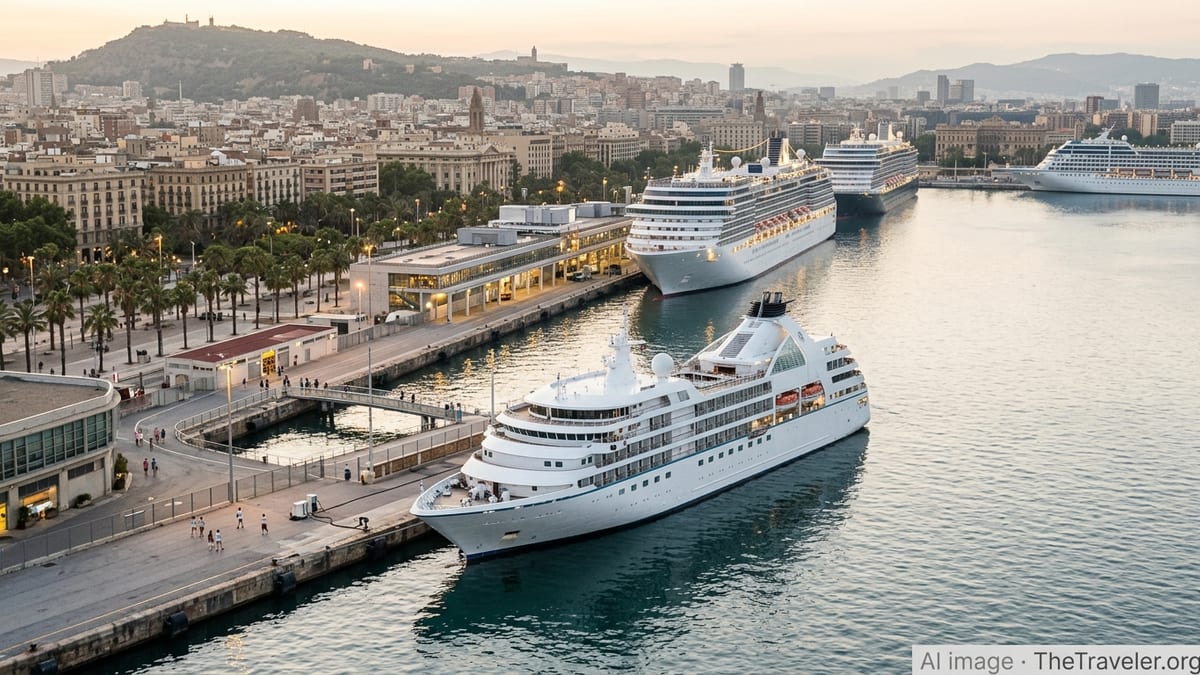
Barcelona remains the flagship gateway, with industry coverage reporting around four million cruise passenger movements in 2025, reinforcing its position among the busiest cruise hubs in Europe. Other ports along Spain’s Mediterranean and Atlantic coasts, including the Balearic Islands, Valencia, Malaga and Canary Islands gateways, have also seen rising traffic and greater deployment from global brands operating Western Mediterranean itineraries.
Market analyses of the wider European cruise sector describe Spain as one of the leading national markets by share, benefiting from its role as both a Mediterranean and Atlantic entry point and from year-round operational capacity. This combination of geographic reach and infrastructure investment is helping Spain attract new deployments, including smaller luxury and expedition vessels seeking alternatives to the most saturated central Mediterranean ports.
At the same time, Spanish destinations are attempting to balance growth with resident concerns over congestion. Local planning frameworks in major ports have started to cap terminal numbers and manage daily passenger flows, suggesting that Spain’s leadership in the Mediterranean is now defined as much by selectivity and quality as by raw volume.
Ports Shift Toward Premium and Sustainable Traffic
While overall numbers continue to climb, several Spanish ports are deliberately pivoting toward higher-spend, lower-impact cruise segments. Tarragona on the Catalan coast, for example, has positioned itself as a rising luxury gateway, with recent seasons marked by increased calls from upscale and boutique brands. Reports on the 2025 season highlight double-digit growth in passenger spending and stronger interest from lines marketing slower-paced, culturally focused itineraries.
Valencia has emerged as another growth story, recording record ship calls and a notable increase in turnaround traffic, which brings added hotel and transport demand before and after cruises. Industry coverage notes that Valencia’s rate of cruise growth has recently outpaced that of Spain’s largest cruise hubs, narrowing the gap while authorities emphasize shore power projects and terminal upgrades designed to cut emissions and disperse visitors more evenly across the metropolitan area.
Smaller ports such as Cadiz and emerging destinations in the Balearic and Canary Islands are also experimenting with more selective deployment. Instead of pursuing constant increases in passenger totals, port strategies increasingly reference passenger quality, time spent ashore and alignment with city sustainability goals. This mirrors a wider Mediterranean trend in which ports seek to avoid overtourism while still benefiting from cruise-related spending.
Environmental measures are beginning to reshape operations. Shore-side electricity projects in several Spanish ports aim to allow visiting ships to plug into the local grid, reducing emissions at berth. Newer vessels calling at Spanish ports are frequently marketed as more energy efficient, with advanced waste treatment systems and alternative fuel readiness becoming standard talking points in cruise line announcements.
Corazul Cruises Enters With Spain-Focused Luxury Offering
Against this backdrop of growth and gradual repositioning, Corazul Cruises is preparing to enter the market with a distinctively Spanish imprint. According to cruise industry reports published in early 2026, Corazul Cruceros is developing a new brand geared primarily toward the Spanish-speaking market, built around itineraries that highlight Spanish ports and nearby Mediterranean destinations.
The company has already brought the cruise ship Piano Land into service under the Corazul Cruceros banner, creating a foundation for its planned expansion. Coverage indicates that the forthcoming brand concept will emphasize a more intimate on-board experience than many mass-market ships, with a focus on gastronomy rooted in Spanish regional cuisine, locally inspired design elements and entertainment tailored to Iberian tastes.
Positioned in the upper-premium segment, Corazul aims to appeal to travelers who may have previously sailed with large international lines but are now seeking a product closely aligned with Spanish culture. Early descriptions suggest that the line intends to use Spanish homeports as both embarkation points and core storytelling anchors, encouraging guests to spend additional nights in cities such as Barcelona, Valencia or Malaga before and after their cruises.
This strategy dovetails with local tourism objectives that favor longer stays and deeper engagement over brief transit visits. By anchoring its identity in Spain and focusing on immersive experiences, Corazul is set to differentiate itself within a Mediterranean market still dominated by global brands based elsewhere in Europe and North America.
Luxury and Sustainability at the Center of Corazul’s Strategy
Corazul’s planned expansion comes as demand grows for cruise products that combine upscale service with credible sustainability measures. Industry forecasts for the European cruise sector highlight rising interest in smaller ships, lower passenger densities and itineraries that reduce crowding in the most visited coastal cities. Corazul’s forthcoming brand is being positioned squarely in this space.
Publicly available information on the project indicates that the line is evaluating ship upgrades and future tonnage with an emphasis on efficiency and environmental performance. This includes exploring technologies such as optimized hull designs, more efficient propulsion systems and advanced waste and water treatment, in line with the direction taken by several newbuilds serving the Mediterranean. While details of specific new vessels have not yet been disclosed, the stated ambition is to compete in a category where sustainability credentials are a key part of the value proposition.
On shore, Corazul appears likely to lean on Spain’s broader port investment in cleaner operations. Spanish ports have been progressing toward expanded shore power capacity and stricter environmental standards, a trend that aligns naturally with a brand promoting responsible travel. For guests, this is expected to translate into marketing that emphasizes reduced emissions at berth, curated excursions with smaller group sizes and partnerships with local operators who promote cultural preservation.
Within the Mediterranean, such positioning could resonate with both first-time cruisers and experienced guests seeking an alternative to the largest ships. By framing luxury not only in terms of amenities but also in terms of space, time in port and environmental footprint, Corazul is aligning itself with a growing segment of the cruise market that values impact as much as indulgence.
Implications for Spain’s Cruise Tourism Future
Spain’s emergence as a leading force in Mediterranean cruising and the arrival of Corazul’s new Spain-centric brand point to an evolution in how the country approaches maritime tourism. Rather than simply chasing higher passenger totals, port authorities and operators are increasingly focused on reshaping the composition of traffic in favor of premium, sustainable segments.
The spread of cruise activity beyond a handful of major hubs to ports such as Tarragona, Valencia and Cadiz is helping to distribute economic benefits more widely while relieving pressure on the most saturated destinations. New brands like Corazul, with products built around Spanish culture and longer stays, could further reinforce this shift if they succeed in attracting travelers willing to invest more time and money ashore.
For the wider Mediterranean, Spain’s trajectory suggests how a large cruise market can grow in absolute terms while still experimenting with limits on capacity, environmental safeguards and a reorientation toward high-value visitors. As Corazul Cruises moves from planning to full operation, its performance will offer an early indication of how strong demand truly is for exclusive, sustainability-focused cruise experiences anchored in Spain’s ports.