

More news on this day
Spain’s busy Easter getaway is colliding with airport strike calls and longer border checks under Europe’s new biometric Entry/Exit System, creating a volatile mix that could severely disrupt travel plans for millions heading to Semana Santa celebrations and spring sunshine breaks.
Get the latest news straight to your inbox!
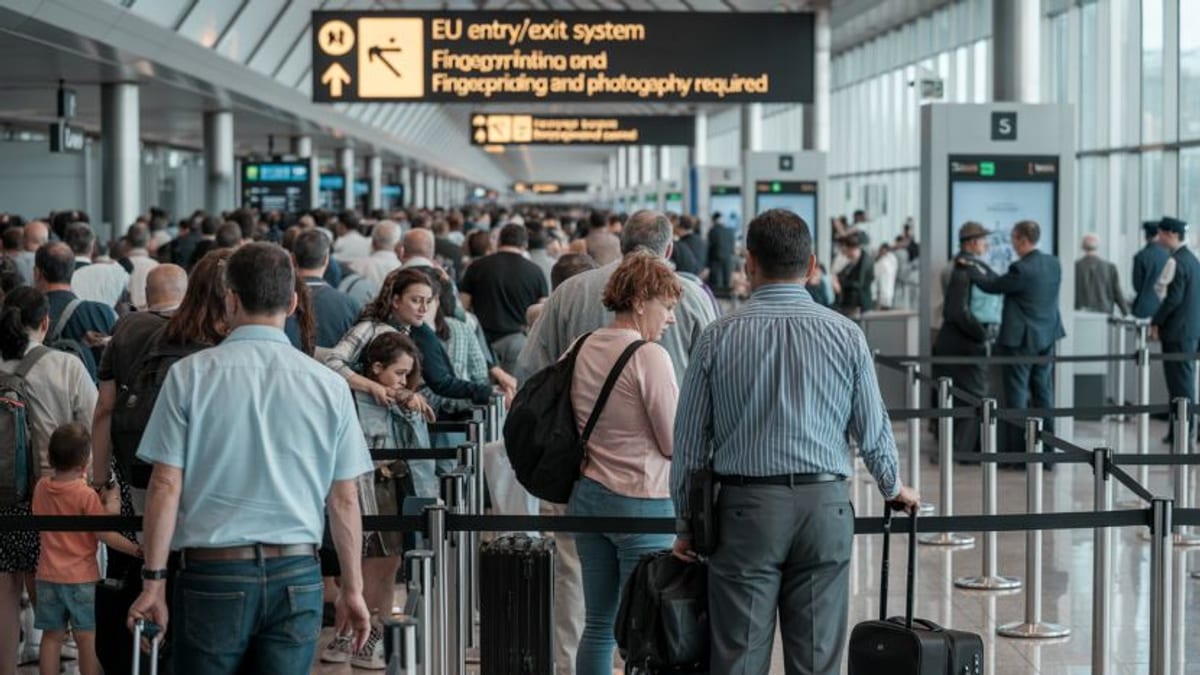
Image by Travel And Tour World
Airport Strikes Cloud Spain’s Semana Santa Peak
Fresh strike calls affecting Spanish airports in late March and early April are emerging just as Easter traffic builds, with reports highlighting planned stoppages among ground handling staff and air traffic workers at several major gateways. Coverage in European travel media indicates that industrial action is concentrated around the core Easter travel window, when passenger numbers typically surge at hubs such as Madrid Barajas, Barcelona El Prat, Malaga, Palma de Mallorca and the Canary Islands.
Industry briefings note that handling companies supplying services for both full service and low cost airlines have filed strike notices that span multiple days rather than isolated hours. Where stoppages proceed, airport operations risk being constrained by reduced staffing on ramps, in baggage halls and at check in desks, raising the prospect of slower turnarounds, baggage delays and last minute gate changes.
Separate reporting on Spain’s air traffic control sector points to continuing labour tensions that could yet translate into targeted walkouts over the Easter period. Even limited participation by controllers would likely trigger preemptive flight cancellations and rerouting, since airspace capacity reductions have an immediate impact on scheduling.
Aviation analysts quoted in trade coverage stress that not all notices lead to full scale disruption, as many disputes are settled or scaled back at the last minute. However, the clustering of threatened strikes around Easter means that travellers face a higher than usual level of uncertainty, particularly on peak departure and return days.
Biometric Border Checks Extend Passport Control Queues
Layered on top of the strike risk is a structural change at Spain’s external borders. Since October 2025, the European Union’s Entry/Exit System has been progressively rolled out at major Spanish airports, replacing traditional passport stamping for non EU visitors with biometric registration that includes fingerprints and facial images. Travel industry analysis indicates that this has already lengthened processing times at busy checkpoints.
Airport and tourism bodies across Europe have reported that initial enrolment into the system can add several minutes per person, especially when travellers are unfamiliar with the kiosks or arrive without completed pre registration steps where these are available. In Spain, early testing at Madrid and Barcelona has been described in specialist coverage as a “soft launch,” but reports of queues stretching well beyond pre pandemic norms have emerged at peak arrival banks.
While the EU has allowed member states a phased introduction period in which border teams can temporarily ease biometric requirements to keep lines moving, publicly available information from aviation associations suggests that overall border processing times for third country nationals have risen by up to 70 percent at certain gateways. Spain is repeatedly cited among the countries experiencing the sharpest increases, reflecting its heavy reliance on visitors from the United Kingdom, North America and other non Schengen markets.
The timing is particularly sensitive because the formal transition period in which manual passport stamps and biometric registration operate side by side runs through early April 2026. After that date, border officers are expected to rely predominantly on digital records, intensifying the push to register large numbers of travellers during the Easter rush.
How the Two Pressures Combine for Easter Travelers
For individuals heading to Spain over Easter, the interaction between staffing disruption and longer passport control procedures matters as much as each factor on its own. Travel risk assessments published in recent weeks underline that small delays at multiple points in the journey can now quickly add up to missed connections or late arrivals at resort areas.
An airport operating with reduced ground staff because of a strike may already be struggling to keep to schedule when arriving flights meet extended queues at border control. In such a scenario, even modest biometric bottlenecks can cascade into aircraft waiting for stands, baggage unloading delays and congestion at customs exits. The problem is amplified at leisure focused airports such as Malaga, Alicante or Palma, where a high proportion of passengers are non EU holidaymakers who all require external border processing.
Observers also point out that Spain’s role as a transfer hub for Latin America introduces another layer of complexity. Passengers connecting through Madrid Barajas from long haul services to short haul domestic or European flights may find that additional minutes spent in biometric lines erode the buffer that once protected tight connections, especially if departure banks are simultaneously affected by industrial action.
Rail and road corridors are not immune. Although Easter rail operations within Spain are generally expected to be more stable than aviation this year, cross border routes intersecting Schengen external frontiers face similar biometric requirements, and any parallel strike action at neighbouring countries’ rail or border agencies could further constrain capacity.
Official Timelines and Industry Warnings on EU Entry Rules
European institutions have been refining the timetable for the Entry/Exit System in response to mounting concerns from the travel sector. A Council of the European Union press communication issued in 2025 outlined a six month progressive launch period in which member states could calibrate how quickly they moved from pilot operations to full biometric checks at all external border points. Subsequent parliamentary questions and national briefings have repeatedly acknowledged “teething problems” in the early months.
Airports Council International Europe and other trade groups have circulated data citing delays of up to three hours at peak times in some Schengen states since the system went live, and they have urged EU bodies to insist that border agencies use all available flexibility during the busiest leisure travel periods. Reports referencing airports in Spain, Portugal, France and Italy describe shared patterns of congestion and passenger frustration as the new technology beds in.
In Spain specifically, regional media on the Balearic and Canary Islands have focused on upcoming rollouts at Palma de Mallorca and key holiday airports serving British and German markets. Articles aimed at local tourism businesses warn that the full impact of the system is likely to be felt only once high season begins, with Easter 2026 identified as an early stress test for how quickly mixed flows of EU and non EU passengers can be processed at limited checkpoint space.
Alongside EES, separate but related changes are on the horizon, including the European Travel Information and Authorisation System for visa exempt nationals. Although that programme has been pushed back beyond 2025, travel commentators argue that its eventual arrival will add another pre travel step for many of Spain’s visitors, reinforcing the need for clear communication and realistic scheduling.
What Travelers Can Realistically Expect This Easter
With multiple risk factors converging, forecasts from tour operators, consumer travel advisories and aviation analysts share a broadly similar message: disruption over Easter is not guaranteed, but the range of plausible delays in Spain is wider than in a typical year. On days when strikes proceed and biometric checks are fully in use, long queues at both departure and arrival points are a credible scenario.
Passengers originating in the United Kingdom and other non Schengen countries are likely to feel the effects most sharply, since they face external border controls on both legs of the journey and are among the main users of Spanish leisure airports. Families travelling with children, large groups and those with tight connections or onward ground transport reservations are seen as particularly exposed to timetable slippage.
Travel industry guidance encourages holidaymakers to treat scheduled times conservatively over the Easter period. Recommendations circulating in specialist bulletins include allowing substantially more time at departure airports, favouring longer connection windows, and being prepared for gate or schedule changes at short notice if airlines adjust operations in response to evolving strike participation or airspace restrictions.
Consumer advocates further highlight the importance of understanding compensation and rerouting rights in the event of cancellations or severe delays. While the legal framework varies depending on carrier, route and cause, public information resources from European institutions outline circumstances in which travellers may be entitled to assistance, rebooking or partial refunds. For now, however, the most immediate defence for those heading to Spain’s Easter celebrations is to build flexibility into their plans and to anticipate that passport control and airport processes may take significantly longer than in previous years.