

More news on this day
Spain’s flagship hospitality and tourism trade fairs are reporting a sharp rise in international exhibitors, buyers and destinations, reinforcing the country’s position as a global hub for travel, foodservice and hotel investment.
Get the latest news straight to your inbox!
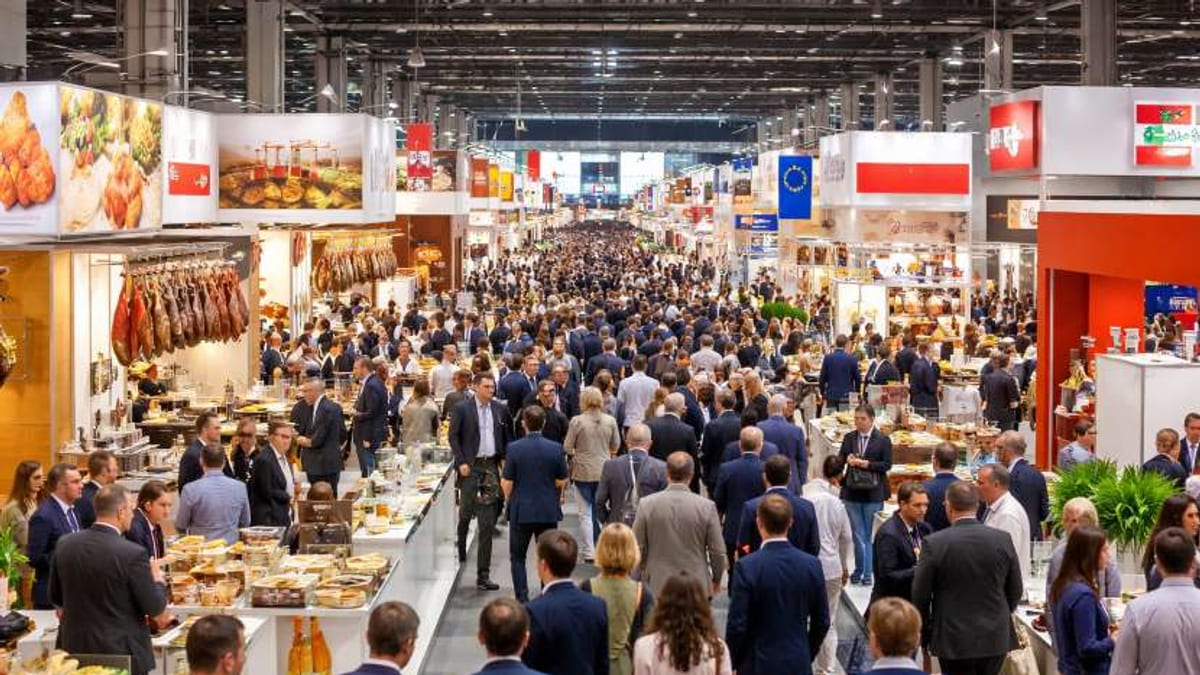
Image by Travel And Tour World
Record International Momentum at FITUR in Madrid
Recent editions of FITUR, the International Tourism Trade Fair held annually at IFEMA Madrid, have consolidated the event’s status as one of the world’s largest gatherings for the travel industry. Published coverage of the 2026 edition indicates participation from around 160 countries and regions, with more than 10,000 companies represented and professional attendance surpassing pre‑pandemic benchmarks.
Data shared in Spanish and international trade reports show that FITUR has steadily increased its share of international exhibitors in recent years. The 2025 edition was already described as one of the most globally diverse in the fair’s history, and early figures for 2026 point to a further rise in foreign participation, both on the exhibitor side and among professional visitors.
The growing international footprint is closely linked to Spain’s broader tourism performance. In 2025 the country welcomed a record 96.8 million foreign visitors, according to international news agency reporting, providing a strong commercial backdrop for a trade fair that focuses on destinations, tour operators, airlines, technology providers and hospitality brands from every continent.
FITUR’s role as an early‑year meeting point for the sector also contributes to its draw. Organisers position the show at the start of the global trade fair calendar, giving destinations and companies a platform to launch strategies, sign distribution agreements and test new hospitality concepts for the year ahead in front of a highly international audience.
Alimentaria + Hostelco in Barcelona Strengthens Global Reach
In the foodservice and hotel equipment segment, Barcelona’s joint Alimentaria + Hostelco fair is emerging as Spain’s leading hospitality event for the Horeca channel. Press material for the upcoming 2026 edition shows that the combined show at Fira de Barcelona’s Gran Via venue expects a 41 percent increase in international participation compared with its previous edition, underlining a clear surge in cross‑border engagement.
The organisers project around 3,300 exhibiting companies occupying 100,000 square metres across seven halls, with more than 650 exhibitors coming from outside Spain. Europe is set to take the lead in that international mix, with strong representation from Italy, Poland, France, Germany, Portugal, the Netherlands, Belgium, Greece, Turkey and China, alongside a wider global presence.
Recent briefings highlight a targeted international buyers’ programme designed to turn that exhibitor growth into concrete business. The fair is preparing to host more than 1,500 high‑level importers, distributors and purchasing managers from some 80 markets, reflecting a deliberate effort to deepen commercial ties between Spanish suppliers and international hotel, restaurant and catering operators.
By bringing together food, beverages, technology and hospitality equipment under one roof, Alimentaria + Hostelco is positioning itself as a comprehensive platform for global foodservice innovation. The scale of international participation signals that the Spanish market is not only important domestically, but increasingly viewed as a gateway for suppliers seeking access to Europe, Latin America and the Mediterranean basin.
Strategic Guest Countries and Partner Initiatives Lift Global Profile
One of the factors driving the surge in international engagement at Spain’s leading hospitality events is the intensified use of guest country and partner programmes. FITUR has a long tradition of naming a partner country each year, and recent editions have featured major tourism economies that use Madrid as a stage to reinforce their global branding and partnership networks.
For 2026, published business press coverage notes that Mexico will act as FITUR’s partner country, with plans for a large delegation representing all of its states and a significantly expanded exhibition area. Organisers and participating institutions present this partnership as a way to strengthen air connectivity, hotel investment and tour‑operator agreements between Spain, Latin America and key long‑haul markets.
Alimentaria + Hostelco is following a similar path with its guest country strategy. Trade information for 2026 points to Poland as the featured guest country, with more than 100 exhibitors and over 1,200 square metres of space dedicated to its food and beverage offer. This type of spotlight is designed to attract buyers from across Europe and beyond, giving emerging and established exporting nations a high‑visibility platform in front of hotel chains, restaurant groups and distributors.
These curated partnerships add a layer of diplomatic and business significance to the trade fairs. By tying national promotion campaigns to Spain’s hospitality events, countries effectively use Madrid and Barcelona as global showrooms, which in turn enhances the events’ international relevance and supports their growth trajectories.
Innovation, Sustainability and Data at the Core of Engagement
Alongside headline visitor and exhibitor numbers, the thematic focus of Spain’s hospitality fairs is playing an important role in attracting international stakeholders. Programmes at FITUR, Alimentaria + Hostelco and other Spanish industry forums increasingly highlight digital transformation, artificial intelligence, revenue management and sustainability as core pillars of the modern hospitality business.
Conference agendas released for recent editions emphasise topics such as smart destinations, climate‑resilient tourism models, zero‑waste kitchens and energy‑efficient hotel design. This aligns with global investor and operator priorities, drawing in technology providers, consultants, finance institutions and start‑ups that see Spain as a testing ground for scalable solutions.
In the case of Alimentaria + Hostelco, organisers have announced expanded space for innovation areas devoted to foodservice technology, coffee, bakery and pastry concepts, and hospitality start‑ups. These zones are designed to encourage networking between equipment manufacturers, software platforms and international buyers searching for tools to boost productivity and meet new sustainability regulations.
The steady professionalisation of content helps reinforce the fairs’ roles as knowledge hubs rather than purely transactional marketplaces. For international participants weighing the cost of long‑haul travel, the combination of exposure, learning opportunities and deal‑making potential strengthens the case for repeated attendance and deeper engagement.
Spain’s Hospitality Ecosystem Capitalises on Tourism boom
The surge in international engagement at Spain’s leading hospitality events is closely tied to the country’s broader tourism boom. According to widely reported data from United Nations tourism bodies and national statistics, global arrivals reached a new record in 2025, while Spain itself posted its highest‑ever foreign visitor numbers and consolidated its position among the world’s top destinations.
This rising tide has clear implications for hotels, restaurants, catering companies and technology providers operating in the Spanish market. Strong occupancy rates in key regions such as Catalonia, the Balearic Islands, the Canary Islands and major cities like Madrid and Barcelona are prompting investment in new properties, renovations and digital upgrades, which in turn fuels demand for the type of products and services showcased at Alimentaria + Hostelco and FITUR.
At the same time, the rapid growth of tourism is intensifying debates around capacity, housing and community impact in several Spanish destinations. While that tension is driving new regulatory approaches at regional and municipal levels, it is also accelerating interest in more sustainable operating models. Exhibitors and conference programmes at the country’s main hospitality events increasingly foreground solutions that address overtourism, energy use and local supply chains.
As Spain looks ahead to another year of strong demand, the performance of its flagship hospitality and tourism fairs indicates that international engagement is likely to deepen further. With record exhibitor numbers, expanded guest country initiatives and a growing emphasis on innovation, the country’s trade show circuit is emerging as a key barometer for global hospitality trends and a central meeting point for decision‑makers across the travel and foodservice value chain.