

More news on this day
Spain is set to join the United Kingdom, France, and Germany at the top tier of global tourism in 2025, propelled by a fresh record in international arrivals and robust spending figures that underline Europe’s renewed travel boom.
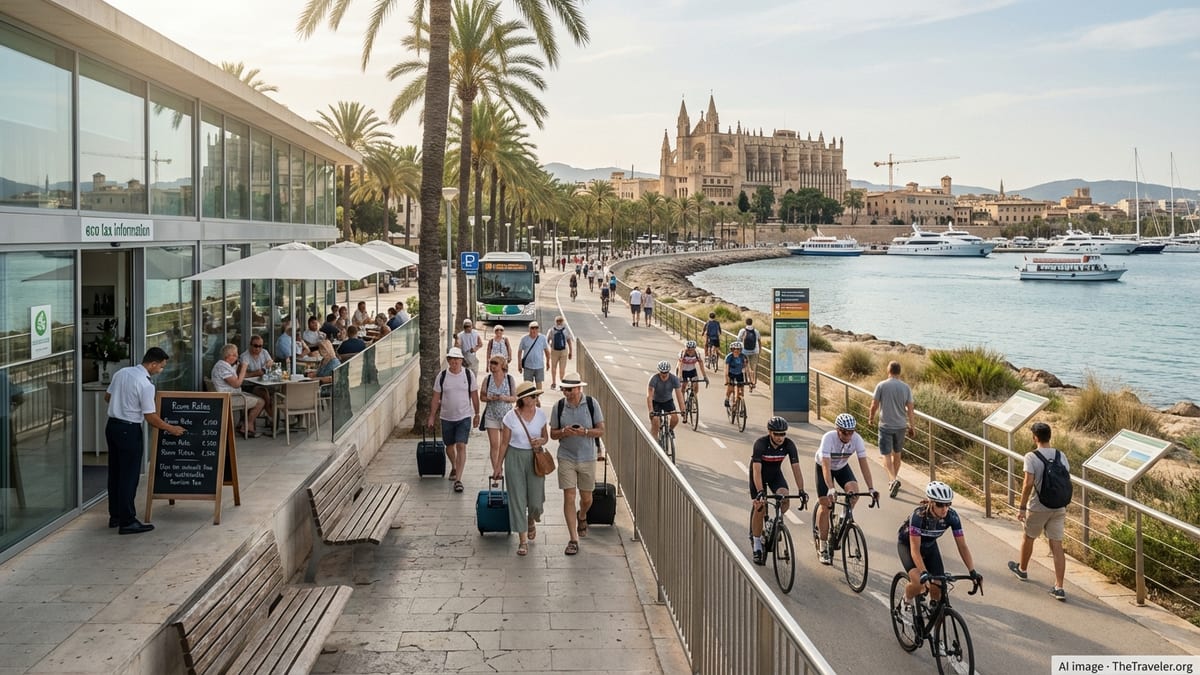
With the Balearic Islands, and particularly Mallorca, emerging as one of the most in-demand Mediterranean destinations, authorities are tightening their focus on sustainability, including higher tourist taxes designed to offset the pressures of mass tourism on fragile island ecosystems and local communities.
More News
- Caribbean Travel to U.S. Upended by New Visa Freezes and Expanded Bans
- Mexico Restores E-Visas for Brazilians, Paving the Way for Borderless Tourism
- Philippine Airlines Joins Regional Carriers Powering Southeast Asia’s Tourism Boom
Spain’s Record-Breaking Tourism Surge
Spain closed 2025 with a new tourism milestone, welcoming close to 97 million foreign visitors and confirming its position as one of the world’s leading tourism powerhouses. The National Statistics Institute reported that the country surpassed its previous record set in 2024, extending a three-year streak of historic highs in international arrivals after the pandemic slump. Tourism’s share of national output has inched higher, now accounting for more than one in every eight euros generated in the Spanish economy.
In monetary terms, tourism is proving even more dynamic than headline visitor numbers suggest. Spending by foreign visitors rose markedly in 2025, climbing to nearly 135 billion euros. That represents robust year-on-year growth, as travelers from core markets such as the United Kingdom, France, and Germany stay longer and opt for higher-value experiences, from boutique rural stays to premium urban gastronomy and culture-led itineraries in Barcelona, Madrid, and Seville.
The British remained Spain’s single largest source market, delivering roughly 19 million visitors in 2025, followed by France and Germany. This triangular flow is now increasingly reciprocal: while millions of Britons, French and Germans are flocking to Spain’s beaches and cities, Spanish travelers are also contributing to record numbers in London, Paris, Berlin, and other European capitals, underscoring a broader continental tourism upswing.
Mallorca and the Balearics at the Vanguard
Within Spain, the Balearic Islands have cemented their status as one of the nation’s most powerful tourism engines, and Mallorca is at the heart of that momentum. Fresh data for 2025 show that the Balearics welcomed about 15.7 million international visitors, a rise of more than 2.5 percent on the previous year, with total visitors including domestic travelers reaching just over 19 million. Tourism expenditure in the archipelago topped 21 billion euros, growing faster than visitor numbers and signaling a continued shift to higher-spend segments.
Mallorca, as the largest and best-connected island, continues to capture a dominant share of these arrivals. Direct air links from British, German, and increasingly French and Scandinavian cities have allowed the island to extend its season, attracting early-spring hikers and cyclists, late-autumn food and wine tourists, and year-round short-break travelers. Hotel occupancy in Palma and along key resort corridors remained high through much of 2025, supported by a diversified offering ranging from five-star resorts and rural fincas to city boutique properties.
Interestingly, while the Balearics saw slight declines in arrivals from the United Kingdom and Germany in 2025, French visitors rose strongly, reflecting changing travel patterns and the region’s efforts to broaden its source markets. Average per-visitor spending now exceeds 1,300 euros per trip, with daily expenditure upward of 200 euros, suggesting that even with only moderate growth in headcount, the islands can continue to boost tourism revenue and employment.
Tourist Tax Increases and the Push for Sustainability in 2025
As visitor numbers swell, Balearic policymakers are leaning more heavily on fiscal tools to manage the impacts of mass tourism, particularly on Mallorca. The region’s sustainable tourism tax, levied on overnight stays in regulated accommodation, is slated for increases in 2025 aimed at raising additional funds for environmental protection, heritage conservation, and housing initiatives. Although the precise rate structure varies by accommodation category and season, guests in mid- and high-end hotels can expect to pay noticeably more per night than in previous years.
The higher tax is being framed as a necessary response to the pressures that intensive tourism exerts on water supplies, transport networks, and residential neighborhoods. Authorities have pledged that the additional revenue will be earmarked for projects that directly benefit residents and the environment, such as upgrading wastewater treatment, restoring coastal dunes and wetlands, supporting renewable energy schemes, and financing affordable housing to counter the displacement effects of short-term rentals.
Industry reactions are mixed. Hoteliers and some tour operators warn that rising taxes, on top of inflation and higher airfares, could price out more budget-conscious travelers or push them toward competing Mediterranean destinations. Others argue that visitors are increasingly aware of sustainability concerns and willing to pay more if they see tangible benefits in cleaner beaches, improved public transport, and protected natural landscapes. Surveys of recent arrivals suggest that, for most travelers, the tourist tax remains a small fraction of total trip costs and is unlikely to deter them from choosing Mallorca.
UK, France, and Germany: Parallel Tourism Highs
Spain’s surge in tourism is part of a broader European upswing in travel, with the United Kingdom, France, and Germany also expected to break or approach record levels in 2025. In the UK, the national tourism agency projects 43.4 million international visits this year, a new high that edges beyond 2019 and consolidates the country’s recovery. Associated spending is forecast to reach nearly 34 billion pounds, buoyed by strong demand from the United States, European neighbors, and a gradual return of long-haul visitors from Asia.
France, traditionally the world’s most visited country, is riding a wave of renewed interest fueled by high-profile cultural reopenings and major events. The return of Paris’s Notre-Dame cathedral to the tourist circuit, coupled with blockbuster exhibitions and large-scale sporting showcases, has pushed visitor numbers in the capital to multiyear highs. Nationwide, tourism officials expect international arrivals and spending in 2025 to remain at or above 2024’s strong levels, solidifying France’s place at the top of the global league table.
Germany, meanwhile, has quietly set its own records. Federal statistics show that overnight stays in 2024 already surpassed the previous peak from 2019, with close to 500 million nights spent in commercial accommodation across the country. That momentum is expected to carry into 2025. Domestic travelers remain a crucial pillar, but international demand is rising as well, especially in major cities and traditional holiday regions along the coasts and in the Alps.
The combined effect is a Europe in which several of the continent’s largest economies are simultaneously experiencing tourism highs. For Spain, this context heightens competitive pressures but also opportunities, as multi-destination trips and open-jaw itineraries encourage travelers to combine Spain with stays in London, Paris, Berlin, or other European hubs.
Germany’s Urban Magnetism and Its Ties With Spain
Nowhere is Germany’s tourism resurgence more evident than in Berlin. The capital celebrated a milestone in 2024 with more than 30 million overnight stays, breaking the 30-million mark for the first time since 2019. The city welcomed 12.7 million guests, with international visitors accounting for around 42 percent of the total. Among foreign markets, the United Kingdom topped the list in overnight stays, followed closely by the United States and the Netherlands.
Spain itself is a rapidly growing source market for Berlin, with Spanish overnight stays in the German capital climbing at a double-digit rate. This two-way traffic reflects a pattern seen across Europe’s major cities, where improved air connectivity and a strong appetite for cultural and culinary experiences are driving city-break tourism. In turn, German travelers are a mainstay in Spain’s tourism mix, especially in Mallorca and the wider Balearic Islands, where German-language services are ubiquitous and repeat visitation rates are among the highest in the Mediterranean.
As Germany posts record national overnight numbers, its role as both a feeder market and a competitor to Spain becomes more pronounced. German regions are marketing their own coastal resorts and nature areas aggressively, highlighting cooler summer temperatures and lower crowding compared with some southern hotspots. In response, Spanish destinations are redoubling efforts to differentiate on culture, gastronomy, and year-round experiences rather than only sun-and-beach appeal.
Balancing Growth, Community Pressure, and Visitor Experience
The acceleration of tourism across Spain and in Mallorca in particular is sharpening longstanding debates around overtourism, housing affordability, and quality of life. Residents in several neighborhoods of Palma and other Mallorcan towns have staged demonstrations over rising rents, the dominance of short-term rentals, and crowded public spaces during peak months. Local authorities have responded with a mix of measures, from tighter regulation of tourist housing to caps on new hotel developments in saturation zones.
The increased tourist tax for 2025 is seen by regional leaders as part of a broader strategy to pivot from sheer volume to higher value and better-managed flows. That includes encouraging visits in shoulder seasons, promoting lesser-known inland and rural areas of Mallorca to relieve coastal pressure, and investing in public transport to reduce congestion on popular routes. The Balearics are also exploring differential pricing and capacity limits for especially fragile natural sites, such as protected coves and mountain trails.
Visitors, for their part, are confronting new realities: higher prices, the need to book earlier, and growing restrictions on where and how they can access certain spaces. Yet surveys suggest that many travelers accept such measures as the price of preserving the very landscapes and cultural settings that draw them to Mallorca and the wider Balearics. Tour operators are increasingly highlighting sustainability commitments in their marketing, aiming to align with both regulatory demands and shifting traveler values.
Outlook for 2025: Spain’s Place in a Reordered Tourism Map
With Spain reaching fresh highs in visitors and spending and aligning more closely with record-setting peers such as the UK, France, and Germany, the global tourism map is evolving toward a more evenly distributed recovery across major European destinations. For Spain, the challenge is to convert its current momentum into long-term resilience. That means deepening ties with high-spend markets, expanding the season beyond summer, and ensuring that benefits reach beyond the coastal hotspots to smaller cities and inland regions.
Mallorca’s trajectory will be closely watched as a test case. The island is at once a beneficiary and a potential victim of its success, grappling with the strains of almost year-round tourism while seeking to maintain the charm, natural beauty, and local authenticity that underpin its appeal. If higher tourist taxes, tighter regulation, and sustainability investments succeed, Mallorca could emerge as a model for responsible island tourism. If they fail, the island risks growing resistance from residents and a possible erosion of visitor satisfaction.
For now, indications are that demand remains strong despite rising costs. Airlines are adding capacity to Palma, new hotel projects and refurbishments are underway, and international tour operators continue to feature Mallorca prominently in their 2025 and 2026 brochures. Against a backdrop of geopolitical uncertainty and shifting long-haul travel patterns, Europe’s Mediterranean heartland still holds powerful allure, and Spain is firmly at the forefront of that narrative.
FAQ
Q1. Why is Spain considered to have reached new tourism heights in 2025?
Spain has reached historic records for international arrivals and tourism spending in 2025, with close to 97 million foreign visitors and nearly 135 billion euros in expenditure, placing it alongside the UK, France, and Germany in a top tier of global tourism performers.
Q2. How important is tourism to Spain’s overall economy?
Tourism now contributes more than 12 percent of Spain’s gross domestic product, making it one of the country’s most important economic sectors, supporting hundreds of thousands of jobs in hospitality, transport, culture, and related industries.
Q3. What role do the UK, France, and Germany play in Spain’s tourism boom?
The UK, France, and Germany are among Spain’s largest source markets, collectively sending tens of millions of visitors each year. At the same time, these countries are also experiencing their own record or near-record tourism levels, highlighting a strong European travel cycle.
Q4. Why is Mallorca singled out as leading the charge in Spain’s tourism growth?
Mallorca, the largest island in the Balearics, concentrates a significant share of the archipelago’s nearly 19 million visitors and more than 21 billion euros in spending, benefitting from dense air connectivity, a long season, and a diverse mix of resorts, rural stays, and urban experiences.
Q5. What is changing with the tourist tax in Mallorca and the Balearic Islands in 2025?
Regional authorities are increasing the sustainable tourism tax on overnight stays in 2025, especially in mid- and high-end accommodation, to raise more funds for environmental projects, infrastructure upgrades, and social programs aimed at mitigating the impacts of mass tourism.
Q6. Will higher tourist taxes make holidays in Mallorca much more expensive?
Although the tax hike will modestly raise nightly costs, it remains a small part of total holiday spending for most visitors. Industry analysts expect the island to remain competitive compared with other Mediterranean destinations, especially for travelers prioritizing quality and sustainability.
Q7. How are local residents in Mallorca reacting to rising visitor numbers?
Many residents have voiced concerns over housing affordability, crowded public spaces, and strain on local services, prompting protests and calls for stricter controls on tourist accommodation, especially short-term rentals in residential areas.
Q8. What measures, besides tax increases, are being used to manage tourism in Mallorca?
Authorities are tightening regulations on tourist housing, limiting new hotel capacity in saturated zones, promoting travel in shoulder seasons, investing in public transport, and considering capacity limits at sensitive natural sites to better balance resident needs with visitor demand.
Q9. How does Germany’s tourism performance connect to trends in Spain?
Germany has recorded record overnight stays nationally, and cities like Berlin have seen strong growth in international visitors, including from Spain. At the same time, German travelers remain a core market for Spanish destinations such as Mallorca, illustrating the deep interdependence of European tourism flows.
Q10. Is Europe’s tourism boom expected to continue beyond 2025?
Forecasts from tourism boards and industry analysts suggest that, barring major shocks, international visits and spending will continue to grow in 2026, though at a more moderate pace, with sustainability, higher costs, and capacity limits shaping how and where that growth is distributed.