

Spain is often reduced to postcard clichés: clinking glasses of sangria, late-night tapas, and dramatic flamenco shows. Yet the country’s culture runs far deeper than these images suggest. For travelers willing to look beyond the tourist menus and souvenir-shop castanets, Spain reveals a complex mosaic of regional identities, everyday rituals, and living traditions that are still evolving in the 21st century.
A Mosaic of Identities, Not a Monolith
To understand Spanish culture, it helps to begin with a simple idea: there is no single, homogeneous “Spanish way of life.” Instead, the country is a patchwork of historic regions, each with its own language, customs and sense of belonging. Andalusia, Catalonia, the Basque Country, Galicia, Valencia, Castile and many others all bring distinct flavors to the national table.
In Barcelona you might hear Catalan on the tram and see human towers rise in the main square; in Bilbao, Basque flags fly beside modern art museums and pintxo bars; in Santiago de Compostela, Galician folk music spills out of granite-walled taverns. The coexistence of these identities can feel contradictory from the outside, but for many residents it is simply reality. People may feel Basque and Spanish, Catalan and European, Galician and global, all at once.
This diversity is also political and emotional. Debates around autonomy, independence and language rights are very much alive, and travelers will see them reflected in graffiti, banners hanging from balconies, and conversations in local cafes. Engaging respectfully with these nuances, rather than treating Spain as a monolith, is one of the most rewarding aspects of deeper cultural travel.
For visitors, the lesson is simple: move beyond the capital-and-beach circuit. Each region has its own rhythms, vocabulary and sense of humor. The more you listen, the more Spain’s apparent contradictions start to make sense as layers rather than conflicts.
Languages That Shape Daily Life
Spanish, or Castellano, is the country’s official language and the most widely spoken. Yet several co-official and protected languages play a crucial role in cultural identity. Catalan is widely used in Catalonia, Valencia has its closely related Valencian, the Basque Country preserves Euskara, and Galicia speaks Galician, which is closely related to Portuguese. In pockets of the Pyrenees and the northwest, smaller languages such as Aranese or Asturian still have devoted speakers.
These languages are not just classroom subjects. They appear on street signs, in newspapers, on TV talk shows and stand-up comedy stages. Local governments fund cultural programs, publishing and festivals to keep them vibrant. For many residents, speaking a regional language is an expression of belonging and heritage, as significant as a family recipe or a religious tradition.
Travelers notice this multilingual reality almost immediately. In Barcelona, museum labels might appear first in Catalan and then in Spanish; in San Sebastián, a bar menu may mix Basque dish names with Spanish descriptions; in rural Galicia, older neighbors might switch between Galician and Spanish mid-sentence. Asking a few basic phrases in the local language, even if your accent is rough, is often appreciated as a gesture of interest and respect.
This linguistic richness also underscores how limited the tapas-and-flamenco stereotype really is. A culture expressed in multiple languages across varied landscapes cannot be compressed into one soundtrack and one style of dining.
Everyday Rituals: From Plaza Life to Late Dinners
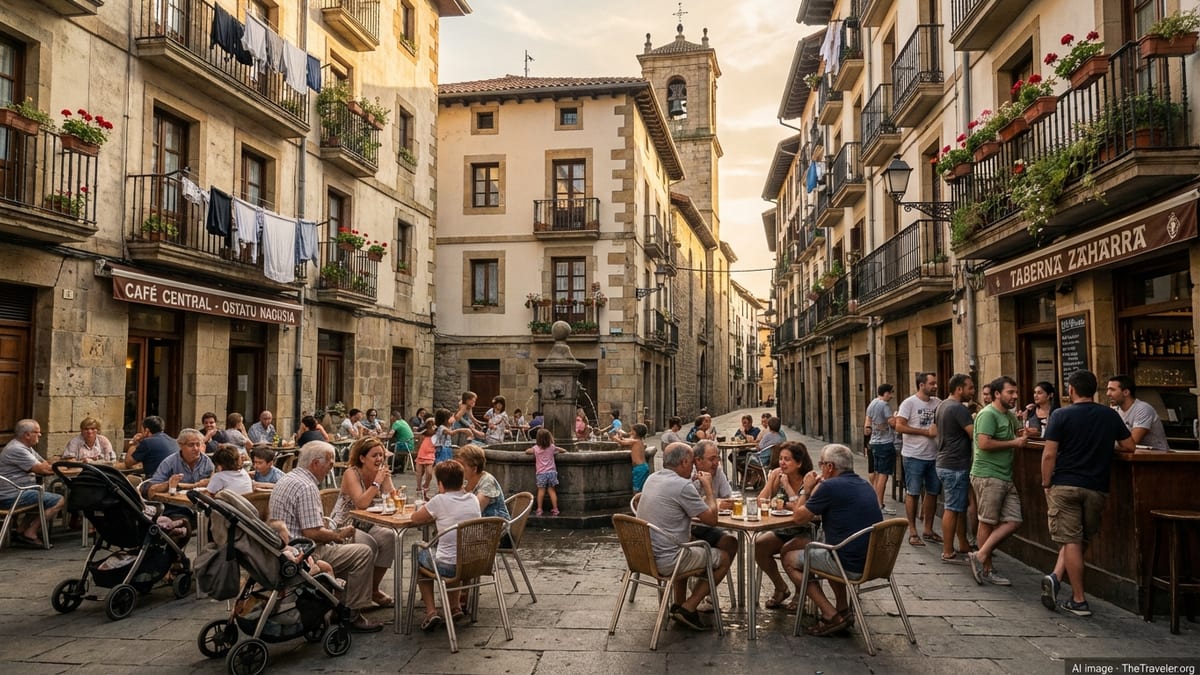
Beyond festivals and big gestures, Spanish culture is written in small, everyday rituals. One of the most enduring is the use of public space. Town squares function as collective living rooms where children play until late, older residents occupy benches, and cafe terraces host a constant murmur of conversation. On warm evenings, simply sitting in a plaza and watching life unfold is an immersion in the country’s social fabric.
The daily timetable also tells a cultural story. Lunch remains the main meal of the day, often eaten mid-afternoon and followed, at least in smaller towns, by a quieter period when shutters come down and streets briefly empty. While the classic midday siesta has become less practical in big cities, where people commute and work in continuous shifts, the idea of structuring the day around a long lunch and late dinner still shapes social life.
Food, importantly, is not just fuel but a social glue. Long family meals on weekends, spontaneous after-work drinks, and small gatherings in neighborhood bars all reinforce community bonds. Tapas are part of this, but they are just one expression among many: hearty stews in the north, rice dishes in the east, seafood along the Atlantic and Mediterranean coasts.
For travelers, adapting to these rhythms is part of engaging with local culture. Accept that dinner might not start before nine in the evening, that shops in smaller towns could shut for several hours in the afternoon, and that lingering over coffee instead of rushing away is entirely normal. These habits speak to a broader value placed on conversation, community and taking time.
Family, Faith and Shifting Traditions
Family remains a cornerstone of Spanish life, even as the country modernizes and social attitudes evolve. It is common for several generations to live in close proximity, see each other frequently and share responsibilities such as childcare. Sunday lunches often turn into multi-hour affairs where cousins, grandparents and friends all crowd around the table.
These strong family ties help explain why many young adults continue living with parents longer than in some other European countries. Economic realities play a role, of course, but there is also less stigma attached to intergenerational households. It is not unusual to see three generations strolling together in the evening paseo, the traditional walk through town that anchors many people’s daily routine.
Religion historically shaped much of Spain’s cultural calendar, with Catholic feast days dictating festivals, processions and public holidays. Today, active religious practice varies widely by region and generation. In some areas, Holy Week processions still draw large crowds and deep emotional engagement, while in others, participation has become more cultural than devout.
At the same time, Spanish society has become increasingly plural. Immigration from Latin America, North Africa, Eastern Europe and South Asia has brought new faiths, cuisines and cultural practices to cities and coastal regions. Hindu temples, mosques and Latin American evangelical churches coexist with centuries-old cathedrals. This mix is reshaping neighborhoods and adding new layers to the country’s already diverse identity.
Festivals Beyond the Familiar Icons
Flamenco festivals and bullfighting often dominate international coverage of Spanish celebrations. Yet many of the country’s most revealing cultural events look quite different. Across Spain, hyper-local fiestas showcase everything from acrobatic human towers to elaborate fire rituals, each rooted in its own landscape and history.
In Catalonia, groups known as castellers build castells, or human towers, that can reach several stories high. Participants of all ages climb onto one another’s shoulders in precise formations, supported by a dense human base. The towers rise during town festivals, at major city celebrations and at dedicated competitions. For locals, castells symbolize cooperation, trust and community discipline as much as physical daring.
Elsewhere, fire and light dominate. Coastal towns might stage correfocs, where costumed figures run through the streets with handheld fireworks, and toro de fuego events, in which a bull-shaped frame loaded with pyrotechnics chases laughing crowds through a square. In Valencia, the famous Fallas festival fills the city with enormous, satirical sculptures that are ultimately burned in cathartic nighttime bonfires, blending humor, artistry and communal release.
For travelers, these festivities offer a direct window into local values: collective effort, irreverent humor, and a willingness to embrace joy and risk together. They also remind visitors that Spanish culture is not frozen in the past, but constantly reinterpreted by new generations who adapt age-old customs to contemporary life.
Creativity in Contemporary Spain: Art, Film and Design
Spain’s artistic reputation is often linked to historical figures such as Velázquez, Goya, Picasso and Dalí. Yet the country’s contemporary cultural scene is just as revealing. In Madrid, Barcelona, Bilbao, Valencia and beyond, a new generation of filmmakers, visual artists, designers and musicians explore themes such as memory, migration, gender and regional identity.
Independent cinemas curate Spanish and Latin American films that go far beyond international blockbusters, addressing social change, urban life and the lingering echoes of the dictatorship. Street art has become an important outlet in many neighborhoods, especially in industrial districts repurposed as creative hubs, where murals reflect local struggles and dreams.
Architecture and design also express modern Spanish culture. Projects that transform old factories into cultural centers, waterfronts into public promenades and historic markets into multifunctional spaces demonstrate how cities are reimagining their relationship with space and heritage. Cafes where traditional tiles meet minimalist interiors, or galleries installed in former warehouses, speak to a dialogue between past and present rather than a rejection of either.
Visitors who seek out local galleries, small live music venues or neighborhood design shops will encounter a culture in conversation with the wider world, not just performing a greatest-hits repertoire for tourists. These spaces highlight the curiosity, experimentation and diversity that define life in contemporary Spain.
How Travelers Can Go Deeper
Experiencing the depth of Spanish culture does not require expert knowledge, only curiosity and a willingness to look beyond the obvious. Choosing to stay in a residential neighborhood rather than a tourist-only district, for example, changes what you see and hear. The local bakery, the bar where workers stop for a morning coffee, the playground full of evening chatter all reveal details that no guidebook can fully capture.
Engaging with language is another powerful entry point. Learning a few words of the regional language, paying attention to how people greet one another, or simply listening on public transport can help you pick up rhythms and expressions that do not translate neatly into textbook Spanish. Even noticing the order of languages on street signs can teach you something about local identity.
Food choices matter too. Instead of seeking out only familiar dishes, ask about daily specials, regional specialties or seasonal ingredients. In Galicia this could mean trying octopus in a small town bar; in inland Castile, a slow-cooked roast or hearty soup; in Catalonia, grilled vegetables and sausages at a rural restaurant. These meals are often tied to local agriculture and family traditions, and asking about them can spark memorable conversations.
Above all, give yourself time. Spanish social life often unfolds slowly, over long walks, shared meals and repeated encounters. Returning to the same cafe for several mornings, or to the same bar over a few evenings, can transform you from anonymous tourist into a familiar face, opening doors to stories, recommendations and insights that are rarely offered on first meeting.
The Takeaway
Spain’s global image of flamenco dresses, bullrings and tapas plates contains grains of truth, but it leaves out far more than it reveals. The real richness of Spanish culture lies in the interplay between its many regions, languages and histories, in the way daily rituals of eating and socializing shape community, and in the creativity with which old traditions are adapted to new realities.
For travelers, moving beyond the clichés means paying attention to the details: the language of a street sign, the timing of a meal, the posters advertising a local festival or neighborhood concert. It involves recognizing that Barcelona is not Seville, that Bilbao is not Valencia, and that each place you visit contains worlds within worlds.
By approaching Spain with patience and curiosity, you trade a postcard version of the country for a layered, living experience. You begin to see that Spanish culture is not just something performed for visitors in crowded plazas, but something negotiated every day by the people who call this remarkably diverse country home.
FAQ
Q1. Is flamenco popular everywhere in Spain?
Flamenco is most strongly rooted in Andalusia and parts of Extremadura and Murcia. Other regions have their own musical traditions and may engage with flamenco more as an art form than a daily practice.
Q2. Do people in Spain still take a daily siesta?
In large cities, many people work continuous hours and do not go home to sleep at midday, though lunch remains a long, central meal. In smaller towns and rural areas, a quieter early afternoon and flexible schedules are still common.
Q3. How many languages are spoken in Spain?
Besides Spanish, several regional languages such as Catalan, Galician and Basque are widely used, and smaller languages like Aranese or Asturian have local communities of speakers.
Q4. Is tapas the main way Spaniards eat every day?
Tapas are popular, especially for socializing, but most people also eat full meals at home or in restaurants. Tapas are one part of a broader food culture that includes regional dishes and family cooking.
Q5. Are bullfights still an important part of Spanish culture?
Bullfighting remains present in some regions but is increasingly debated and restricted in others. Many Spaniards never attend bullfights and may view them as controversial rather than central to their identity.
Q6. How can I experience authentic local culture as a visitor?
Stay in residential neighborhoods, use local markets and small bars, attend neighborhood festivals or concerts, and be open to conversations with residents about their daily lives and traditions.
Q7. Is Spain very religious today?
Religious practice varies by region and generation. Traditional Catholic festivals still draw large crowds, but for many people participation is as much cultural and social as it is devotional.
Q8. What is the typical dining schedule in Spain?
Breakfast is usually light, lunch often happens mid-afternoon and is the main meal, and dinner tends to be late in the evening, especially in summer and in larger cities.
Q9. Are regional identities a source of tension?
Regional identities can be politically sensitive, and debates about autonomy and language rights continue. At the same time, many people embrace layered identities and navigate these differences in everyday life.
Q10. Do I need to speak Spanish to travel in Spain?
In major tourist areas, many people working in hospitality speak some English. Learning basic Spanish and a few regional phrases, however, greatly enriches interactions and shows respect for local culture.