

I arrived in Victoria, British Columbia with that classic day-trip optimism: one full day to walk the harbor, wander the streets, and end with big Pacific views. In my head, it was all bobbing sailboats, relaxed seaside paths, and a slow, golden sunset.
In reality, it was still beautiful, but also more crowded, more commercial, and more rushed than I had imagined. Here is exactly how my day unfolded, what genuinely impressed me, what fell flat, and what I would change if I ever tried to squeeze Victoria into a single day again.
First Impressions at the Inner Harbour
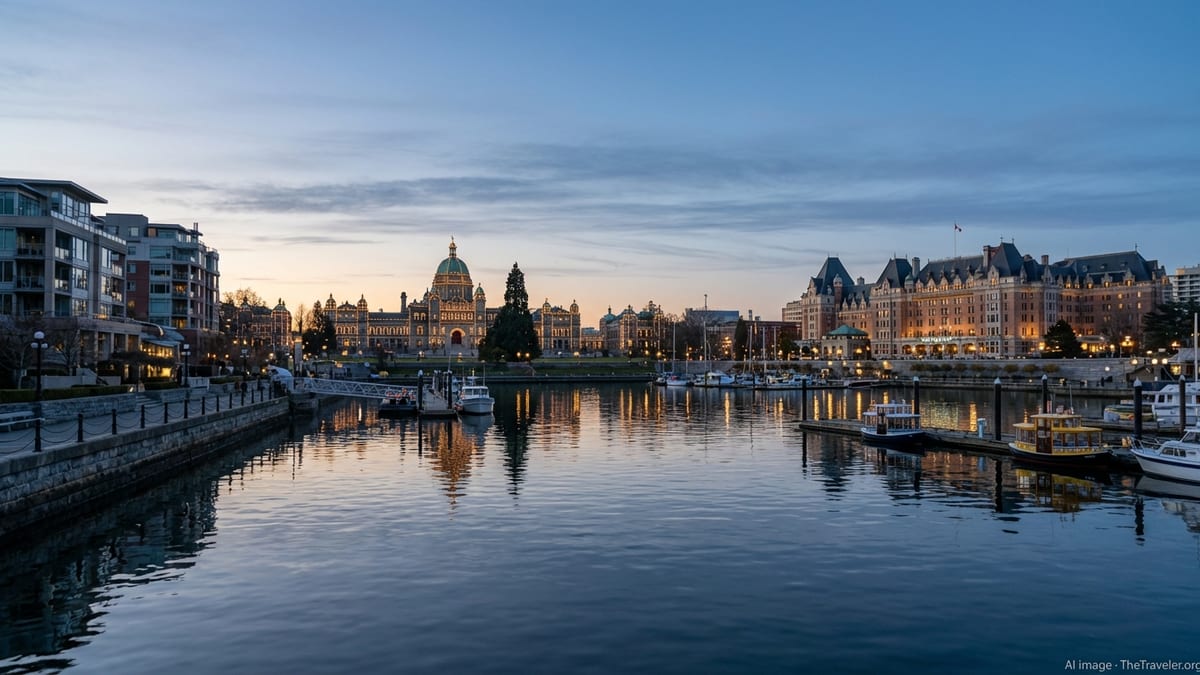
My day started just after sunrise at the Inner Harbour, when the city was still stretching awake. The water was calm, the air carried a faint mix of salt and diesel, and a few floatplanes sat quietly at their docks. I loved this brief, almost private version of Victoria. Without the usual crowds, I could actually hear the clinking of halyards and the gulls arguing over breakfast. Visually, it was as pretty as all the photos suggest: heritage buildings backing a tight curve of water, Parliament’s domes off to one side, and the Fairmont Empress anchored like an old-fashioned postcard.
As the morning went on, the mood shifted. Tour buses started arriving, more floatplanes began taking off, and I watched the harbor turn from serene to busy in under an hour. I do not mind energy, but the noise ramps up quickly here, especially once the seaplanes start a steady rotation. If you are expecting quiet contemplation by the water at mid-morning on a popular day, you will probably be disappointed. This harbor is an active transportation hub first and a tranquil viewpoint second.
What I did appreciate was how walkable the immediate area felt. Sidewalks wrap the water’s edge, and there are plenty of viewpoints without needing to pay for anything or book a tour. I could drift between the causeway, the steps near the visitor center, and the edges of the marinas at my own pace. It was a reminder that, despite the tourism machine around it, the basic appeal of Victoria’s harbor is still free and accessible with a pair of comfortable shoes.
Strolling the Songhees and Westsong Walkways
From downtown, I crossed the Johnson Street Bridge toward the Songhees side of the harbor, following the waterfront trail that locals generally refer to as the Songhees or Westsong Walkway. This was one of my favorite parts of the day, mostly because it let me step back and look at the city instead of being swallowed by it. The path is mostly flat and easy, looping around coves and over sections of boardwalk, with benches tucked in at regular intervals. From here, the Parliament Buildings and Empress Hotel look like tiny, elegant props across the water.
That said, the walkway is not some untouched coastal wildland. There are condominiums, hotels, and manicured landscaping almost the entire way. At times it felt more like an upscale waterfront development than a rugged seaside trail. I had pictured rough rocks and open shoreline; what I got was a very civilized promenade with curated views. It was still pleasant, but I had to adjust my expectations and accept that this was a city walk with water, not a coastal hike.
I also noticed that the path can feel busier than it first appears, especially closer to the bridge. Joggers, dog walkers, visitors with cameras, and people commuting on bikes all share the same corridor. Most were considerate, but there were moments when I felt like I needed eyes in the back of my head to avoid blocking someone’s run or photo. If you are hoping to zone out and walk on autopilot, you may find yourself getting lightly jostled back into awareness.
Still, I liked being able to walk a few kilometers without ever leaving the water’s edge. I could stop to watch harbor ferries zigzag in the channel, listen to the low thrum of floatplanes landing, and see small pockets of natural rock and driftwood where the landscaping loosened its grip. It is an easy, low-stakes way to spend a couple of hours and probably the most relaxing segment of my entire day.
Midday in Downtown: Charm, Crowds, and Cruise Spillover
By late morning I headed back over the bridge into downtown, and this is where the cracks in the picture-postcard image started to show. The historic streets near the harbor are attractive, with brick facades, hanging flower baskets, and narrow lanes like Trounce Alley and Bastion Square. On paper, it is the sort of compact core I usually love. In practice, at midday it felt heavily curated for visitors. Many storefronts lean hard into souvenirs, themed pubs, and tourist-friendly menus. I found myself scanning blocks for places that felt geared to locals rather than whoever had just stepped off a cruise ship.
The cruise presence is not subtle. Even on a day without multiple ships in port, I could feel the city bracing for them. There are kiosks selling whale watching, bus tours, and bike rentals, and certain streets seem almost entirely oriented around short-stop visitors with just a few hours to spare. It is not inherently bad; tourism clearly keeps a lot of businesses afloat here. But if you are someone who dislikes walking through clusters of guided groups with name tags and matching stickers, downtown Victoria in the middle of the day will test your patience.
On the positive side, there are pockets of genuine character if you are willing to wander a few blocks farther. Bastion Square, despite hosting markets and plenty of tourist traffic, still has a nice sense of place with its restored buildings and view toward the harbor. Chinatown, with its gate and narrow Fan Tan Alley, felt more grounded in the city’s deeper history, even if some of the surrounding shops clearly know they are part of every visitor’s itinerary. These areas did not feel like secrets, but they at least reminded me that Victoria is more than a postcard backdrop.
What frustrated me most was the sense of time pressure. With just one day, I found myself skimming the surface: glancing into shops instead of browsing, gliding past heritage plaques without really reading them, and mentally weighing every detour against the sunset views I did not want to miss later. Victoria’s downtown rewards slowing down, and trying to absorb it between a morning harbor walk and an evening coastal stroll felt like doing it a disservice.
Afternoon Trade-offs: Museums, Gardens, or More Walking
The middle of the day forced a hard choice. Victoria is known for its gardens and museums, but there was no way to do everything justice in a few hours. I had imagined fitting in a major attraction and still having time for a long afternoon walk by the ocean. On the ground, that turned out to be overly optimistic. Distances are walkable, but not trivial, and queues, exhibits, and transit all eat up time.
I opted for more walking and brief cultural stops over a deep dive into any single museum or garden. That choice came with trade-offs. I skipped some of the blockbuster experiences in favor of wandering quieter streets and small parks. Part of me regretted not committing to at least one substantial indoor visit, especially when a light drizzle rolled through and I found myself sheltering under an awning instead of exploring an exhibit. If you are a museum person, you will probably want to deliberately carve out half a day for one place and accept that something else will have to slip off the schedule.
Food was another area where I felt the pinch of limited time. There are plenty of lunch options downtown, but around peak hours they fill quickly. I ended up in a place that was fine but not memorable, mostly because it had a shorter wait and I did not want to lose another half hour standing in line. The meal did its job, but it added to the feeling that I was making compromises all day: choosing speed over quality, proximity over atmosphere.
By mid-afternoon, I was already thinking ahead to the evening along the Dallas Road waterfront. That meant leaving some downtown corners unexplored. In a way, the afternoon became a transition zone rather than a highlight: a necessary set of small decisions and minor sacrifices to position myself for the sunset I was hoping the city would deliver.
Chasing Evening Light Along Dallas Road
From the downtown core, I walked toward the Dallas Road waterfront, which traces Victoria’s southern edge above the Strait of Juan de Fuca. Locals clearly love this area, and I quickly understood why. The path along the bluffs gives you open ocean, a big sky, and on a clear day a dramatic backdrop of the Olympic Mountains across the water. After the dense activity around the Inner Harbour, this stretch finally gave me the sense of space I had been craving.
However, it is not as seamless a stroll as I had pictured. You share the route with joggers, dogs, families, and cyclists, and certain sections can feel congested around late afternoon when everyone seems to come out at once. It is not unmanageable, but if you imagine a solitary coastal ramble you will likely be surprised by how many people had the exact same idea about where to end their day. Also, wind along this stretch can be intense, even when the city itself feels mild, so I was glad I had an extra layer; without it I would have bailed earlier and missed some of the best light.
I pushed on toward the breakwater area at Ogden Point. The long concrete wall and lighthouse at its far end have a utilitarian appeal rather than classic beauty. Walking out along the breakwater gave me a new angle on the city and a closer feel for the open water, but it also underlined how exposed this spot is. Gusts shoved at my back, and waves slapped the rocks just below. The added railings along much of the structure made it feel safer, but I was still conscious of my footing and the drop on either side. Anyone with a strong fear of heights or rough water might find this more nerve-wracking than inspiring.
As the sun lowered, clouds thickened a bit and the sky never quite delivered the blazing colors I had secretly been hoping for. Instead, I got a softer, muted palette: silvery water, pale sky, and the city turning slowly into a string of lights in the distance. It was not the cinematic finale I had built up in my head, but it was still quietly beautiful. In some ways, the understated end to the day felt truer to Victoria’s character: less spectacle, more gentle accumulation of small, good moments.
Victoria After Dark: Lit Landmarks and Lingering Energy
After retracing my steps from the waterfront, I looped back through the Inner Harbour as night settled. This was easily the most atmospheric part of the day. The Parliament Buildings were outlined in thousands of small bulbs, glowing against the dark sky, and reflections from the lights trembled on the harbor surface. The Empress and surrounding buildings were illuminated enough to feel special without tipping into garishness. Even the little harbor ferries, some still shuttling passengers, became moving points of light.
The downside to this nighttime charm is that the area can still feel busy, especially during peak seasons or on days when special events are underway. Street performers, buskers, and vendors give the causeway a festive feel, but they also add noise and crowds to what could otherwise be a more contemplative scene. I found it hard to find a quiet corner to simply sit and absorb the view without also listening to competing speakers and music from different directions.
Practicalities also intrude on the magic. If you are staying outside the core, getting back to accommodations or a late ferry or flight can limit how long you are comfortable lingering. I caught myself checking the time more than I wanted to. It is not a city where late-night transit or services feel endless, especially compared to larger urban centers. I ended up cutting the evening short by a little, choosing certainty over squeezing out the last possible view.
Still, those final passes by the harbor at night did a lot to balance out my earlier frustrations. Seeing the same buildings and boats I had watched under grey midday cloud now wrapped in warm light felt like a second chance. It did not erase the overcrowded sidewalks or the tourist shops, but it reminded me why people keep coming back here: when Victoria leans into its harbor setting, especially after dark, it is genuinely hard to resist.
The Takeaway: Was One Day in Victoria Worth It?
Looking back on my single day in Victoria, I feel two things at once. On one hand, I am glad I went. The harbor is undeniably scenic, the waterfront walks are easy and rewarding, and the city offers an appealing blend of coastal setting and historic architecture. On the other hand, trying to compress everything from morning harbor walks to evening views into a single day left me feeling like I had skimmed past the city rather than really met it.
If you only have one day, I still think Victoria is worth the trip, but with managed expectations. You will not see everything, and some things will feel more commercial than charming. The Inner Harbour is beautiful but busy, the downtown core leans heavily into tourism, and you will be sharing the best viewpoints with a lot of other people. Weather will also shape your experience more than you might like to admit. A cool wind on Dallas Road or a stubborn bank of cloud at sunset can subtly erode the idealized picture you may have carried in with you.
I would not repeat my day in exactly the same way. Next time, I would either slow down and focus on fewer areas or commit to spending at least one night so I could see the harbor in the early morning and late evening without day-trip time pressure. I would prioritize one substantial indoor visit, whether a museum or gallery, and accept that I would have to skip some of the strolling. And I would plan meals a bit more deliberately, even if that meant walking a few extra blocks away from the highest-traffic streets.
In the end, Victoria worked best for me in its quieter moments: early harbor walks, mid-trail pauses on the Songhees and Westsong Walkways, and that gentle transition from dusk to night around the Inner Harbour. If you value those smaller, slower experiences and you are comfortable ignoring some of the more manufactured tourist energy, a well-planned day from morning harbor walk to evening views can absolutely be satisfying. Just do not expect a flawless postcard. Expect instead a real, lived-in coastal city that sometimes feels crowded and commercial, but still manages, often enough, to be quietly beautiful.
FAQ
Q1. Is one day really enough to experience Victoria, BC?
For a first taste, yes, but it will feel rushed. One day lets you see the Inner Harbour, walk a waterfront trail, and catch evening views, but you will only scratch the surface.
Q2. What time of year is best for a day trip focused on harbor walks and views?
Late spring to early fall generally offers the best combination of daylight, milder temperatures, and a good chance of clear evening views, though weather is never guaranteed.
Q3. How crowded does the Inner Harbour get during the day?
By late morning, especially in peak season and on busy weekends, the Inner Harbour can feel quite crowded with tours, cruise visitors, and general foot traffic.
Q4. Are the Songhees and Westsong Walkways suitable for all fitness levels?
The walkways are mostly flat and well maintained, making them accessible for most fitness levels. You can easily adjust distance by turning around at any point.
Q5. Is the Dallas Road waterfront windy or exposed?
Yes, the Dallas Road area is often significantly windier than downtown. Even on mild days, the bluffs and breakwater can feel exposed, so extra layers are a good idea.
Q6. Can I fit in a major museum or garden visit on a one-day itinerary?
It is possible, but you will need to sacrifice time elsewhere. Realistically, you can fully enjoy one major indoor attraction and still have a harbor walk, but not much more.
Q7. Is Victoria easy to explore on foot without a car?
For a one-day visit centered on the Inner Harbour, downtown, and nearby waterfront paths, walking works well, though distances to some viewpoints are longer than they look on a map.
Q8. How late do things stay lively around the harbor in the evening?
In busier seasons, the harbor area remains lively around dusk and into early evening, but it is not a late-night city. Activity tapers off relatively early compared to larger urban centers.
Q9. Are there quieter spots if I want to avoid the most touristy areas?
If you walk a bit farther along the Songhees or Westsong Walkways, or continue past the busiest sections of Dallas Road, you will usually find calmer stretches with fewer people.
Q10. Would you recommend staying overnight instead of doing a day trip?
If you can, yes. An overnight stay lets you enjoy early mornings and late evenings by the harbor without clock-watching, and reduces the sense of rushing from one view to the next.