

More news on this day
Bangladesh’s decision to bar Indian budget carrier SpiceJet from its airspace over unpaid navigation dues is rippling across short-haul corridors in eastern South Asia, lengthening flight times, raising costs and unsettling travel plans at the height of the region’s busy winter tourism season.
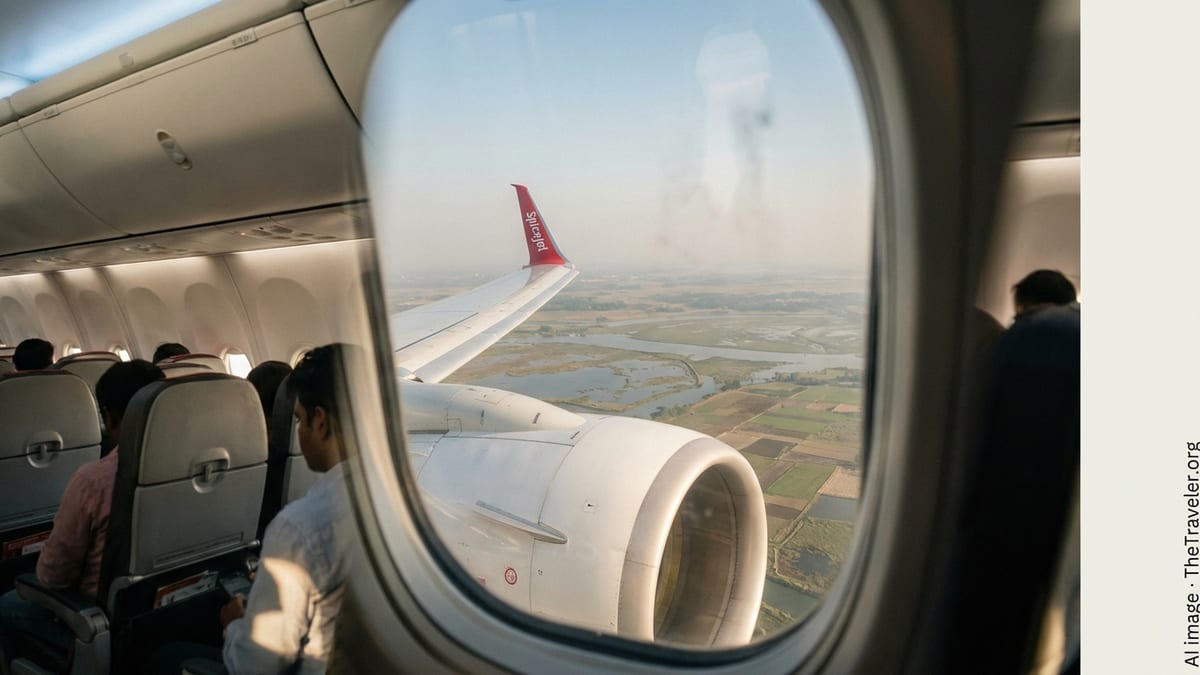
Regulatory Move Closes a Crucial Corridor
The Civil Aviation Authority of Bangladesh has suspended SpiceJet’s overflight rights after the airline allegedly failed to clear pending air navigation charges, according to multiple media reports citing officials and industry sources. The restriction, which took effect this week, effectively closes one of the most efficient eastbound corridors for the Indian low cost carrier’s operations from Kolkata.
SpiceJet does not operate scheduled passenger services to and from Bangladesh, but it has relied on Bangladeshi airspace as a shortcut for flights linking Kolkata with cities in India’s northeast. With the ban in place, affected services must now arc around Bangladeshi territory, adding distance to sectors that are already finely balanced on time, crew duty limits and fuel economics.
The airline has said it is in “regular dialogue” with Bangladeshi authorities on operational and procedural matters, including navigation-related charges, and has described the dispute as a routine industry issue. Industry analysts, however, note that outright airspace closures over unpaid dues are rare and typically signal a breakdown in negotiations between carriers and regulators.
Longer Routes Stretch Flight Times and Schedules
Flight tracking data over recent days has shown SpiceJet services between Kolkata and northeastern destinations such as Guwahati and Imphal avoiding Bangladeshi skies and instead flying longer domestic routings. Aviation sources estimate the detours are adding around 20 to 30 minutes to some sectors, a significant increase on routes that normally take about an hour.
Extra flying time ripples through an airline’s tightly choreographed daily schedule. A 30 minute extension on one leg can delay the aircraft’s subsequent rotations, compressing turnaround buffers at busy airports, and making the network more vulnerable to knock on disruptions from minor weather or ground handling delays.
For passengers, even modest schedule shifts can mean missed onward connections, tighter margins for rail or road links at either end of the journey and less predictability for business and leisure trips. Travel agents in Kolkata and Guwahati reported a rise in queries from customers concerned about punctuality and minimum connection times, particularly those pairing SpiceJet’s domestic segments with international flights operated by other carriers.
Tourism and Regional Connectivity Under Pressure
The airspace restriction comes during a period of heightened travel across the eastern subcontinent, with cooler winter temperatures drawing domestic tourists to hill states and wildlife destinations in India’s northeast. Routes that depend on efficient eastbound corridors from Kolkata serve as critical feeders for tourism in Assam, Meghalaya, Manipur and neighboring regions.
Tour operators say longer flying times and the risk of delays are already influencing booking behavior. Some travelers are opting for alternative airlines that are not dependent on Bangladeshi airspace for similar routes, while others are shifting to rail or road for shorter trips in an effort to avoid uncertainty. Industry executives warn that if the dispute persists into the spring and summer seasons, it could erode confidence in air connectivity to emerging destinations that rely heavily on budget carriers.
Beyond India, the episode underscores the importance of cross border airspace access for regional tourism flows. Although SpiceJet’s current detours mainly affect domestic sectors, Bangladesh and India have been promoting joint itineraries focused on heritage, river tourism and Buddhist circuits. Any perception of regulatory friction on aviation matters could complicate efforts to market the region as a seamlessly connected tourism cluster.
Passenger Experience: More Time in Transit, Rising Frustration
On the ground, many passengers have encountered the impact of the new routings primarily as extended time in the air. Frequent flyers on the Kolkata Guwahati corridor reported arrival times creeping beyond what they had come to expect, even when official schedules remained largely unchanged in reservation systems.
Some customers have taken to social media to question why flights on historically short sectors are now spending more time airborne, while others have expressed concern about potential knock on costs if extended travel times lead to missed hotel check ins or tour departures. Travel advisors are recommending that passengers build in extra buffers on the affected routes and closely monitor flight status on the day of departure.
SpiceJet, for its part, has maintained that its overall operations remain “unaffected” and that scheduled services continue in line with regulatory requirements. However, consumer advocates argue that even incremental extension of flight times, when combined with the psychological impact of an airspace ban, can erode passenger confidence, particularly among price sensitive travelers who choose low cost carriers on the basis of simplicity and reliability.
Financial Strain and Operational Costs for SpiceJet
The ban arrives at a delicate moment for SpiceJet, which recently reported a net loss for the quarter ended December 2025, citing higher expenses and one off costs. The need to fly longer routes without the benefit of Bangladeshi airspace adds fresh pressure in the form of extra fuel burn, higher navigation fees on alternative paths and potential crew overtime.
On short haul routes, airlines often compete on razor thin margins, relying on efficient routings and high aircraft utilization to keep unit costs down. An additional 20 to 30 minutes on multiple daily sectors can quickly add up to several additional hours of aircraft and crew time each day, reducing productivity and squeezing profitability further.
Investors have already reacted cautiously. Indian business media reported a modest dip in SpiceJet’s share price following initial reports of the Bangladesh decision. Market analysts note that while the immediate financial impact of the detours may be manageable, the episode reinforces perceptions of ongoing financial and regulatory challenges facing the carrier.
Regulatory Standoff and Scope for Resolution
Bangladeshi outlets have described the move as a suspension based on non payment of air navigation charges, a routine fee that airlines pay for the right to use a country’s airspace. Such dues are typically settled through regular billing and reconciliation processes between carriers and air navigation service providers, and disputes are often resolved quietly without visible operational fallout.
In this case, however, the authorities opted to close airspace access for SpiceJet, signaling a firmer stance. The specific amount allegedly owed has not been publicly disclosed, and the Civil Aviation Authority of Bangladesh has not issued a detailed breakdown of the outstanding charges. That lack of transparency has prompted questions within the aviation community about how negotiations unfolded and why they reached a point of operational sanction.
SpiceJet has expressed confidence that it can reach an early resolution, framing the matter as part of the normal course of business. Industry observers say that if the airline settles the dues promptly and engages in a structured payment plan, overflight rights could be restored, easing strain on routes through Kolkata and helping stabilize passenger sentiment. Until then, both sides face scrutiny over the balance between regulatory enforcement and the broader economic value of uninterrupted air connectivity.
Implications for Travelers and the Wider Aviation Market
For travelers, the immediate question is whether to continue booking on affected SpiceJet routes while the airspace ban remains in place. Travel agencies in major Indian cities report that corporate clients, who are more sensitive to schedule reliability, are already diversifying carriers on key northeastern routes. Leisure travelers, by contrast, remain strongly price driven, with many still choosing the lowest available fare even if it involves slightly longer flying time.
If operational disruptions escalate, rival airlines may seek to capture market share by adding capacity on the most affected sectors or promoting interline connections that avoid the congested corridor altogether. Over time, such shifts could reshape competitive dynamics in eastern India, particularly if some carriers secure more favorable airspace or slot arrangements that allow them to maintain shorter sector times.
The episode also serves as a reminder of how quickly localized regulatory decisions can reverberate through the travel ecosystem. Online travel agencies must update schedules and minimum connection time recommendations, hotel and tour operators may need to adjust check in windows, and insurance providers could see a rise in claims linked to missed connections or extended delays.
What Tourists and Travel Planners Should Watch Next
With negotiations ongoing between SpiceJet and Bangladeshi authorities, tourism stakeholders are watching for concrete signs of progress. A formal statement from the Civil Aviation Authority of Bangladesh on the status of talks, a partial restoration of overflight rights or a revised navigation charging schedule would all be seen as indicators that the dispute is moving toward resolution.
Until then, travel planners advise passengers with time sensitive itineraries to build greater flexibility into their schedules, especially when connecting from affected domestic flights to long haul services in hubs such as Delhi or Mumbai. Some are recommending that travelers headed to northeastern leisure destinations choose departures earlier in the day, when there is more room to absorb cascading delays.
For now, the skies over Bangladesh remain closed to SpiceJet, and the airline’s aircraft continue to trace longer arcs across South Asia’s busy airways. Whether this proves to be a short lived detour or a longer chapter in the carrier’s financial and operational adjustment will help determine how deeply the current disruption ultimately affects tourism flows, travel plans and passenger confidence in one of the region’s most price sensitive aviation markets.