

More news on this day
SpiceJet has more than doubled its domestic market share to just over four percent in three months, powered by a 56 percent surge in capacity and the rapid induction of 16 aircraft, in the clearest sign yet that the Indian low-cost carrier’s long-awaited operational recovery is finally taking hold.
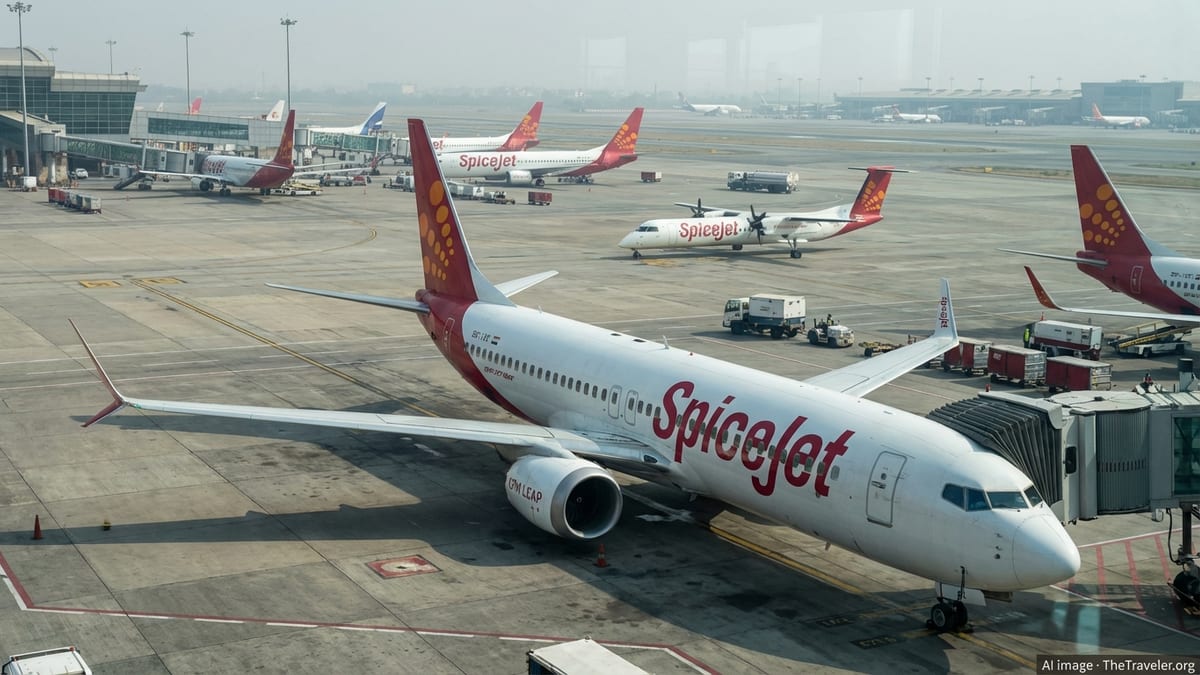
Market Share Rebound Signals a Sharp Turnaround
The latest traffic data show SpiceJet’s domestic market share rising to 4.3 percent in December 2025, up from around 1.9 percent in September 2025. For an airline that had been stuck in a prolonged period of capacity cuts, grounded jets and shrinking relevance in India’s fiercely competitive skies, the move back above the four percent threshold marks a symbolic and operational milestone.
The improvement is striking not only in percentage terms but also in the pace of the turnaround. Over one quarter, SpiceJet has shifted from the margins of the domestic market back into the second tier of Indian carriers, even as larger rivals such as IndiGo and Air India Group continue to dominate. Industry analysts say the market share gain reflects the first tangible payoff from the carrier’s strategy of selectively rebuilding its fleet and schedule after several years of retrenchment.
Executives at the airline describe the jump as evidence that passengers are responding to more available seats and better connectivity on core routes. By restoring frequency in key metros and adding capacity in high-growth regional markets, SpiceJet has begun to recapture demand that had migrated to competitors during its operational slump.
Capacity Up 56 Percent as Sixteen Aircraft Join the Fleet
The foundation of the market share surge is a dramatic ramp-up in flying capacity during the October to December 2025 quarter. SpiceJet reports that its Available Seat Kilometres, the standard industry measure of capacity, rose by 56 percent quarter on quarter, reflecting both higher utilisation of existing aircraft and the arrival of 16 additional jets.
Most of the new capacity has come through short-term wet leases of Boeing 737 aircraft, including Next-Generation and 737 MAX variants. Wet leasing, where aircraft, crew, maintenance and insurance are provided by the lessor, has allowed SpiceJet to add seats quickly without the long lead times usually associated with deliveries from manufacturers or the heavy upfront capital expenditure of outright purchases.
This influx of aircraft has effectively doubled SpiceJet’s deployed capacity compared with the previous quarter, with monthly available seats rising from roughly 55 crore ASKMs to about 105 crore. The additional lift has been channelled into high-demand domestic routes, where the carrier can best monetise its network, as well as selective international city pairs where yields are more resilient.
Crucially for travellers, the increased capacity has translated into more choices of departure times and restored nonstops on some routes that had seen service reductions. For an airline whose value proposition rests on affordable fares and point-to-point convenience, the ability to put more aircraft back in the air is central to winning back customers.
Network Rebuild Targets 60 Aircraft and 300 Daily Flights
Looking beyond the initial rebound, SpiceJet’s board has endorsed an ambitious but calibrated expansion plan that would see the active fleet grow to around 60 aircraft and daily departures climb past 300 flights by the winter 2026 schedule. The strategy leans on a combination of wet and damp leases, together with the phased return to service of grounded aircraft.
In recent days the airline has announced a memorandum of understanding to induct a further 10 aircraft, a move that management says will more than double capacity over the course of 2026 compared with current levels. The carrier is targeting roughly 220 to 225 crore Available Seat Kilometres by winter 2026, effectively cementing the gains of the past quarter and adding another significant leg of growth.
The network rebuild is being shaped to balance trunk routes with thinner city pairs where a lower-cost operator can stimulate demand. That includes reinforcing metro-to-metro links at peak times, deepening presence on busy leisure corridors, and maintaining a foothold in select international markets where SpiceJet can differentiate on timing and price.
For domestic and regional travellers, the planned ramp-up suggests a denser schedule, more direct options and potentially some fare relief on routes where capacity had been constrained. For India’s wider aviation market, it underscores the continued expansion of low-cost capacity even as the sector absorbs new aircraft from multiple carriers.
Improving Loads and Yields Point to Operational Momentum
SpiceJet’s capacity push has not come at the expense of utilisation. The airline has reported passenger load factors around the 90 percent mark in the latest quarter, up from the mid-80s earlier in the year. That level of seat occupancy is among the highest in the Indian market and indicates that the additional flights are being absorbed by underlying demand rather than flying empty.
Revenues have responded accordingly. Operating income in the December 2025 quarter jumped sharply compared with the preceding period, helped by both higher traffic volumes and better yields. Revenue per available seat kilometre has improved, suggesting that the airline has been able to pass through at least some of the higher fuel and leasing costs without sacrificing load factors.
The combination of fuller planes and a broader network has narrowed SpiceJet’s underlying losses, even though the airline remains in the red at the net level. Management has highlighted a move back into positive operating earnings before aircraft rent and other key charges, describing the quarter as an inflection point after a series of loss-making periods.
For the travelling public, this operational momentum can translate into more reliable schedules and a better on-board product, as airlines with healthier cash flows are generally better placed to invest in maintenance, cabin refurbishment and customer service. Yet it also raises questions about how long SpiceJet can sustain elevated loads if competitors respond aggressively on capacity and fares.
Financial Fragility and Lease Dependence Temper the Recovery
Behind the headline growth numbers, SpiceJet’s balance sheet remains stretched. The airline continues to post net losses, carries negative shareholder equity and relies heavily on leased aircraft, particularly short-tenor wet leases that tend to be more expensive than traditional operating lease arrangements. Industry observers note that while such leases are an effective tactical tool to regain market share, they can weigh on margins if used for too long.
The carrier has taken steps to shore up its finances, including equity issuances to strategic partners and efforts to monetise non-core assets and surplus spare parts. Some of the fresh capital has been used to clear overdue statutory liabilities and settle with lessors and vendors, moves that have helped keep more aircraft available for service and stabilised relations with key stakeholders.
However, SpiceJet’s liquidity position remains tight compared with larger rivals, and its ability to fund sustained expansion could hinge on continued access to capital and a further reduction in legacy costs. Episodes such as recent overflight fee disputes with regional authorities have underscored the need for disciplined cash management as the airline ramps up operations.
Analysts caution that the current phase of growth will need to be matched by continued improvements in punctuality, customer experience and operational resilience if SpiceJet is to convert short-term market share gains into durable competitive strength. They also point out that a lease-heavy fleet strategy leaves the airline more exposed to swings in leasing rates and exchange rates.
Competitive Landscape in India’s Crowded Skies
SpiceJet’s resurgence comes at a time of profound change in India’s aviation market. IndiGo remains the dominant force with well over half of domestic traffic, while the combination of Air India and Vistara under the Tata umbrella is steadily integrating and expanding. Akasa Air has been carving out share as a new entrant, and other regional carriers are jostling for space.
In this context, a four percent domestic market share may look modest, but it restores SpiceJet to a position where it is once again a relevant player in route planning and alliance discussions. The airline now has enough scale to influence pricing on certain sectors, particularly secondary city pairs where competition is thinner and travellers are more price-sensitive.
For passengers, a stronger SpiceJet increases choice and can act as a counterweight on fares in markets where consolidation has reduced the number of operators. For airports, especially in tier-two and tier-three cities, the airline’s renewed appetite for capacity offers a path to higher connectivity and utilisation, supporting broader tourism and business travel growth.
Yet the competitive pressures are intense. Rivals with healthier balance sheets and larger order books are already rolling out new aircraft with more efficient cabins and lower unit costs. To stay relevant, SpiceJet will need to keep fine-tuning its schedule, sharpen ancillary revenue streams and maintain a tight grip on controllable costs.
What the Recovery Means for Travelers and Tourism
For Indian travellers and inbound visitors alike, SpiceJet’s capacity ramp-up is already changing the map of affordable air travel. Routes that had seen frequencies cut during the airline’s downturn are seeing services restored, while some new point-to-point connections are opening up between non-metro cities, reducing the need for hub connections and cutting overall journey times.
Higher seat supply on busy domestic corridors can ease pressure on fares, particularly outside peak holiday periods, although elevated fuel prices and leasing costs limit how far prices can fall. For budget-conscious passengers, the presence of a revitalised low-cost carrier offering aggressive promotions and bundled deals is likely to be a welcome development.
Tourism-dependent destinations stand to benefit as additional flights make it easier for travellers to plan weekend breaks and short-notice trips. Increased connectivity to key gateways also supports outbound tourism, with more convenient domestic feed into international departures operated by other carriers. For business travellers in smaller cities, restored connectivity can make same-day trips and tighter schedules viable again.
At the same time, SpiceJet’s focus on restoring reliability will be closely watched by frequent flyers. On-time performance and customer handling during disruptions remain critical differentiators in a market where travellers have increasingly high expectations of service, even at low-cost price points.
Outlook: Momentum With Caveats
SpiceJet’s doubling of market share to just over four percent, fuelled by a 56 percent increase in capacity and the induction of 16 aircraft, marks a decisive turn in its multi-year struggle to regain relevance. The airline has moved from contraction to cautious expansion, backed by a clear fleet and network plan that targets 60 aircraft and more than 300 daily flights by winter 2026.
If the carrier can sustain high load factors, continue nudging up yields and hold operating costs in check, the current rebound could evolve into a more durable recovery. Further progress in reducing net losses and strengthening the balance sheet would, in turn, give management more room to invest in product, technology and people.
Yet significant risks remain. A lease-heavy fleet, lingering liabilities and intense competition from larger, better-capitalised rivals all pose challenges to SpiceJet’s long-term trajectory. External shocks, whether in fuel prices, currency movements or regulatory decisions, could quickly test the resilience of its turnaround.
For now, though, the airline’s return to modest growth and a market share north of four percent offers a rare piece of positive news in a sector that has seen repeated restructurings and failures. For travellers looking for more options and sharper pricing across India’s aviation network, SpiceJet’s operational recovery is a development worth watching closely over the coming year.