

More news on this day
Spirit Airlines is racing to reinvent itself as America’s ultra-low-cost carrier of choice, filing an ambitious reorganisation blueprint that aims to slash billions in debt, shrink and refresh its Airbus fleet, and restore confidence among price-sensitive travellers after a turbulent stretch of bankruptcies and route cuts.
Get the latest news straight to your inbox!
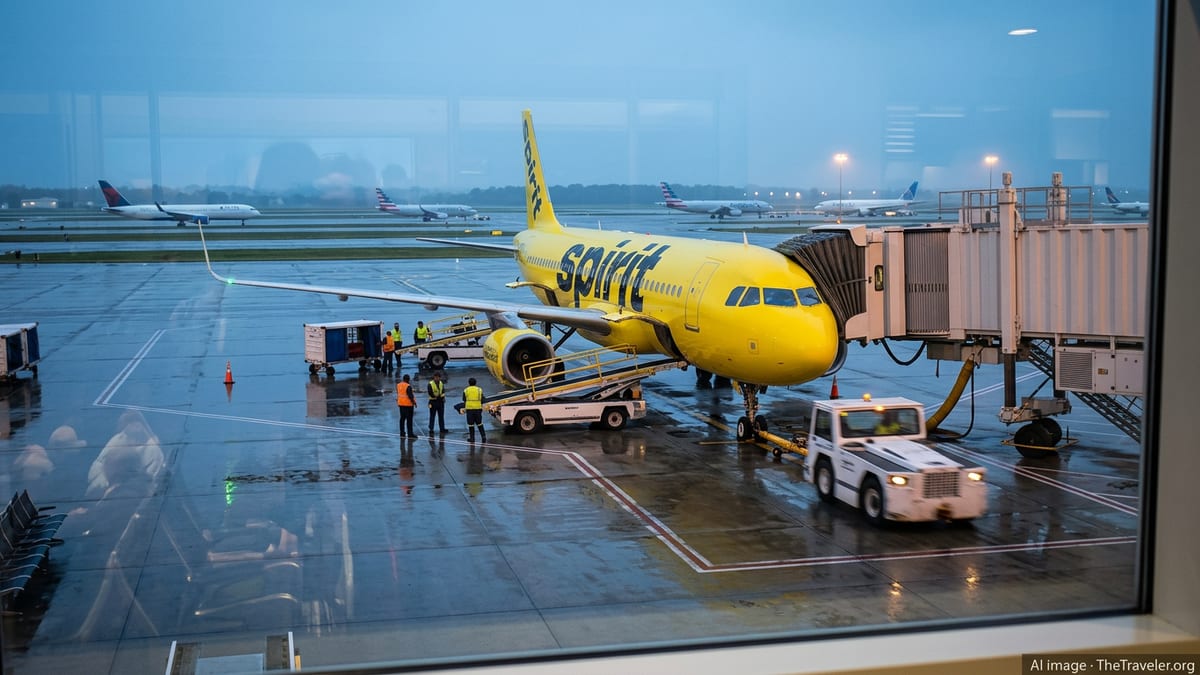
A High-Stakes Bid to Save a Budget Powerhouse
The latest filings from Spirit Aviation Holdings outline a sweeping plan to stabilise the South Florida-based carrier after back-to-back Chapter 11 processes that exposed just how fragile the ultra-low-cost model could be in the face of high interest rates, engine problems and softening domestic demand. The airline has already converted large chunks of legacy borrowings into equity, won court approval for hundreds of millions of dollars in fresh financing and begun renegotiating aircraft leases on aggressive terms designed to lighten its balance sheet.
Court documents and company statements show Spirit targeting a dramatic reduction in liabilities, seeking to restructure or discharge billions in secured notes and lease commitments while preserving enough cash and aircraft to operate a viable network. Management has framed the strategy as a necessary reset rather than a retreat, arguing that a leaner, less indebted Spirit will be better placed to compete on fares with rivals such as Frontier, Allegiant and the basic-economy offerings of the big three U.S. network carriers.
Industry analysts describe the effort as one of the most consequential restructurings in recent U.S. airline history, not least because of Spirit’s outsized role in driving down ticket prices on many domestic and Caribbean routes. For travellers, the outcome will help determine whether the era of rock-bottom base fares and pay-as-you-go extras continues to shape the lower end of the U.S. market.
Debt Relief, Fresh Cash and Tough Cost Cuts
Central to Spirit’s comeback story is a multilayered financial package that mixes new money, debt exchanges and hard-edged cost cutting. The carrier secured a sizeable debtor-in-possession credit facility and subsequently amended that agreement to unlock additional liquidity as it advanced its standalone reorganisation plan, subject to meeting strict performance milestones.
Spirit has also won bankruptcy court approval for complex settlements with key aircraft lessors, including AerCap affiliates, that will terminate dozens of unprofitable leases, provide the airline with cash relief and sharply reduce future rental obligations. That move, combined with proposed exchanges of high-interest notes into new instruments and equity, is intended to trim interest costs and free up funds to maintain operations while the company reshapes its network.
Those financial manoeuvres are being matched by painful headcount reductions. The airline has already furloughed several hundred pilots and warned that more cockpit and non-union corporate roles may be cut as capacity is reduced. Executives say staffing must be aligned with a smaller, more profitable fleet if Spirit is to avoid a third trip through Chapter 11 and ultimately return to growth.
Right-Sizing and Rebuilding the All-Airbus Fleet
Spirit’s fleet strategy sits at the heart of its restructuring narrative. The carrier entered its latest bankruptcy with more than 210 Airbus A320-family jets, but is now seeking to shed leases on roughly 40 percent of those aircraft to better match capacity with demand. In practice, that means parking or returning older, less efficient A320ceo models while concentrating future growth around newer A320neo and A321neo variants.
Recent disclosures from aircraft lessors and Spirit’s own fleet tables show the airline working to smooth out an order book that once envisioned rapid expansion well into the next decade. Delivery schedules for dozens of narrowbodies have been pushed into the 2030s or reshaped through new agreements with Airbus and leasing companies, allowing Spirit more time to digest additional capacity and avoid piling on debt to finance new jets before it has repaired its balance sheet.
For passengers, a more focused “Fit Fleet” of high-density A320neo-family aircraft could ultimately mean better reliability and more consistent cabin layouts, even if the short-term effect is a slimmer network and fewer daily frequencies. With rival discounters also moderating growth, any capacity pullback from Spirit risks nudging fares higher on routes where it has been a dominant low-fare player.
Network Retrenchment Today, Low-Fare Ambitions Tomorrow
As the restructuring progresses, Spirit has been pruning its map, exiting a string of marginal routes and pulling down flying in some secondary cities while concentrating aircraft in core leisure corridors. The airline has already withdrawn from more than 10 markets and trimmed schedules elsewhere, a pattern likely to continue as it tests which routes can support sustainable ultra-low fares in a higher-cost environment.
Executives insist that the near-term retrenchment is a prelude to a more disciplined return to growth once the plan of reorganisation is confirmed and the smaller fleet is fully redeployed. The stated goal is to rebuild a network that leans into the carrier’s strengths: dense, price-sensitive traffic flows from major U.S. population centres to Florida, Las Vegas, Latin America and the Caribbean, all operated with simple point-to-point flying and minimal hub complexity.
Travelers may notice a more cautious Spirit when it comes to speculative route launches and seasonal expansion. Instead of chasing every new opportunity, the airline is expected to focus on markets where it can sustain a clear price advantage over full-service rivals and maintain high aircraft utilisation without eroding yields.
What Spirit’s Gamble Means for U.S. Travelers
For now, Spirit’s dramatic reboot introduces both uncertainty and opportunity for U.S. travellers. On the one hand, schedule cuts, aircraft exits and staffing changes can create short-term disruption, including reduced frequencies, thinner options from smaller airports and a greater risk of cancellations as the operation is rebalanced.
On the other hand, a successfully restructured Spirit could help preserve a fiercely price-competitive tier of the domestic market at a time when consolidation and capacity discipline are nudging average fares upward. If the carrier manages to emerge with a lighter debt load, a younger, more efficient fleet and a tighter focus on its most profitable routes, it will be better equipped to keep offering bare-bones base fares that undercut legacy rivals.
For budget-conscious flyers, the message is to expect a period of adjustment as Spirit works through court approvals and implements its fleet and network changes. Over the medium term, the airline’s high-risk, high-reward plan will help determine whether ultra-low-cost travel across America remains a race to the bottom on price, or evolves into a slightly more sustainable, but still aggressively affordable, segment of the U.S. skies.