

Spirit Airlines is marking its twentieth anniversary at Hartsfield-Jackson Atlanta International Airport with a limited-time 20 percent discount on base fares from the hub, a headline offer aimed at budget-conscious travelers preparing for a forecast travel surge in 2026.
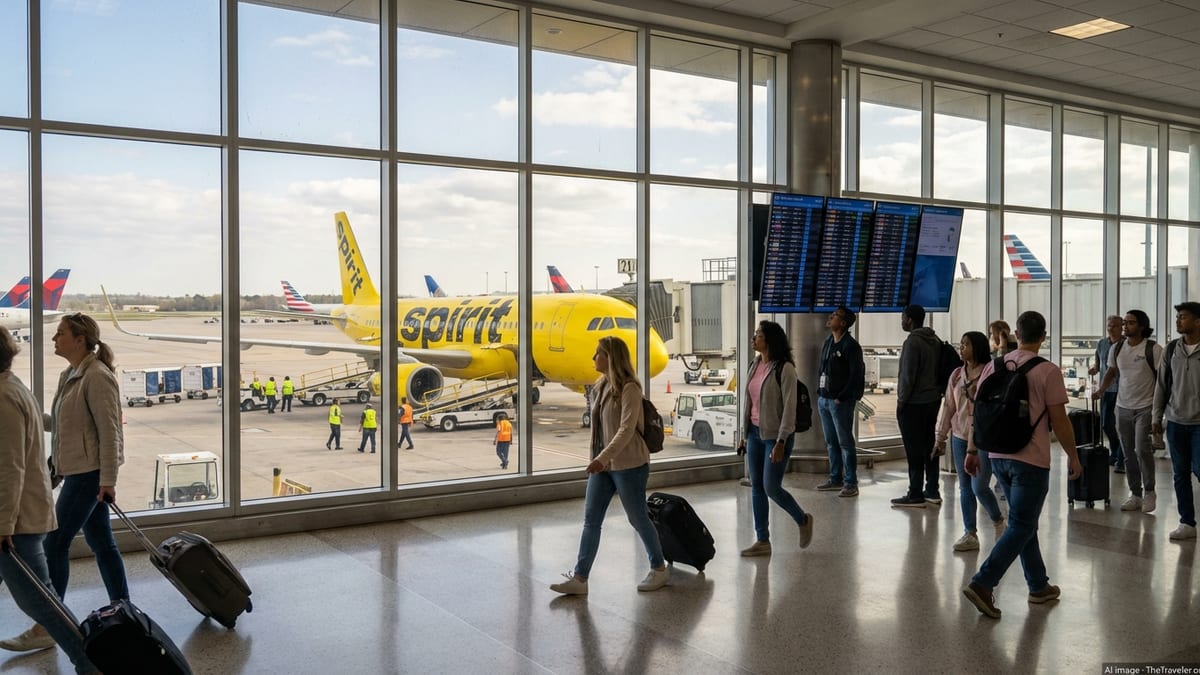
Anniversary Deal Targets Price-Sensitive Atlanta Travelers
Spirit Airlines announced the promotion on February 17, coinciding with the exact date the carrier first launched service at Hartsfield-Jackson Atlanta International Airport in 2006. The move underscores how important Atlanta has become within the airline’s network and highlights the growing competition for price-sensitive travelers at the world’s busiest airport.
The 20 percent discount applies to the base fare on one-way tickets originating from Atlanta, or on the Atlanta segment of a roundtrip or connecting itinerary. To qualify, customers must book between February 17 and February 18, 2026, and enter a dedicated promotion code at checkout. The offer is available only through Spirit’s own digital channels and excludes agency bookings.
While the discount targets the base fare and not government taxes or carrier-imposed fees, it effectively lowers entry-level ticket prices across a portion of Spirit’s Atlanta schedule. For travelers planning spring trips to Florida, the Midwest, the Northeast or the Caribbean, the timing is designed to capture demand that is already building for 2026.
Spirit’s promotion is structured as a short booking window tied to defined travel dates, a model the airline has relied on to stimulate traffic during key shoulder periods. For Atlanta, which has seen a steady expansion of low cost capacity, it is also a symbolic gesture marking two decades of growth at Hartsfield-Jackson.
Travel Window Set Around Early 2026 Demand
The fare sale covers travel from March 15 through May 20, 2026, a period that spans spring break, Easter and the early ramp-up to the broader summer travel season. Within that window, a series of day-of-week restrictions and blackout periods apply, reflecting the airline’s effort to steer discount seekers into less congested flights.
Tickets booked with the promotion are valid on select days in late March and early April, including many Tuesday and Wednesday departures when airlines traditionally see softer demand. Flights on some peak days in April and May, particularly Fridays and Sundays, are excluded from the discount. Certain dates around early April are blacked out entirely to protect high-yield holiday traffic.
By concentrating the offer on off-peak days and shoulder dates, Spirit aims to smooth demand across its Atlanta operation, filling seats that might otherwise go unsold while preserving revenue on the heaviest travel days. For leisure travelers with flexibility, the structure of the sale could translate into substantial savings when compared with standard spring fares.
The promotion also coincides with an evolving economic backdrop as airlines prepare for 2026. With consumers remaining highly price-conscious and many families planning travel further in advance, a targeted discount tied to a defined travel window gives Spirit a marketing hook while nudging travelers to lock in plans early.
Expanded Route Map Underscores Atlanta’s Strategic Role
Alongside the discount, Spirit is positioning its Atlanta network for higher demand in 2026 by restoring and increasing several key routes. Beginning in April, the carrier plans to operate up to 18 peak-day departures from Hartsfield-Jackson, linking Atlanta to major leisure and visiting-friends-and-relatives destinations across the United States and the Caribbean.
The refreshed schedule includes the resumption of nonstop service to Chicago O’Hare and Philadelphia, reconnecting Atlanta with two significant population and business centers in the Midwest and Northeast. Flights to Chicago are scheduled up to twice daily on select days, while Philadelphia returns as a daily service, broadening Spirit’s reach into competitive coastal markets.
Florida remains central to Spirit’s Atlanta strategy. The airline is boosting its Orlando service to three daily flights from mid-April, joining frequent connections to Fort Lauderdale and Miami. Additional daily or near-daily departures to Dallas-Fort Worth, Detroit, Houston and Newark support a dense web of domestic links. A daily nonstop to San Juan keeps Atlanta connected to one of the Caribbean’s busiest leisure and diaspora markets.
For travelers, the combination of more frequencies and a time-limited discount increases the chances of finding lower fares on popular routes. For Spirit, the move signals confidence that Atlanta will continue to function as a core component of its point-to-point network as the overall U.S. travel market continues to recover and expand into 2026.
World’s Busiest Airport Leans on Low Cost Competition
Hartsfield-Jackson Atlanta International Airport has long held the title of the world’s busiest airport by passenger volume, anchored by a major legacy carrier hub and a dense network of domestic and international flights. Within that ecosystem, low cost and ultra-low-cost carriers play an increasingly visible role in providing fare discipline and expanding access for budget travelers.
Spirit’s two-decade presence in Atlanta has helped fuel that competition, broadening the range of options for passengers willing to trade some frills for lower base fares. Airport officials said the airline’s growth has contributed to more choice and lower average prices on certain routes, particularly to Florida and select East Coast and Midwest cities.
The anniversary promotion arrives as airports and airlines alike face shifting traveler expectations. Passengers are looking for value but also reliability, on-time performance and transparent pricing. Atlanta’s airport leadership has emphasized that partnerships with a mix of full-service and low cost carriers are central to maintaining the hub’s status while keeping it accessible to a wide range of travelers.
As the travel industry looks toward 2026, Atlanta’s combination of heavy business traffic, a large local population and strong leisure demand positions it as an important testing ground for fare promotions and new capacity strategies. Spirit’s latest offer and route adjustments are one example of how carriers are jockeying for share in a still-evolving marketplace.
Positioning for a 2026 Travel Surge
Industry analysts expect 2026 to bring another year of robust leisure demand, with many households prioritizing trips that were deferred or scaled back earlier in the decade. Figures from tourism boards and airline trade groups point to solid advance bookings and rising interest in domestic getaways, beach destinations and city breaks.
For budget carriers such as Spirit, that anticipated surge represents both an opportunity and a challenge. On one hand, more people planning multiple trips increases the addressable market for low fare travel. On the other, competition for discretionary dollars remains intense, and customers are increasingly attentive to fees, schedule reliability and perceived value.
By tying its Atlanta anniversary celebration to a specific discount and a series of schedule enhancements, Spirit is attempting to stake out a clear value proposition ahead of the busiest months of 2026. The airline is banking on the idea that lower advertised base fares, combined with a network that offers convenient nonstop options from a major hub, will resonate with travelers comparing an array of carriers.
The promotion may also help Spirit fill out its spring shoulder season, shoring up load factors in March and April before peak summer demand arrives. For an airline navigating restructuring and fleet adjustments, efficient use of each seat becomes even more critical as it plans around a potentially record-breaking travel year.
Operational Resilience Amid Financial Restructuring
The Atlanta anniversary comes at a pivotal moment for Spirit Airlines, which has been working through a multi-year financial restructuring process. The carrier has moved to streamline its fleet and sharpen its focus on profitable routes while seeking to maintain a consistent schedule and protect the customer experience.
In recent months, Spirit has announced plans to sell a portion of its Airbus aircraft as part of efforts to improve liquidity and reduce costs. The airline has said that most of the jets earmarked for sale were not active in its day-to-day schedule, and that the transaction is not expected to significantly impact its published flying if approved by the courts.
At the same time, Spirit has recalled some furloughed flight attendants and other frontline employees in anticipation of higher demand in 2026. The decision signals that, despite restructuring pressures, the airline intends to preserve and grow its operational footprint in key markets such as Atlanta where demand and competition are both strong.
The combination of fleet optimization, workforce planning and targeted fare promotions underscores how Spirit is attempting to balance short-term financial realities with longer-term network and brand considerations. Atlanta’s twentieth anniversary, and the accompanying fare sale, give the company a high-visibility platform to reinforce its commitment to one of its most important airports.
Value Proposition and Consumer Considerations
For travelers considering the anniversary offer, the 20 percent base fare discount can be meaningful, particularly on longer domestic routes or peak travel dates that still fall within the sale’s valid window. However, consumer advocates emphasize the importance of understanding the total trip cost, including checked and carry-on baggage fees, seat selection charges and optional extras.
Spirit’s business model centers on low entry-level fares with additional charges for services that are bundled in the price on many full-service airlines. Passengers who pack light, accept standard seating and forgo add-ons often see the greatest relative savings from base fare promotions like the Atlanta anniversary sale.
Travel experts also advise paying close attention to the specific terms of the promotion. The discount does not apply to all fare classes and is restricted to bookings made directly with the airline during the published booking window. Availability on heavily booked flights may be limited, and blackout dates and day-of-week exclusions can affect which itineraries qualify.
Still, in a year when many travelers are trying to stretch budgets without giving up long-awaited trips, offers that bring down the headline price of airfare are likely to attract attention. For Spirit, the key will be converting that interest into repeat business by delivering a reliable, predictable experience to customers who may be trying the airline for the first time.
Atlanta’s Role in Shaping Low Fare Travel Trends
As Spirit looks beyond its twentieth anniversary at Hartsfield-Jackson, Atlanta’s status as a megahub ensures the city will remain central to broader trends in low fare travel. The airport’s passenger mix, which includes business road warriors, families, students and international visitors, offers a real-time snapshot of shifting travel behaviors.
Carriers operating from Atlanta are watching how travelers respond to early-booking discounts, dynamic pricing and a more crowded field of ultra-low-cost options on key domestic routes. Spirit’s current promotion provides one data point in that evolving picture, testing how a sizable percentage-off sale tied to a single hub performs in a competitive environment.
If the anniversary offer succeeds in driving strong bookings for spring 2026, it could encourage similar targeted promotions at other focus cities, especially where low cost carriers are vying for share against entrenched legacy hubs. Atlanta’s experience may also influence how airlines structure blackout periods, day-of-week restrictions and route-specific incentives in future campaigns.
For now, as the carrier celebrates two decades at the world’s busiest airport, the focus is firmly on filling seats and reinforcing its identity as a value-focused alternative. With more flights, a limited-time discount and a looming travel surge on the horizon, Spirit is using its Atlanta milestone to send a clear signal that it intends to compete aggressively in 2026 and beyond.