

More news on this day
Spirit Airlines is preparing to shrink its fleet to fewer than 80 aircraft as part of an aggressive Chapter 11 restructuring, a dramatic downsizing that could reshape competition and capacity across the U.S. ultra-low-cost airline market.
Get the latest news straight to your inbox!
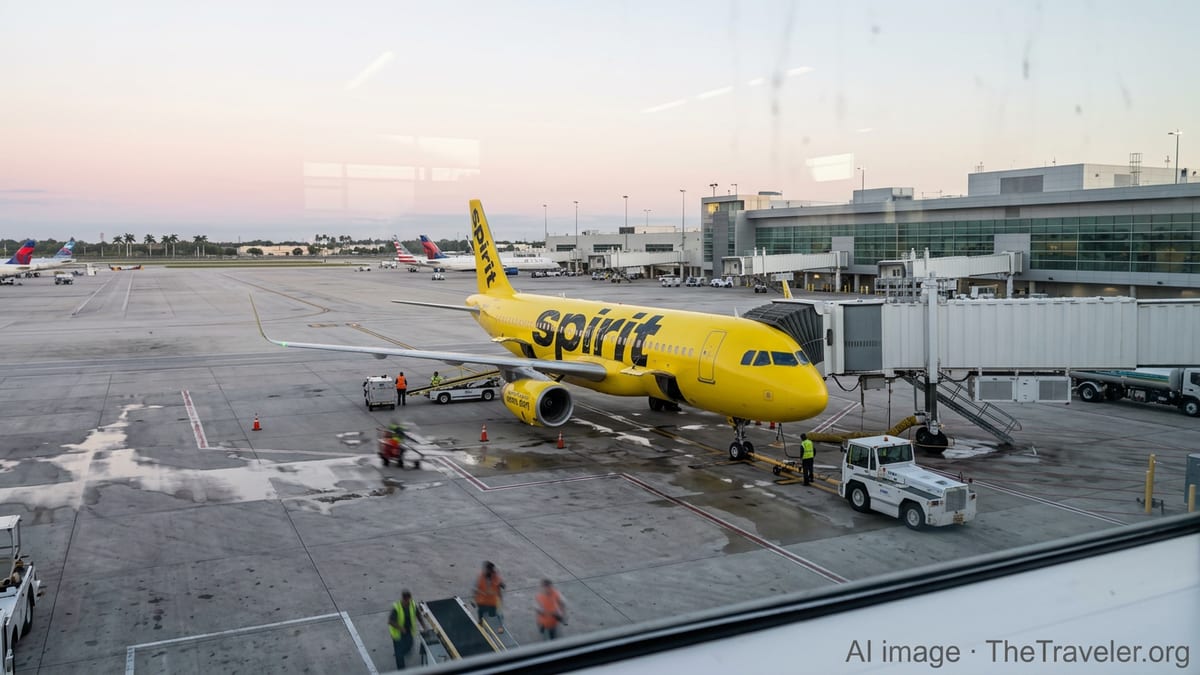
A Radical Retrenchment From a 214-Jet Peak
Publicly available court and company information shows that Spirit entered its current Chapter 11 process with a fleet of about 214 Airbus A320-family aircraft. The latest restructuring blueprint envisions a carrier operating less than half that size, with management now targeting an operation built around roughly 76 to 80 jets by the third quarter of 2026.
The reduction reflects a mix of lease terminations, aircraft sales and early returns negotiated with lessors. Recent filings and reporting indicate that the airline has won court approval for deals that unwind dozens of leases and allow a court-supervised auction of additional A320-family aircraft, accelerating the pace at which planes will exit the fleet this year.
Spirit has also previously deferred deliveries of new Airbus aircraft and canceled future orders as it pivots away from a growth strategy and toward cost containment. That shift marks a sharp reversal from the pre-bankruptcy period, when the carrier had positioned itself as a fast-growing budget airline with a large pipeline of new narrowbodies on order.
The decision to settle on a fleet below 80 aircraft underscores the depth of the financial strain facing the airline after a failed first restructuring and persistent pressure from higher costs, engine-related groundings and intense fare competition in key leisure markets.
Network Shrinkage and a New Focus on Core Hubs
The steep fleet cut is being matched by a major retrenchment in Spirit’s route network. Published coverage of the restructuring describes exits from multiple cities and a greater concentration of flying around a handful of core airports, including Fort Lauderdale and Orlando, with New York and Detroit also highlighted as strategic markets in the go-forward plan.
With fewer aircraft, Spirit is expected to lean on higher utilization of its remaining jets, particularly on peak travel days, while trimming or eliminating weaker off-peak and shoulder-period flying. Public comments from the company’s restructuring communications point to a strategy that prioritizes dense leisure routes where short-haul flying and quick turnarounds can maximize revenue from a smaller fleet.
The pullback means fewer ultra-low-cost options in some secondary and mid-sized markets that benefited from Spirit’s expansion in the late 2010s and early 2020s. Airports that once relied on the carrier to inject price-sensitive capacity on domestic and near-international routes are now facing reduced frequencies or complete exits as the airline consolidates around its strongest performers.
For consumers in Spirit’s remaining focus cities, the plan suggests that the yellow jets will remain a visible presence, but with a more disciplined schedule calibrated to seasonal demand and profitability rather than pure market share growth.
Implications for Ultra-Low-Cost Competition in the U.S.
Spirit’s downsizing is reverberating across the U.S. airline industry, particularly within the ultra-low-cost carrier segment. A fleet of fewer than 80 aircraft positions Spirit well below rivals such as Frontier and above only niche players in terms of scale, altering the competitive balance that had emerged among budget airlines over the past decade.
Industry data and analysis indicate that ultra-low-cost carriers had already been contending with higher fuel costs, operational disruptions and elevated wage pressures even before Spirit’s second bankruptcy filing. The choice to shrink so dramatically suggests that the aggressive capacity growth model that defined much of the pre-pandemic era has become far more difficult to sustain in the current cost and demand environment.
The retreat could open space for competitors to strengthen their positions on former Spirit routes, especially in markets where the airline exits entirely. At the same time, the cuts may relieve some downward pressure on fares in overlapping leisure markets, potentially benefiting larger airlines that had matched Spirit’s pricing on certain routes.
For the broader industry, the episode is emerging as a test case of whether the U.S. market can support multiple large ultra-low-cost players at scale, or whether sustained profitability in that segment now requires more moderate growth and tighter capacity discipline.
Financial Reset After a Second Chapter 11 Filing
Spirit’s plan to operate a sub-eighty-aircraft fleet is a central pillar of its effort to cut costs and stabilize finances after a bruising series of setbacks. Public restructuring documents and reporting describe a company that first entered Chapter 11 in late 2024, exited, and then filed again in 2025 after the initial plan failed to deliver a durable turnaround.
The current process includes a combination of new debtor-in-possession financing, debt-for-equity conversions and renegotiated aircraft lease terms. By sharply reducing its fleet, Spirit aims to lower annual fleet-related costs by hundreds of millions of dollars, freeing cash to service remaining obligations and invest selectively in its core network.
Analysts following the case note that the airline’s balance sheet has been burdened by a mix of high lease expenses, engine issues that sidelined multiple aircraft and an environment of soft yields on many domestic leisure routes. The restructuring framework seeks to address those headwinds by matching capacity more closely to demand and eliminating underperforming assets.
While the plan sets an ambition to exit Chapter 11 by early summer 2026, the smaller footprint means that even a successfully reorganized Spirit will look very different from the carrier that once pursued rapid expansion with more than 200 aircraft.
What Travelers Can Expect as the Restructuring Unfolds
For passengers, the most immediate effects of Spirit’s restructuring are likely to be seen in schedule changes, reduced route options from certain cities and potentially fuller flights on the routes that remain. Travelers in focus markets such as South and Central Florida may still find abundant Spirit service, but with a network optimized for peak leisure seasons and popular departure times.
In cities where Spirit is scaling back or withdrawing, travelers may have to look to other low-cost or legacy carriers for comparable fares. Industry observers suggest that some competitors could step in to fill gaps, though replacement capacity may not fully match Spirit’s former frequency or pricing structure, at least in the near term.
Customer experience on board is not expected to change dramatically in the short run, as the airline continues to operate an all-Airbus narrowbody fleet configured in a high-density, unbundled-fare model. However, with fewer aircraft to deploy, on-time performance, aircraft utilization and reliability will be closely watched metrics as Spirit seeks to prove that a leaner operation can also be a more stable one.
As the Chapter 11 process moves toward its next milestones, the airline’s experiment in becoming a smaller, more focused ultra-low-cost carrier will be closely monitored by competitors, investors and travelers alike, offering a real-time case study of how far a fleet can shrink while still sustaining a national presence in the U.S. market.