

More news on this day
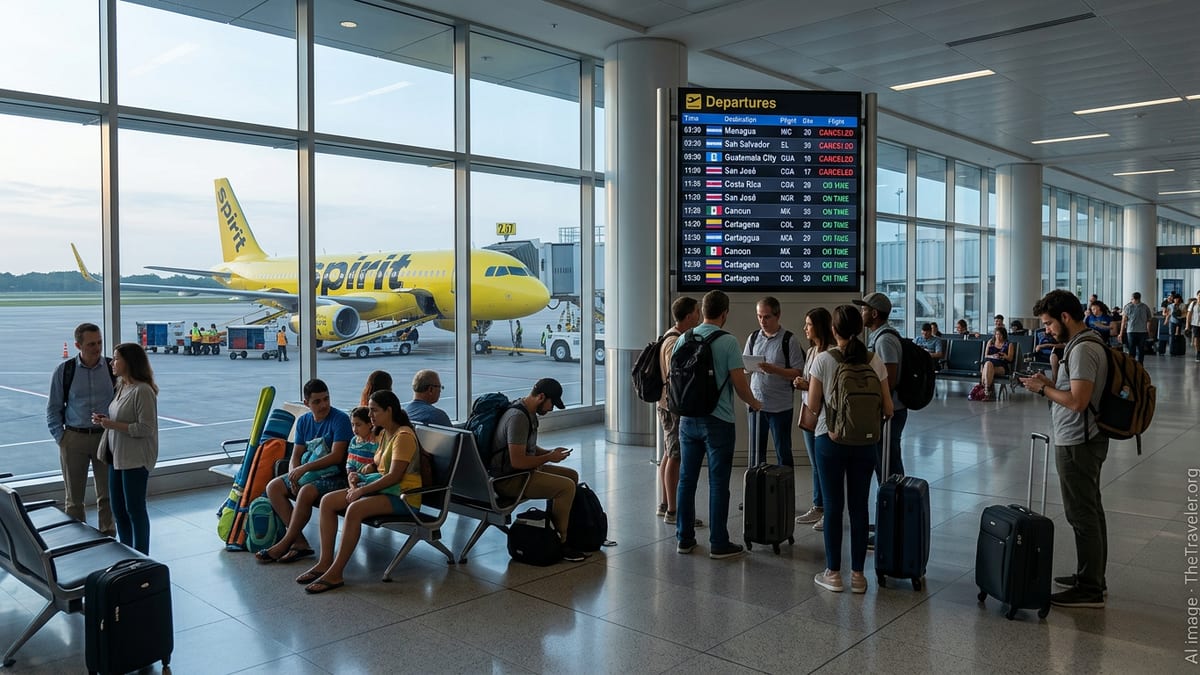
Spirit Airlines is canceling nonstop flights from Fort Lauderdale to Managua and San Salvador and trimming frequencies to Guatemala City, a move that reshapes budget-friendly links between the United States and Central America and raises fresh questions about how travelers will reach nearby tourism hotspots in Mexico, Costa Rica and Colombia.
Route Cancellations Hit Managua and San Salvador First
The latest cuts center on Spirit’s Fort Lauderdale hub, where flights to Managua, Nicaragua, and San Salvador, El Salvador, will operate for the last time in April, according to schedule updates and carrier communications. The airline only relaunched some of these routes in recent seasons as part of a push to court leisure travelers bound for beach destinations and colonial cities in Central America.
The termination of nonstop services to both capitals effectively removes one of the cheapest options for Florida-based travelers heading to Nicaragua and El Salvador. Spirit had long promoted its point-to-point model and bare-bones fares as a way to open up destinations like Managua’s access point to surf towns on the Pacific coast, or San Salvador’s onward connections to volcano hikes and coffee-country tours.
At the same time, Spirit is cutting back rather than outright exiting Guatemala. The airline is reducing the number of weekly flights to Guatemala City, a step that will shrink capacity on one of its remaining Central American links. While Spirit has not ruled out seasonal adjustments in the future, for now the signal is clear: ultra-low-cost capacity between South Florida and parts of Central America is being pulled back.
These decisions are unfolding against the backdrop of Spirit’s financial restructuring, including a renewed Chapter 11 process and a broader network retrenchment aimed at concentrating flying where demand and yields are strongest. Central America, once a growth frontier for the carrier, is now part of the adjustment.
Knock-on Effects for Mexico’s Caribbean and Pacific Gateways
For many U.S. travelers, flights into Central America on Spirit have doubled as a budget bridge to Mexico’s Caribbean and Pacific coasts. Backpackers and price-sensitive holidaymakers frequently stitched together itineraries that paired Spirit’s low fares into Guatemala City or San Salvador with onward bus or low-cost airline hops to Cancun, Tulum or Puerto Vallarta.
With nonstop Spirit options from Fort Lauderdale to Guatemala, El Salvador and Nicaragua reduced or removed, some of that cross-border flow is likely to be diverted back through Mexico’s primary resort airports. Cancun, Cozumel and Puerto Vallarta already rank among Spirit’s strongest international markets, and industry analysts expect the airline to redeploy part of its Central America capacity into high-volume Mexican leisure routes where demand is more resilient.
For Mexican tourism operators, that could provide a modest boost. Tour companies on the Riviera Maya, hotel groups in Cancun and all-inclusive resorts along the Pacific could see more U.S. visitors pushed toward direct Mexico itineraries instead of multi-country backpacking routes that begin in Guatemala or Nicaragua. However, those gains may be offset by higher airfares overall if competition on certain corridors thins as Spirit exits.
On the ground in Mexico, travel advisors anticipate that some travelers who once used Guatemala or El Salvador as entry points to overland journeys through Chiapas and the Yucatan will now opt to fly straight into Mexican gateways on other low-cost carriers. That shifts where visitors begin and end their trips, subtly redirecting spending away from Central American border towns and into Mexican beach hubs.
Costa Rica Stands to Capture Displaced Central American Demand
Costa Rica, already one of the region’s most mature tourism brands, may be a key beneficiary of Spirit’s decision to curb services to its northern neighbors. The airline continues to serve San José, and Costa Rica’s capital has become a reliable entry point for U.S. visitors looking for eco-lodges, surf breaks and volcano-side hot springs.
With fewer ultra-low-cost choices into Guatemala, El Salvador and Nicaragua, some travelers are expected to rebook into Costa Rica instead, particularly those focused on nature, adventure and wellness. Travel agencies report that clients who are flexible about their destination, but fixed on Central America and a strict budget, are increasingly comparing fares to San José when flights to Managua or San Salvador spike or disappear from search results.
For Costa Rica’s tourism sector, this could translate into fuller flights and more pressure on popular routes between the Central Valley, the Pacific coast and the Caribbean side. Hoteliers in beach towns such as Jacó, Tamarindo and Puerto Viejo will be watching booking patterns closely in the months following Spirit’s cuts, looking for signs of additional U.S. demand that might previously have gone to Nicaragua’s surf beaches or El Salvador’s emerging resort zones.
At the same time, Costa Rican officials are aware that overdependence on any one carrier is risky. Spirit’s retrenchment in neighboring markets underscores the importance of maintaining a diverse mix of U.S. airlines and schedules into San José and Liberia, so that shifts in one carrier’s strategy do not leave key tourism regions exposed.
Colombia’s Tourism Corridors Face Capacity Shifts, Not Exit
Colombia has become one of Spirit’s cornerstone international markets, with flights linking U.S. cities to Bogota, Medellin, Cartagena and other secondary destinations. Unlike its move in Nicaragua and El Salvador, Spirit is not abandoning Colombia entirely, but it is trimming some frequencies as part of its broader cost-cutting plan.
For Colombian tourism, this means a more nuanced impact. Routes that once relied heavily on deep-discount fares may see fewer flight options on certain days, nudging travelers toward peak periods or alternative airlines. Cities such as Medellin and Cartagena, which have seen a surge in digital nomads and long-stay visitors from the United States, could face tighter seat supply at the cheapest price points.
Nevertheless, Colombia’s international market is more diversified than that of many Central American neighbors. Competing low-cost and legacy carriers continue to add capacity from U.S. hubs, and domestic connectivity within Colombia remains strong. For most travelers, the end result will be a shifting mix of schedules and fares rather than a sudden loss of access.
Industry observers say the larger question is whether Spirit’s recalibration will slow the growth of ultra-budget tourism into secondary Colombian cities that depended on its low fares to attract first-time visitors. If fewer price-sensitive travelers can justify a long-weekend trip to Colombia, local guesthouses, tour guides and restaurants in those cities could feel the pinch.
Travelers Confront Fewer Ultra-Low-Cost Options Across the Region
Across Mexico, Costa Rica and Colombia, the common thread in Spirit’s route changes is the gradual thinning of ultra-low-cost options that once knit the region together for backpackers, students and cash-conscious families. While alternative airlines still serve major destinations, the loss of certain nonstop links and reduced frequencies means that some itineraries will now require more connections, longer travel times or higher fares.
Travel advisors are urging passengers who plan multi-country trips in late 2026 and 2027 to lock in flights early and remain flexible about routing. Where a simple Fort Lauderdale to Managua ticket might once have anchored an overland journey through Nicaragua and into Costa Rica, travelers may now need to enter via San José, Cancun or Bogota and work backward.
Tourism boards in affected countries are responding by highlighting connectivity on other U.S. and Latin American carriers and by promoting regional circuits that can still be achieved without Spirit. The competitive response, particularly in Mexico and Colombia, will help determine whether airfares stabilize or climb after Spirit’s retrenchment.
For Spirit, the route decisions are part of a high-stakes effort to emerge from bankruptcy with a leaner, more profitable network. For travelers and tourism businesses across Central and South America, they are a reminder that air connectivity, especially at the ultra-low-cost end of the market, remains fluid and highly sensitive to financial pressures on individual carriers.