

More news on this day
Thousands of Spirit Airlines passengers across the United States are grappling with cascading delays and cancellations this week, as the ultra-low-cost carrier suspends dozens of flights and delays more than a hundred others on major routes through Newark, Orlando, Detroit, Fort Lauderdale, Miami and other busy hubs.
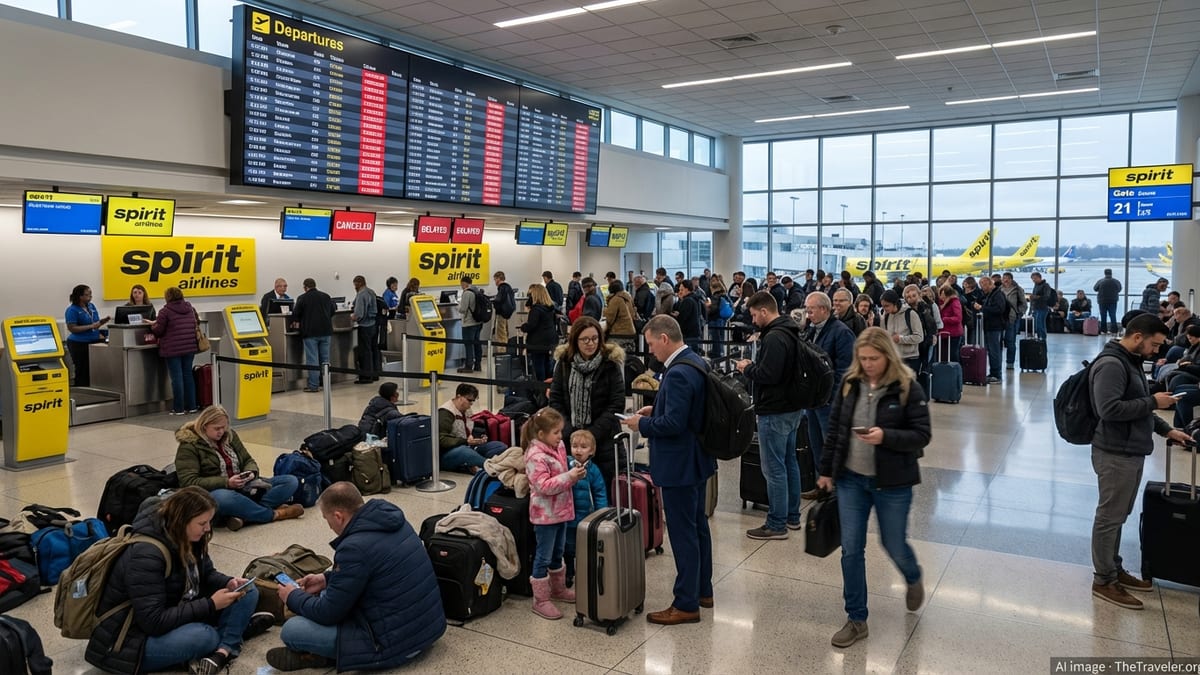
Fresh Disruptions Hit Spirit’s Already Strained Network
The latest wave of disruptions comes as Spirit Airlines continues to weather a period of acute financial and operational stress, including Chapter 11 bankruptcy proceedings and a significant downsizing of its fleet and workforce. Over recent days, the carrier has suspended around 35 flights and logged well over 100 delays across the United States on top of a broader pattern of cancellations that has left customers wary of planning trips on the airline.
Data from airport boards and flight-tracking services show clusters of grounded or heavily delayed Spirit departures at Newark Liberty International, Orlando International, Detroit Metro, Fort Lauderdale–Hollywood International and Miami International, as well as on connecting routes that feed into those hubs. The disruption has rippled into smaller airports where Spirit operates point-to-point leisure routes, compounding travel headaches for families and budget-conscious travelers who often have limited alternatives.
Industry analysts note that while winter storms and air traffic constraints have affected multiple airlines this season, Spirit appears particularly vulnerable. The carrier has less redundancy in its schedule, fewer spare aircraft and thinner crew reserves, meaning a localized problem can quickly cascade through its network and lead to ground stops and rolling delays.
South Florida Becomes the Epicenter for Stranded Passengers
South Florida, where Spirit has historically maintained one of its largest operations, has emerged as a flashpoint for stranded travelers. At Fort Lauderdale–Hollywood International Airport, a dominant Spirit base, rows of yellow-and-white aircraft have been seen parked at gates while departure boards flash “canceled” or “delayed” next to multiple Spirit flights bound for Atlantic City, Newark, Baltimore and other East Coast cities.
Miami International Airport, where several major carriers share already crowded terminals, has also seen its share of Spirit-related disruption. Recent nationwide reports of nearly 200 cancellations and more than 2,500 delays across multiple airlines in a single day included Spirit’s South Florida operations, intensifying congestion at check-in counters, security lanes and rebooking desks as passengers scrambled to salvage travel plans.
Travelers at these airports describe long queues stretching through concourses, with some passengers spending the night on terminal floors or in makeshift waiting areas after hotel options near the airport quickly filled. For families traveling on tight budgets, the cost of unexpected overnight stays, meals and ground transport has added a financial sting to the logistical stress.
Orlando and Newark See Heavy Delays on Key Leisure Routes
Orlando International, one of the nation’s busiest leisure gateways, has faced a steady churn of delayed and canceled departures this week. Flight-disruption trackers report hundreds of delays and dozens of cancellations at the airport overall, with Spirit among the carriers feeling the squeeze from staffing limitations, high demand and residual weather issues affecting connecting cities.
Passengers booked on high-traffic Orlando routes to Northeast and Midwest cities have reported rolling departure times and abrupt cancellations, often with limited rebooking options on the same day. Families bound for theme parks and cruise departures out of Florida’s ports have been especially hard-hit, confronting the risk of missing nonrefundable vacation elements after their initial flights were scrubbed or pushed back repeatedly.
Further north, Newark Liberty International has seen its own share of Spirit disruptions, particularly on short-haul East Coast routes. Travelers headed to and from Newark have reported abrupt schedule changes communicated via app notifications and airport announcements, frequently within just a few hours of departure. Some reported being offered rebookings one or two days later or refunds, but little in the way of interline alternatives to other airlines.
Detroit and Secondary Airports Feel the Knock-On Effects
Detroit Metro Airport, a key connecting point between the Midwest and Florida for Spirit’s network, has also been buffeted by the airline’s operational challenges. Canceled or delayed Florida-bound flights from Detroit can quickly leave aircraft and crews out of position, feeding a chain reaction that affects subsequent departures across the system.
As Spirit pares back its route map and scales down frequencies, secondary airports that once benefited from low-fare, nonstop links have less resilience when something goes wrong. Travelers flying from cities that may only see a handful of Spirit flights per week often confront a stark choice when their flight is canceled: wait days for the next available seat, buy a last-minute ticket on a legacy carrier at significantly higher cost, or abandon their trip altogether.
Airports that previously marketed themselves on the back of low-cost connectivity are now contending with frustrated passengers and reputational questions. Local tourism boards and airport officials in affected cities are watching closely as the airline’s reliability issues intersect with broader concerns about access and affordability in domestic air travel.
Bankruptcy, Furloughs and a Shrinking Fleet Undermine Reliability
Spirit’s current troubles cannot be separated from its financial restructuring. Under Chapter 11 protection, the airline has been aggressively cutting routes, shrinking its fleet and trimming staff to reduce costs. Industry filings and recent announcements point to hundreds of pilot furloughs and thousands of flight attendant layoffs or schedule reductions, moves that may help stabilize finances in the long term but leave the carrier thinly staffed in the near term.
When staffing runs tight, even minor operational hiccups can snowball. A crew that times out on duty limits because of one lengthy delay may not be available for later flights in the rotation. With fewer reserve crews and spare aircraft, Spirit has limited ability to backfill suddenly uncovered flights, resulting in cancellations or extensive delays.
Aviation experts say that Spirit’s ultra-low-cost business model, which depends on high aircraft utilization and lean staffing, leaves little margin for error during peak travel periods or in volatile weather. Combined with elevated demand and ongoing air traffic control constraints at busy hubs, the airline’s attempt to operate a full schedule with fewer resources has proven increasingly fragile.
Passenger Rights, Refunds and Practical Steps for Affected Travelers
For travelers caught in the disruption, knowing their rights has become crucial. Under recently strengthened U.S. Department of Transportation rules, airlines are required to provide cash refunds when flights are significantly delayed or canceled and passengers choose not to travel, even if the carrier initially offers vouchers. That protection applies to Spirit customers as well, though accessing it can require persistence and careful documentation.
Consumer advocates urge passengers to keep digital or printed records of their original itineraries, boarding passes, delay notifications and any additional expenses such as meals, hotels and ground transport. While Spirit and other carriers are not obligated to reimburse all incidental costs, detailed receipts can strengthen claims for compensation or reimbursement, particularly in cases where disruptions are not clearly attributable to weather.
Practical advice for those booked on upcoming Spirit flights includes checking flight status frequently before leaving for the airport, signing up for text and app alerts, and considering flexible back-up plans. Travel experts also recommend evaluating travel insurance policies that explicitly cover airline disruptions and ensuring coverage is purchased well before departure dates.
Wider US Travel Landscape Adds to the Chaos
Spirit’s network issues are unfolding against a backdrop of broader turbulence in U.S. aviation. This winter has seen multiple storms snarl operations nationwide, prompting thousands of cancellations and delays across airlines and forcing the Federal Aviation Administration to implement temporary ground stops and flow restrictions at major hubs.
On some of the worst days, data from aviation analytics firms and flight-tracking platforms show that nearly one in five flights nationwide has been canceled or delayed, with disruptions clustered around high-traffic gateways such as Chicago, New York, Atlanta, Orlando and Dallas. Low-cost and legacy carriers alike have had difficulty recovering quickly once weather clears, in part because of tight schedules and congested airspace.
Spirit, however, faces the dual challenge of external pressures and internal restructuring. While other carriers can often lean on larger fleets, deeper staffing pools and interline agreements to help stranded passengers find alternatives, Spirit’s model relies heavily on its own limited network. That reality leaves its customers more exposed when irregular operations strike.
What Spirit’s Troubles Mean for Budget Travel This Year
The unfolding situation with Spirit Airlines raises larger questions for the U.S. budget travel landscape heading into the peak spring and summer seasons. For years, Spirit has been one of the most visible ultra-low-cost options on domestic and near-international routes, using rock-bottom base fares to stimulate demand and challenge larger competitors.
As Spirit trims routes, furloughs staff and grapples with reliability concerns, there is a risk that some of those low fares will vanish from certain markets, at least temporarily. Competing carriers may fill some gaps, but often at higher price points, eroding the affordability that many leisure travelers have come to expect for trips to Florida, the Caribbean and popular U.S. city pairs.
Travel planners recommend that passengers who rely on low-cost carriers diversify their options, compare fares across multiple airlines and consider building more buffer time into itineraries that connect to cruises, tours or major events. For now, travelers in Newark, Orlando, Detroit, Fort Lauderdale, Miami and other Spirit strongholds are watching closely, hoping that the airline can stabilize operations before the next major travel rush arrives.