

More news on this day
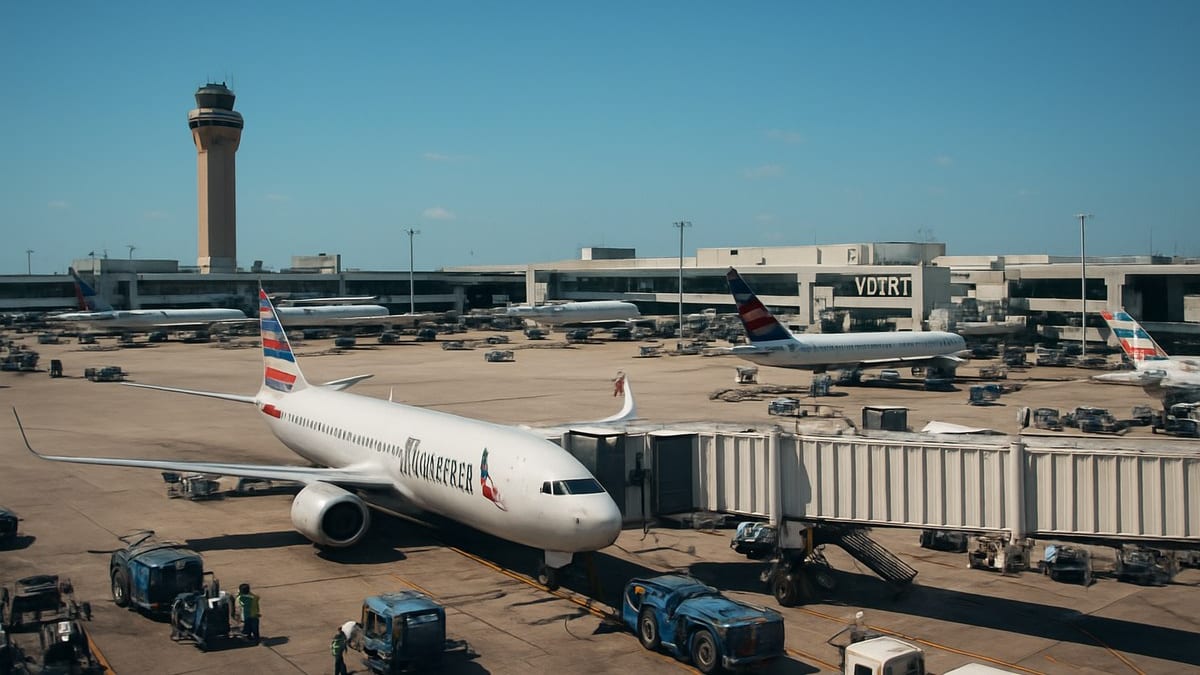
A grounded Spirit Airlines departure at Miami International Airport in early April 2026 set off a chain of rolling delays affecting more than 10 rotations and disrupting schedules across over 50 destinations in the carrier’s already stretched U.S. network, according to flight-tracking data and airport operations reports.
Get the latest news straight to your inbox!
Grounded Aircraft in Miami Becomes a Network-Wide Pressure Point
Operational data from Miami International Airport for the week of April 6 to 8, 2026, shows a delay-heavy pattern, with nearly 200 disrupted departures and arrivals recorded in a single day and multiple carriers affected. Within that broader disruption, one Spirit Airlines aircraft parked at a Miami gate for an extended period became a focal point, remaining grounded long enough to derail a full day’s worth of rotations that would normally touch dozens of domestic and near‑international destinations.
Spirit relies heavily on tight aircraft utilization, with individual jets often scheduled to operate five or more legs per day. When a single Miami-based aircraft is removed from rotation for weather, minor technical checks, or crew availability, subsequent flights that depend on that airframe and crew are forced into cascading delays. In this instance, more than ten downstream flights tied to the grounded aircraft and its scheduled rotations experienced rolling disruptions, as departure times were progressively pushed back through the afternoon and evening.
The pattern aligns with wider spring 2026 disruption trends across U.S. airports, where reports indicate elevated delay counts at Miami, Fort Lauderdale, Orlando, New York-area hubs, and several Midwestern cities. Spirit’s concentration in Florida and its limited spare capacity meant that the grounded aircraft in Miami could not easily be swapped with a backup jet, magnifying the impact on its network compared with some larger competitors.
By late evening, flight boards at Miami and other Spirit-served airports showed clusters of yellow and red status indicators for the carrier, reflecting a mix of extended delays and schedule adjustments rather than large-scale same-day cancellations. For many travelers, that translated into hours of uncertainty rather than clear cut-offs, as estimated departure times continued to shift in small increments.
More Than 50 Destinations Caught in the Ripple Effect
Analysis of timetables and route maps for early April 2026 indicates that the affected rotations touched more than 50 destinations, spanning major hubs, secondary cities, and popular leisure routes. Among the routes exposed to rolling delays were services linking Miami to New York, Atlanta, Chicago, Dallas, and several Caribbean and Central American gateways that feed Spirit’s broader network.
Because Spirit operates a point‑to‑point model with significant reliance on Florida as a connecting region, disruptions at Miami can quickly spill over into airports that are not formally designated as hubs. When the grounded aircraft and its crew failed to depart on schedule, flights later in the day from cities such as Orlando, Fort Lauderdale, Detroit, and Newark were affected when they were scheduled to receive that same aircraft or connecting crews repositioning through Miami.
Published performance snapshots for spring 2026 already show that Spirit has been navigating elevated levels of delays and cancellations compared with some competitors, as the airline adjusts its network under Chapter 11 restructuring and capacity reductions. The Miami incident arrived on top of that fragile baseline, tightening aircraft availability on a day when South Florida was also experiencing lingering weather and air-traffic-flow constraints.
Smaller Spirit stations that depend on a single daily round-trip were particularly exposed. Where an outbound flight departed hours late from Miami or another Florida airport, the corresponding return sector often departed late as well, compressing overnight maintenance windows and setting up further knock‑on delays into the next operating day.
Passengers Face Long Waits, Tight Rebooking Options
For travelers, the Miami-triggered rolling delays added to a season marked by crowded terminals and tense rebooking queues. Publicly available disruption trackers and passenger reports describe scenes of full gate areas at Miami, with lines forming at Spirit service counters as customers sought alternative routes, vouchers, or hotel accommodations after extended waits.
Low-cost carriers such as Spirit generally offer fewer interline arrangements with other airlines, limiting options when an aircraft is grounded and a schedule begins to unravel. When the Miami-based jet did not operate its schedule as planned, many passengers were offered rebooking on later Spirit flights rather than same-day alternatives on other carriers, particularly from smaller airports where Spirit operates limited frequencies.
Consumer-rights platforms note that, under typical U.S. rules, whether travelers receive compensation or only basic assistance depends on the cause of the delay and the airline’s internal policies. Where the disruption is tied to controllable factors such as maintenance or crew scheduling, airlines may provide meal vouchers, hotel rooms, or partial refunds. When weather or air-traffic-control constraints are a primary factor, cash compensation is less common, though carriers are still expected to assist with rebooking and provide reasonable care.
In the Miami event, a mix of factors appeared to be at play, including recent thunderstorms over South Florida, heavy post‑holiday demand, and ongoing staffing and fleet adjustments at Spirit. That combination makes it difficult for travelers to know in real time which obligations apply, especially as status notifications often reference only generic “operational reasons.”
Spring 2026: A Fragile Season for U.S. Air Travel
The Spirit disruption linked to the grounded Miami flight fits into a broader pattern of volatility across U.S. skies in spring 2026. Recent data summaries show thousands of daily delays and hundreds of cancellations spread across multiple airlines, with Miami, Fort Lauderdale, Orlando, New York, Chicago, and several West Coast airports repeatedly appearing among the hardest-hit locations.
Industry analysts point to several overlapping drivers. Airlines entered 2026 with tight staffing in key roles, high aircraft utilization, and limited slack in their schedules after years of capacity adjustments. Weather systems tracking across major hubs further narrowed operating margins, while technical issues and late inbound arrivals reduced the time available for routine maintenance and crew rest.
For Spirit, restructuring efforts and a strategy that emphasizes dense, low-fare point‑to‑point flying amplify the impact of any single disruption. Public filings and industry commentary highlight that the carrier has fewer spare aircraft and less flexibility with partner airlines when compared with some full-service competitors. As a result, an isolated issue at a single airport, such as the grounded aircraft in Miami, is more likely to radiate outward as a network-wide event.
The Miami episode underscores how fragile the broader system remains. With many flights operating near capacity and schedules built around quick turnarounds, even a brief ground stop, a minor maintenance inspection, or a crew-timing constraint can tip into a full day of rolling delays that touch dozens of destinations and tens of thousands of passengers.
What Travelers Can Do When Rolling Delays Hit
Travel guidance built around recent disruption events suggests that passengers have the best chance of reducing the impact of rolling delays by acting early and using multiple information sources. Airline apps, airport departure boards, and independent flight-tracking platforms can reveal when an inbound aircraft is running significantly behind schedule, often before gate announcements are made.
When disruption begins at a hub such as Miami, travelers booked on tight connections or late-night flights may be able to request rerouting through a different city or shift to earlier departures before remaining seats are taken. Some consumer advocates recommend approaching both digital channels and in‑person counters simultaneously, as available seats on alternative itineraries can disappear quickly once a delay becomes widely known.
Passengers are also encouraged to review the airline’s published delay and cancellation policies before travel, including distinctions between controllable and uncontrollable events. That information can shape expectations about vouchers, accommodation, or refunds if a delay passes key thresholds such as three or more hours at the final destination.
For now, the grounded Spirit aircraft in Miami stands as another reminder of how a single operational setback can reverberate far beyond one airport. With the 2026 peak summer season approaching, travelers across the United States may face similar chain reactions unless airlines can build more resilience into their schedules and staffing plans.