

More news on this day
A grounded Spirit Airlines flight at Miami International Airport on April 12, 2026, rippled across the ultra-low-cost carrier’s tightly timed network, contributing to more than 50 delayed routes and hours of disruption for passengers across the United States and beyond.
Get the latest news straight to your inbox!
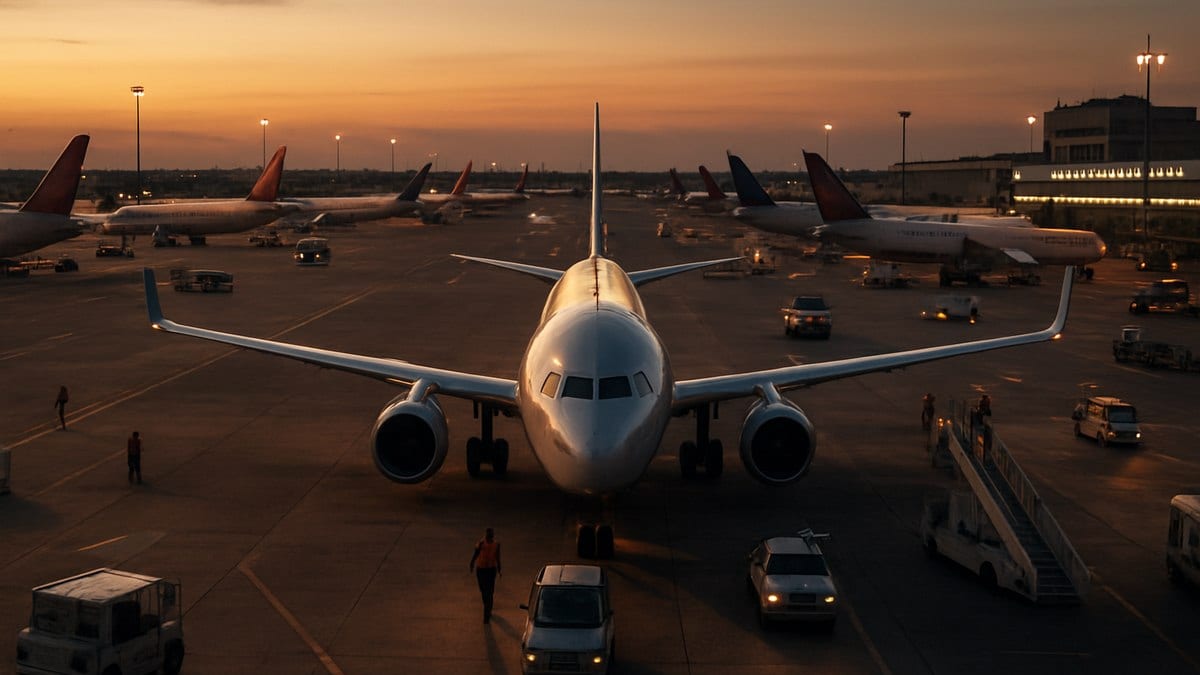
Grounded Flight in Miami Becomes a Network-Wide Flashpoint
Publicly available flight-tracking data and industry coverage indicate that the disruption began with a Spirit Airlines service at Miami International Airport that was unable to depart as scheduled on Sunday, April 12. While only a single flight was formally grounded, the hold created a bottleneck in Spirit’s schedule, which relies heavily on quick turnarounds and high aircraft utilization.
Reports summarizing operational performance at Miami on April 12 describe a delay-driven event rather than a mass cancellation episode, with Spirit among several airlines facing schedule pressure. Travel-focused outlets tracking the airport’s performance noted that more than one hundred flights across all carriers were delayed, with Spirit’s grounded aircraft emerging as a focal point because of the airline’s already stretched network following earlier weeks of disruptions.
Flight-status snapshots show that the affected Spirit rotation in Miami was tied into multiple onward services, including domestic runs to East Coast hubs and connections to Caribbean and Latin American gateways. Once the aircraft remained on the ground, subsequent legs left late or required substitution, sending knock-on delays through at least fifty downstream routes over the course of the day.
Analysts who monitor airline performance highlight that such a pattern is consistent with how a single grounded aircraft can quickly influence a point-to-point network. When spare planes and crews are limited, even a localized issue at a major airport like Miami can cause widespread late departures across distant cities hours later.
Miami’s April Weather and Airport Congestion Set the Stage
The Miami disruption did not occur in isolation. In the days leading up to April 12, thunderstorms and heavy rain had already prompted short-lived ground stops and extended departure queues at both Miami International and nearby South Florida airports, according to national aviation system updates and local broadcast coverage. These conditions slowed departures and arrivals, contributing to residual congestion across early April.
Separate performance tallies for Miami in the week before April 12 show the airport repeatedly ranking among the busiest and most delay-prone hubs in the United States, with daily counts of well over one hundred late operations. Weather along key routes into and out of South Florida, combined with Easter-period demand and tight staffing in some airline operations centers, left little margin to recover from additional disruptions.
Analytical pieces from passenger-rights organizations and travel publications in early April noted that Miami had already recorded close to two hundred flight delays and a cluster of cancellations on some days, affecting major carriers including Spirit, American, Delta and several foreign airlines. These reports pointed to a combination of storms, crowded airspace and network strain as underlying causes, setting a fragile backdrop for any further schedule shock on April 12.
Into this environment, the grounded Spirit flight became another stress point. With aircraft and crew already cycling through busy weekend rotations, Miami’s role as a connecting node magnified the impact when one departure failed to leave on time.
Spirit’s Broader Reliability Challenges Amplify the Impact
The April 12 incident also overlapped with a period of broader instability for Spirit Airlines. Coverage in national media over recent weeks has described the airline’s efforts to stabilize operations amid financial restructuring, lingering staffing pressures and a series of rolling delays and cancellations across its network.
Industry commentary and passenger accounts have highlighted that Spirit’s schedule in early 2026 has been operating with limited slack, meaning modest disruptions can cascade more easily than in previous years. Reports referencing internal planning documents and union statements note that the airline has been working to recall furloughed pilots and adjust schedules heading into the peak summer season in an effort to restore on-time performance closer to pre-2026 levels.
Travel data compilations in the days before April 12 already showed Spirit appearing prominently in national cancellation and delay tallies. On several early April dates, Spirit was identified as one of the carriers with the highest proportion of affected flights, particularly in Florida markets such as Fort Lauderdale, Orlando and Miami. Within that context, a grounded aircraft at a major hub like Miami had an outsized effect, contributing to dozens of additional late departures on an already-stressed operation.
While the number of outright cancellations linked directly to the grounded Miami flight on April 12 appears limited, the volume of delays illustrates how closely connected Spirit’s point-to-point network has become. For many passengers, the disruption registered not as a single grounded plane in South Florida but as missed connections, overnight schedule changes and long lines at distant airports as the day progressed.
Passengers Face Missed Connections and Long Waits
Social media posts and traveler forums on April 12 and the surrounding weekend described a familiar pattern for disrupted Spirit customers: repeated rolling delay notifications, gate changes and uncertainty over whether flights would ultimately depart. Several accounts referenced Miami and broader South Florida weather earlier in the month, but many focused on communication gaps and difficulty rebooking once delays stacked up.
Travel-industry sites that track delay clusters reported that the Miami-centered disruption touched routes serving cities such as Charlotte, New York, Toronto and several European and Latin American gateways via partner connections. Even when flights ultimately operated, late departures from Miami and other Spirit stations led to tight or missed connections for passengers continuing onward on other airlines or on separate Spirit legs.
For travelers already wary of Spirit’s recent operational record, the Miami incident reinforced concerns about planning tight connections or relying on same-day turnarounds in 2026. Online discussions in recent weeks have increasingly recommended building in additional buffer time, purchasing flexible or refundable fares where possible, or considering backup options when traveling for time-sensitive events.
At terminals, passengers affected by the April 12 delays reported long waits at customer service desks and limited alternative flights later in the day, a reflection of Spirit’s lean schedule structure on some routes. With planes largely full at the start of the busy spring period, finding available seats for same-day rebooking proved challenging for many.
What Travelers Can Do When a Grounding Disrupts Plans
Consumer advocates and flight-compensation guides reviewing recent disruption patterns in Miami and other U.S. hubs emphasize that passenger options depend heavily on the specific cause of a delay or grounding. If weather or air-traffic control programs are the primary drivers, cash compensation is rarely offered, although some airlines provide meal vouchers, hotel rooms or partial credits as a goodwill gesture when delays stretch into many hours.
Published guidance specific to Spirit Airlines in 2026 outlines that the carrier typically attempts to rebook affected customers on the next available flight on its own network, sometimes offering travel credits when the disruption is considered within the airline’s control. However, when delays originate with storms or wider system congestion, assistance may focus on rebooking rather than financial restitution.
Travel experts consistently advise passengers to monitor their flight’s status early and often, particularly when traveling through weather-prone hubs such as Miami. Using airline apps and third-party trackers can provide early warning of upstream delays that might affect a later departure, giving travelers more time to adjust connections or seek alternative routings.
The April 12 Miami grounding and resulting Spirit delays fit into a broader pattern of early 2026 volatility across U.S. aviation. For travelers, the episode serves as another reminder that flying on tightly scheduled low-cost carriers during peak travel periods can require added flexibility, backup plans and close attention to evolving conditions at key hubs.