

More news on this day
Spirit Airlines is the latest U.S. carrier to buckle under crew shortages, with hundreds of cancellations compounding weather and technology woes already bedeviling Delta Air Lines and American Airlines and leaving travelers across the country facing another round of unpredictable, disruption-prone flying.
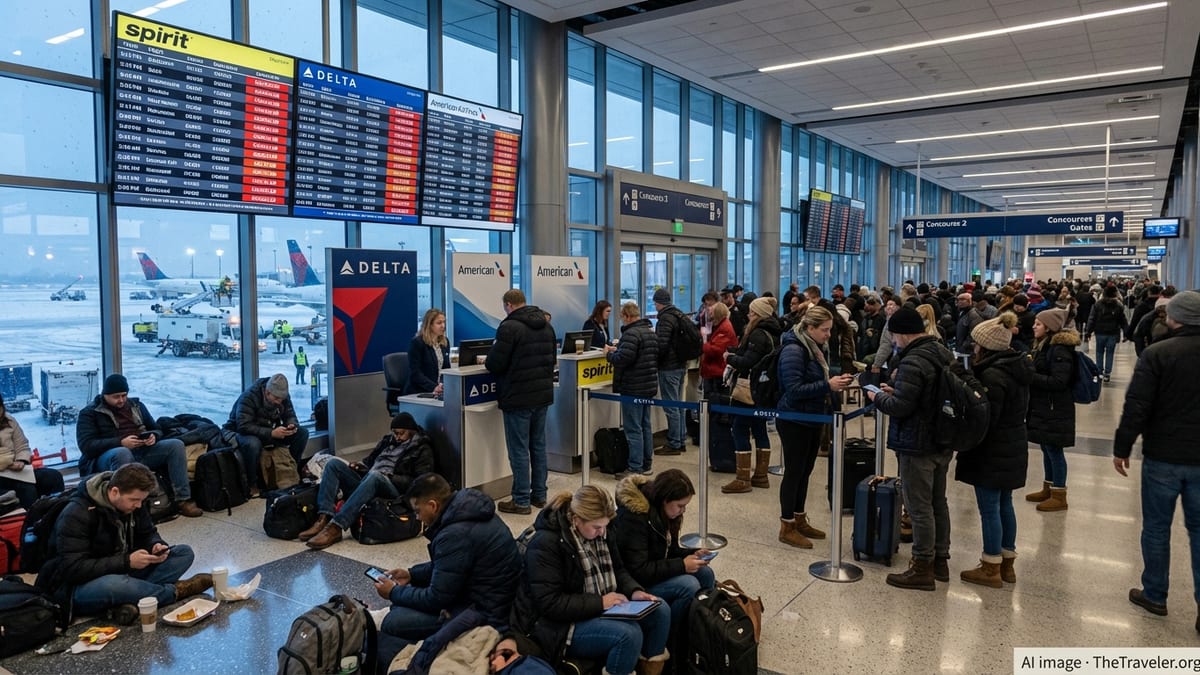
Spirit’s Staffing Crunch Triggers a New Wave of Disruptions
Over Presidents Day weekend and the days that followed, Spirit Airlines scrubbed more than 250 flights nationwide, according to operational data reviewed by travel analysts, with Florida emerging as the epicenter of the disruption. At Fort Lauderdale-Hollywood International Airport, Spirit’s largest base, dozens of departures vanished from schedule boards as the low-cost carrier struggled to find enough flight attendants and pilots to operate its network.
Passengers at Fort Lauderdale, Orlando and Palm Beach International described scenes of confusion more typical of a major storm than of a staffing issue. Gate areas filled with travelers receiving abrupt text messages and app alerts that their flights had been canceled just hours before departure, forcing some to wait in snaking rebooking lines while others scrambled to buy last-minute tickets on rival airlines at far higher fares.
Spirit has acknowledged that a lack of available crews is a central driver of the latest meltdown, atop a network already thinned by bankruptcy-related cutbacks. The carrier has recalled a portion of the roughly 1,800 flight attendants it furloughed in late 2025, but analysts say those hires are moving through training pipelines too slowly to stabilize schedules during peak periods, especially when compounded by elevated sick calls among existing staff.
In practice, the shortages have left dispatchers with almost no margin for error. When weather or air-traffic congestion pushes aircraft out of position, there are simply not enough reserve crews available to step in, turning what might once have been minor delays into cascading cancellations that ripple across Spirit’s point-to-point network.
Bankruptcy Restructuring Deepens Spirit’s Labor Strains
The staffing crunch at Spirit is unfolding against the backdrop of an aggressive restructuring. The airline is working its way through Chapter 11 proceedings for the second time in a year while planning to shrink its fleet by nearly half, exiting leases on close to 100 aircraft and significantly scaling back its schedule heading into the summer.
As part of those cuts, Spirit has already furloughed hundreds of pilots and announced plans to sideline or downgrade hundreds more in 2026 to reduce labor costs. The company also disclosed plans to furlough around 1,800 flight attendants, representing a large share of its cabin crew workforce. While those moves may ease financial pressure on paper, they have left the airline operating with minimal staffing buffers during an era of volatile travel demand and frequent weather shocks.
Labor experts note that repeated cycles of furloughs, recalls and base closures can damage morale and push experienced crew members to seek more stable employment at competitors, especially at larger network carriers or cargo operators. That dynamic can make it harder for airlines like Spirit to rebuild quickly when demand returns or when schedules prove harder to operate than originally forecast.
The result for travelers is a carrier that, even on clear-weather days, can feel structurally fragile. A single sick call in a key base, a crew timing out due to federal duty limits or an aircraft stuck behind a ground stop can be enough to cancel a flight entirely, particularly on thinner routes where Spirit is the only or dominant operator.
Delta and American Also Grappling With Crew and Reliability Pressures
While Spirit’s troubles are the most acute, it is not alone. Delta Air Lines and American Airlines have both struggled this winter to keep flights staffed and on time as storms, system issues and labor unrest exposed the limits of their recovery-era staffing plans. Travelers have taken to social media in recent weeks to describe flights boarding without pilots, crews timing out on the tarmac and rebookings stretching into the next day.
Delta has prided itself on operational reliability, yet a series of severe winter storms and a recent technical glitch affecting check-in and boarding systems have driven elevated delays across its network. On some peak days this month, data from flight-tracking services showed nearly a third of Delta’s mainline and regional flights running late. In several cases, customers reported sitting on aircraft for hours as the airline tried to locate replacement crew members or waited for pilots to arrive from connecting flights delayed by weather.
American Airlines, meanwhile, is facing escalating tensions with its front-line workforce. The Association of Professional Flight Attendants, which represents American’s cabin crews, issued a vote of no confidence in CEO Robert Isom on February 9 and staged protests outside the company’s Fort Worth headquarters on February 12, citing years of what it called “chaotic” and “mismanaged” operations. Flight attendants say chronic understaffing, tight turn times and frequent schedule changes are pushing crews to the breaking point.
Those pressures have shown up in American’s performance metrics. Even on days without major storms, the airline has struggled with pockets of delays and rolling cancellations as crews shuffle between aircraft and bases. For travelers, that can translate into missed connections, unexpected overnight stays and a growing sense that flying even on the country’s largest carriers has become less predictable.
Nor’easter and Winter Storms Magnify a Thinly Staffed System
The current crew shortages are colliding with one of the most disruptive winter seasons in years. Between late January and mid-February, a series of powerful systems, including Winter Storm Fern and a subsequent nor’easter, swept across the United States, closing runways, restricting traffic flows and icing aircraft at some of the nation’s busiest hubs.
Delta alone was forced to cancel thousands of flights during Storm Fern, which brought an unusually severe ice band across large swaths of the Southeast and Mid-Atlantic, including Atlanta, the airline’s primary hub. American, Spirit and other carriers followed suit with widespread cancellations and travel waivers as snow, ice and high winds made flying unsafe or impractical at airports from Texas to New England.
The latest nor’easter bearing down on the New York metropolitan region has triggered more than 6,000 cancellations across major U.S. carriers, including American, Delta, United, JetBlue, Southwest, Alaska Airlines and Spirit. With New York, New Jersey and Connecticut airports effectively serving as a central crossroad for domestic and international traffic, disruptions there send shockwaves through the national network and beyond.
In a well-staffed system, airlines can sometimes recover from such storms within a day or two by pulling in reserve crews, rerouting pilots and extending flying hours within federal limits. This winter, by contrast, lean staffing levels and already stretched schedules have left little room for error, turning multi-day storms into week-long reliability hangovers for passengers.
Labor Market and Regulatory Realities Behind Crew Shortages
Several structural forces are converging to keep airline staffing under pressure. On the cockpit side, the industry continues to grapple with the aftermath of pandemic-era retirements and training slowdowns. Thousands of senior pilots took early retirement packages during the 2020 downturn, while training pipelines and simulator capacity were curtailed. Rebuilding that experience base takes years in an industry where new captains must accumulate thousands of flight hours.
Regional carriers, which historically served as the farm system for the major airlines, have also struggled to recruit and retain pilots amid stiff competition and higher pay at low-cost and ultra-low-cost carriers. That has left some smaller airlines trimming schedules and freeing up pilots for the big three U.S. carriers, but not enough to eliminate bottlenecks altogether. The result is a system where pilots are in high demand and short supply, particularly for rapid schedule recovery efforts after disruptions.
On the cabin crew side, airlines have ramped up hiring drives since 2022, but many are still catching up with demand. Training new flight attendants takes weeks, and integrating them into complex bid and reserve systems can take months. Meanwhile, fatigue, burnout and concerns over unruly passenger behavior have pushed some experienced cabin crew to leave the industry altogether.
Regulatory requirements add another layer of complexity. Strict duty-time limits, which are designed to protect safety by preventing crew members from flying while fatigued, also mean that long delays or unexpected diversions can easily push crews over their limits, forcing cancellations. With staffing levels thin, there are often no fresh crews ready to step in at short notice, especially late at night or at smaller outstations.
Passengers Face Mounting Frustration and Limited Recourse
For travelers, the day-to-day impact of these intertwined challenges is measured in missed weddings, lost business opportunities and vacations that never quite happen as planned. Social media feeds are now replete with stories of travelers at Spirit, Delta and American who board aircraft only to be told there is no pilot available, or who receive text alerts pushing their departure back by 12 or even 18 hours.
Consumer advocates say the pattern of delays and cancellations has eroded trust in airline schedules, particularly at carriers that have experienced repeated meltdowns in recent years. While many disruptions are weather-related or rooted in complex operational realities, passengers often experience them as a lack of transparency and accountability when communication from airlines is slow or inconsistent.
Compensation rules also vary widely, adding to the confusion. In the United States, carriers are not universally required to provide hotel rooms or meal vouchers when disruptions are categorized as caused by weather or air-traffic control, even if tight staffing exacerbates the impact. That leaves many passengers to shoulder unexpected costs while they wait for rebooked flights.
Travel experts increasingly advise building more slack into itineraries, especially when flying in winter or relying on connections through weather-prone hubs. Suggestions include avoiding the last flight of the day, opting for morning departures where possible and allowing longer connection windows to reduce the risk that a delay on the first leg cascades into an overnight stranding.
Airlines Adjust Schedules and Hiring to Rebuild Resilience
Faced with repeated disruptions and rising scrutiny from regulators and lawmakers, major U.S. airlines are moving on several fronts to rebuild resilience. Spirit is paring back its schedule and exiting marginal routes as it works through bankruptcy, with executives indicating that a smaller, more concentrated network should be easier to staff and less vulnerable to knock-on disruptions from storms.
Delta and American, for their part, have announced additional hiring classes for both pilots and cabin crew in 2026, along with investments in crew scheduling technology and predictive analytics intended to optimize where aircraft and staff are positioned ahead of forecast storms. Delta has touted new AI-driven recovery tools that helped it bounce back more quickly from recent weather events than in past years, though the airline acknowledges that this winter has still tested the limits of those systems.
Industry analysts caution that technology alone cannot fully offset structural staffing shortages. Even the most sophisticated scheduling platforms rely on having enough people to plug into their algorithms. For that reason, several carriers are also revisiting pay scales, work rules and quality-of-life provisions in union contracts as they seek to retain experienced crew and attract new hires in a competitive labor market.
At American, ongoing contract negotiations and union activism highlight the tightrope management must walk between cost control and operational reliability. Flight attendants and pilots argue that better staffing and more humane schedules are essential not only for worker well-being but also for the on-time performance and customer satisfaction that underpin long-term profitability.
What Travelers Should Watch in the Months Ahead
With spring break and the busy summer travel season on the horizon, the question for millions of travelers is whether Spirit, Delta and American can get ahead of their staffing and reliability issues. Spirit’s restructuring will determine how many aircraft and routes it can realistically support, and whether the carrier can rebuild enough crew depth to avoid further high-profile meltdowns.
For Delta, the coming months will be a test of whether its technology investments and renewed hiring efforts can restore its reputation for reliability after a bruising winter. Frequent flyers will be watching on-time statistics, particularly at major hubs such as Atlanta, New York and Detroit, to see if the airline can sustain more robust performance through summer thunderstorms and holiday rushes.
American’s path is more entangled with labor relations. The outcome of negotiations with flight attendants and the broader push by unions for leadership changes could shape everything from route planning to staffing levels at key hubs. A more stable relationship with its workforce could lay the groundwork for smoother operations, while prolonged conflict risks further disruption.
For now, the convergence of crew shortages, bankruptcy restructuring and severe weather has made air travel on Spirit, Delta and American a more uncertain proposition than many passengers would like. Until airlines can rebuild staffing buffers and adapt their schedules to a more volatile climate, travelers may need to pack extra patience, backup plans and a flexible mindset every time they head to the airport.