

More news on this day
Spirit Airlines is pressing ahead with a sweeping restructuring that is shrinking its fleet, workforce and route network while attempting to realign the ultra-low-cost carrier with changing US tourism and leisure travel demand.
Get the latest news straight to your inbox!
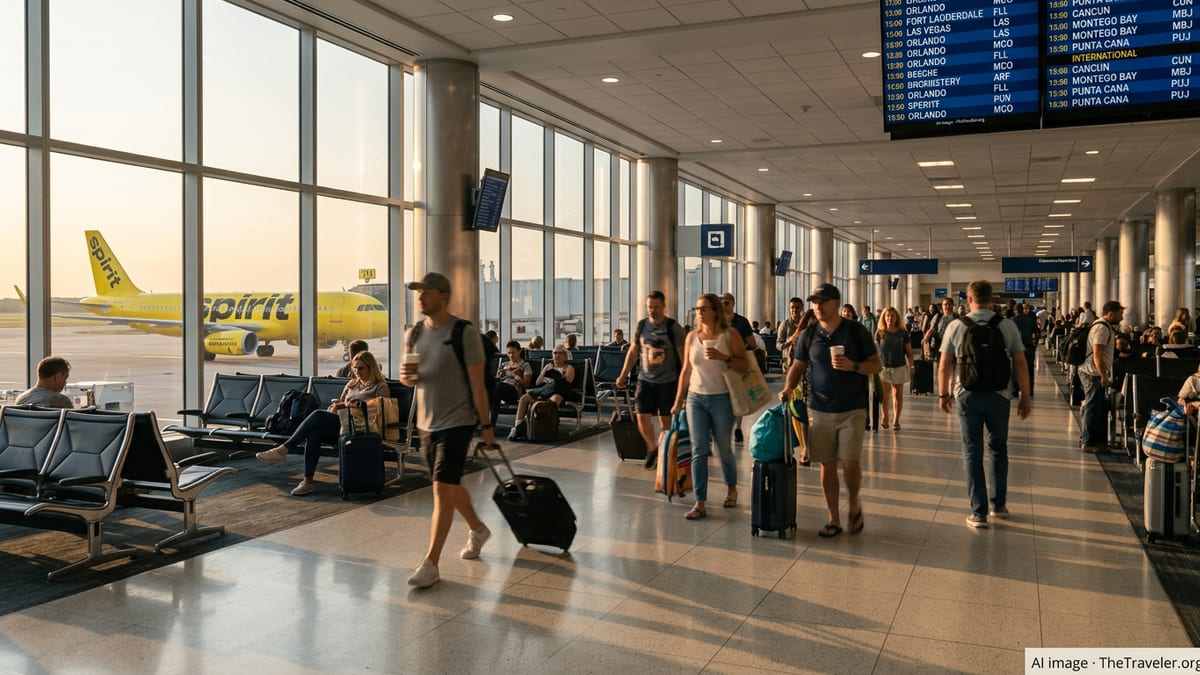
A Smaller Airline Built Around Leisure Hotspots
Publicly available filings and recent coverage indicate that Spirit’s restructuring is centered on becoming a smaller but more focused carrier, after years of rapid growth left it exposed to rising costs and soft domestic demand. The airline has cut capacity sharply since late 2024, with industry data showing domestic flying reduced by well over one third year over year in late 2025 as schedules were pulled back across the United States.
Reports indicate that much of this retrenchment is occurring on marginal routes that were heavily dependent on price-sensitive travelers and thin local demand. Spirit has exited or announced plans to leave multiple US airports, including St. Louis, Phoenix and Milwaukee, as part of a plan to eliminate salaried roles and concentrate flying in markets where aircraft can be filled more consistently and at stronger fares.
At the same time, the carrier is signaling that it intends to retain a strong presence in high-volume leisure corridors that remain central to US tourism flows. South Florida, Las Vegas and major gateways to the Caribbean and Mexico continue to feature prominently in its network, reflecting the resilience of beach, resort and casino demand even as some domestic city pairs weaken.
According to industry analysts cited in recent aviation and financial reports, the strategic goal is to emerge from Chapter 11 as a leaner airline that still caters to budget-conscious vacationers but with a route map better matched to where US travelers are actually choosing to go.
Refining the International Footprint to Follow US Travelers
Spirit’s restructuring is also reshaping its international network, particularly in Latin America. Coverage in travel and aviation outlets shows the carrier winding down some Central America flying while signaling a greater focus on Mexican beach destinations and a more selective approach to South America, in line with changing US-origin holiday patterns.
Routes that once connected US secondary cities to emerging tourism markets in Central America and parts of northern South America have been trimmed back or removed as the airline evaluates profitability and demand volatility. Industry observers note that some of these destinations relied heavily on Spirit’s low fares to attract first-time US visitors, leaving questions about whether tourism growth there will slow as capacity pulls back.
In contrast, high-volume resort destinations such as Cancun and other Mexican coastal cities have been consistently identified as strong performers. Reports suggest that Spirit is redeploying aircraft into these markets where US travelers continue to book package holidays, short-break getaways and family trips despite broader economic uncertainty.
The result is a more concentrated international strategy that mirrors the broader restructuring: fewer experimental or thin routes, and a greater emphasis on corridors with robust, year-round US leisure demand and more predictable yields.
Cost Cuts, Workforce Changes and Product Tweaks
To support its shift toward a more sustainable role in US tourism, Spirit is undertaking deep cost-cutting measures. Coverage from business and labor-focused outlets details multiple rounds of job reductions, including furloughs for flight attendants and pilots alongside cuts to salaried staff at headquarters and across the network. The carrier has also moved to shrink its fleet through early retirements, lease terminations and aircraft storage, with some analyses estimating that its active fleet has fallen to roughly half of early 2025 levels.
Union communications and aviation reports describe efforts to secure significant labor cost savings, including temporary pay reductions and adjustments to retirement contributions for pilots, framed as a tradeoff intended to preserve the airline’s long-term viability. These steps align with management’s stated aim, through court filings and public statements, of lowering fixed costs enough to operate profitably at a smaller scale.
Alongside these structural changes, Spirit is signaling modest product adjustments to appeal to a broader slice of the leisure market. Recent reports on the restructuring note plans to expand higher-value seating options, such as extra-legroom and quasi-premium sections, even as the carrier maintains its ultra-low-cost base model. For US tourists, this could mean slightly more choice between bare-bones fares and more comfortable seating on routes to popular vacation spots.
Industry commentators say these product tweaks are intended to capture additional revenue from travelers who still prioritize low fares but are willing to pay more for comfort on longer-haul leisure routes, particularly to beach and resort destinations.
Implications for US Travelers and Tourism Markets
The restructuring is already being felt by US travelers in the form of reduced choice on certain domestic and international routes. Communities that lose Spirit service, particularly secondary cities without multiple low-cost competitors, may see fewer nonstop options to major leisure destinations and potentially higher average fares as capacity drops.
Tourism boards and businesses in some Latin American and Caribbean destinations are also monitoring the changes closely. Where Spirit was a primary provider of ultra-low fares from US cities, its retrenchment could slow growth in visitor numbers or shift demand toward carriers that maintain more traditional fare structures and ancillary fees.
Conversely, the carrier’s decision to center its future around proven leisure hotspots may reinforce connectivity to the destinations that already dominate US outbound tourism. Travelers heading to major Florida gateways, top Mexican beach resorts or well-established Caribbean islands are likely to continue seeing Spirit as an option, particularly if the airline succeeds in stabilizing its finances and avoiding further large-scale schedule disruptions.
Travel advisors and industry analysts underscore that the coming months will be critical. As Spirit works toward exiting its latest Chapter 11 process, its success or failure in aligning fleet size, labor costs and route choices with real-world US tourism demand will help determine whether it remains a significant player in the budget leisure market or cedes more ground to rivals.
A Test Case for Ultra-Low-Cost Tourism Models
Spirit’s restructuring is unfolding against a broader shift in US aviation, as large network carriers and other low-cost competitors build out their own discounted offerings on key domestic and leisure routes. Analysts note that pressure from these rivals, combined with lingering changes in post-pandemic travel behavior, has challenged the sustainability of the pure ultra-low-cost model in some markets.
By drastically cutting capacity, simplifying its network and recalibrating its product, Spirit is effectively testing whether a smaller, more targeted ultra-low-cost carrier can still thrive in a landscape where US consumers expect low fares but increasingly seek flexibility, reliability and at least some comfort on leisure trips.
If the airline manages to complete its restructuring on schedule and return to profitability later in the decade, it could provide a blueprint for how other budget carriers respond to shifting tourism patterns and competitive pressures. If not, its struggles may accelerate consolidation and further concentration of US leisure traffic among larger airlines and a handful of well-capitalized low-cost rivals.
For now, the restructuring is reshaping how and where millions of Americans can access low-fare travel to the destinations that anchor the country’s tourism economy, from sunbelt cities to cross-border resort hubs. The final scale and shape of that network will become clearer as Spirit finalizes its emergence from bankruptcy and settles into its next phase as a restructured player in US leisure aviation.