

More news on this day
Spirit Airlines’ deep cutbacks in Las Vegas are reshaping how visitors reach the Strip, as rival carriers pivot toward international routes and casino giants brace for shifting travel patterns and profits.
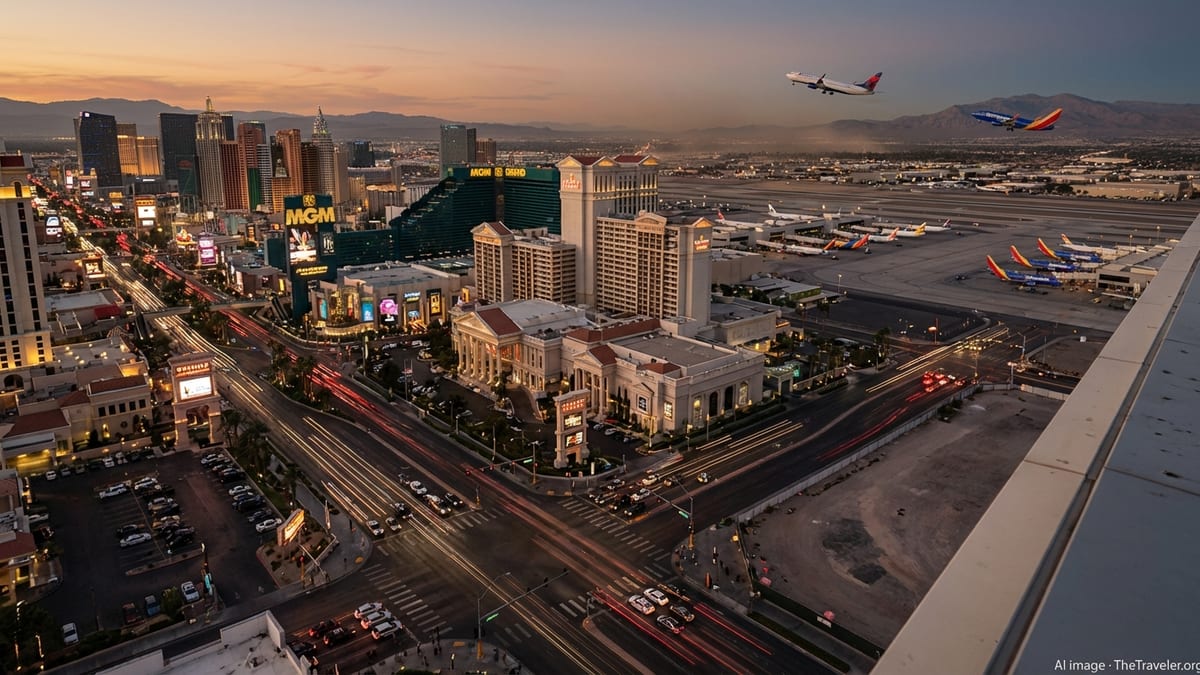
Spirit’s Las Vegas Pullback Marks a New Phase in Its Crisis
Spirit Airlines’ network retrenchment has reached Las Vegas in a visible way, underscoring how far the ultra-low-cost carrier has shrunk after back-to-back bankruptcy filings. Industry schedule data for early 2026 show Spirit slashing capacity and withdrawing from multiple U.S. cities, with Las Vegas losing a disproportionate share of routes as the airline chases only its most profitable markets.
In 2025, Spirit’s passenger count at Harry Reid International Airport fell by more than 40 percent compared with the previous year as the airline ended service to a cluster of destinations, many of them leisure-heavy cities feeding the Strip. The carrier has since furloughed hundreds of Las Vegas-based flight attendants and trimmed aircraft utilization, signaling that the city is no longer a core growth market but a station being held in place while the company fights for survival.
The shift is happening against a softer backdrop for Vegas overall. Total traffic through Harry Reid slipped nearly 6 percent in 2025 from the prior year, with both domestic and international arrivals declining, even as overall numbers remained historically high. Spirit’s retreat amplifies this deceleration in the price-sensitive segment, reducing the supply of rock-bottom fares that had reliably funneled budget travelers into Sin City.
For visitors who built their Vegas trips around Spirit’s low base fares, the new reality is fewer nonstop options, more connections, and in many cases higher all-in prices once bags and seats on other airlines are factored in.
Frontier, Southwest, and Delta Chase Higher-Yield International Demand
As Spirit scales back, competitors are redrawing their own maps with a sharper focus on cross-border and long-haul leisure demand. Frontier Airlines, which has also trimmed some domestic flying and high-cost routes into Las Vegas, is simultaneously rolling out new international services, particularly to Mexico from U.S. gateways. Recent schedule announcements include more links to Cancun and other resort markets, reflecting where the airline sees resilient demand and better margins.
Southwest Airlines, long the dominant carrier at Harry Reid, is leaning into its strength on North American leisure corridors, including Canada and Mexico, even as it manages capacity carefully. While Southwest has not staged a dramatic international build-up from Las Vegas itself, it increasingly uses its big U.S. bases to connect Canadians and Mexican travelers through to the Strip, effectively backfilling some of the volume Spirit once provided from secondary U.S. cities.
Delta Air Lines, meanwhile, is targeting higher-spending visitors, both domestically and abroad. The carrier has been rebuilding and expanding its transatlantic portfolio, including routes that make it easier for British and broader European travelers to reach Las Vegas via its hubs. Industry analysts say Vegas benefits indirectly when Delta adds capacity from the United Kingdom and Europe into U.S. gateways such as Los Angeles and Salt Lake City, then feeds those passengers onward to Nevada.
The net effect is a gradual pivot away from dense domestic ultra-discount flights into Las Vegas and toward a patchwork of international and connecting options designed to capture travelers with more spending power. For the Strip, this represents a subtle but important change in who is filling the hotel rooms.
What MGM and Caesars Stand to Lose and Gain
For casino heavyweights MGM Resorts International and Caesars Entertainment, airline schedules are not an abstract metric but a leading indicator of who will be walking through their doors. Spirit and other ultra-low-cost carriers historically delivered large volumes of short-stay, budget-conscious guests who filled midweek rooms and drove slot play, even if they were less likely to splash out on high-end dining or premium shows.
With Spirit’s footprint shrinking, that segment risks erosion. Fewer cheap seats into Las Vegas can translate into softer occupancy on slower days, particularly at older or more value-focused properties in the portfolios of MGM and Caesars. Executives and analysts are already watching Las Vegas visitation data closely after a 2025 dip in airport traffic, wary of any prolonged gap between room inventory and flight capacity.
At the same time, the growing emphasis by Frontier, Southwest, and Delta on Canada, Mexico, and the United Kingdom aligns with a strategy both MGM and Caesars have been pursuing for years: targeting international visitors who stay longer, gamble more, and spend heavily on entertainment. British and Canadian guests, in particular, tend to book multi-night packages that combine resort stays with concerts, sporting events, and fine dining, lining up squarely with MGM’s and Caesars’ push to diversify beyond pure gaming revenue.
The risk for the casino giants is that a slow adjustment period could leave some properties squeezed between weaker domestic volume and an international market that takes time to scale up. The opportunity, if air-service shifts are managed well, is a more profitable visitor mix driven less by deep-discount weekenders and more by high-value global travelers.
What the Shake-Up Means for Your Next Vegas Trip
For travelers, the changes in the skies above Las Vegas will be felt first in the shopping process. Spirit loyalists will find fewer nonstop options to Harry Reid International, especially from smaller cities that once enjoyed several weekly flights. It is increasingly likely that a Vegas weekend will require either a connection on a full-service airline or a reroute through another leisure carrier’s hub, sometimes at a higher fare.
On the flip side, travelers coming from Canada, Mexico, and the United Kingdom may see more options and, at times, sharper deals as Frontier, Southwest, and Delta compete for their business. Canadians might connect through U.S. gateways on Southwest or Delta more easily, while Mexican vacationers benefit from Frontier’s expanded links to major resort airports with onward connections to Las Vegas. British travelers could see improved one-stop itineraries via major U.S. hubs, making Vegas a more accessible add-on to North American trips.
The shifting airline landscape also encourages more deliberate trip planning. Budget travelers who previously relied on last-minute Spirit fares may need to book earlier, compare multiple airports within driving distance, or adjust travel dates to catch competitive prices. Those eyeing Strip stays at MGM or Caesars properties should pay attention to package offers that bundle airfare and rooms, as casinos experiment with incentives to offset any softness in domestic arrivals.
Ultimately, Spirit’s pullback is another reminder that Las Vegas, for all its bright lights, is highly sensitive to the economics of the airlines that feed it. As carriers recalibrate toward higher-yield international visitors, the city’s visitors will change along with the route maps, and so will the ways they experience the Strip.