

More news on this day
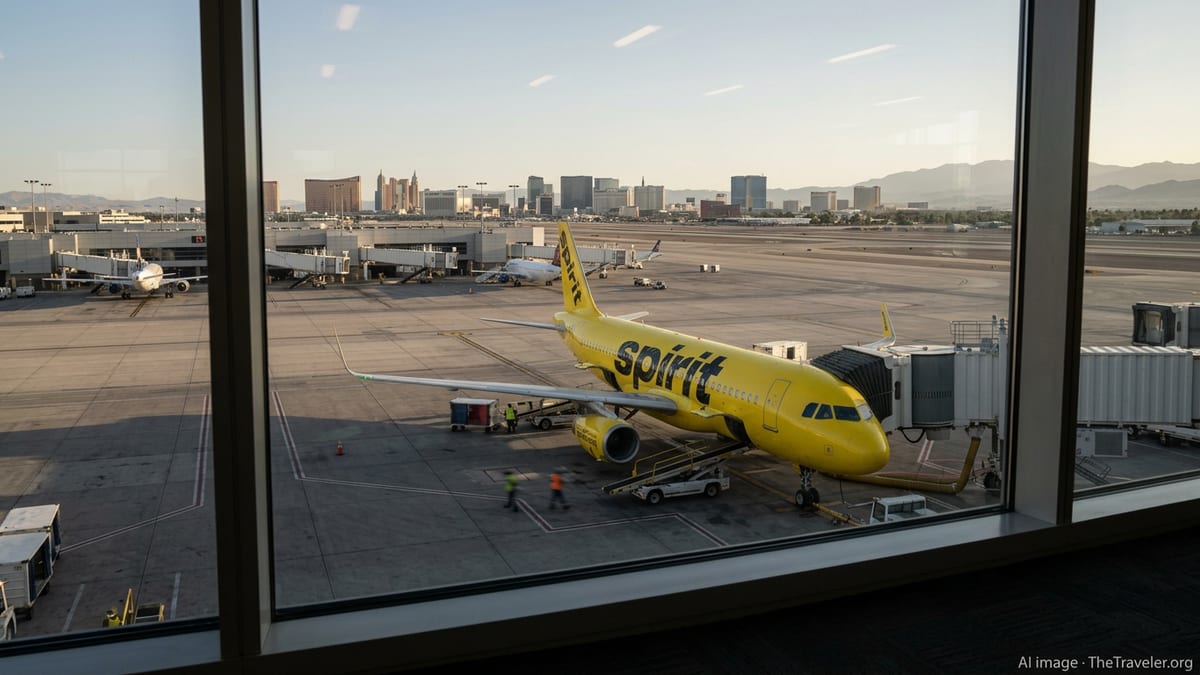
Travelers who rely on ultra low cost fares to and from Las Vegas are facing a major shakeup as Spirit Airlines moves to cut twenty three routes from Harry Reid International Airport, sharply reducing nonstop options and signaling a deeper retrenchment in the carrier’s Western U.S. network.
Get the latest news straight to your inbox!
Major Pullback at a Key Low Cost Gateway
Publicly available schedule data and recent route analyses show Spirit rapidly shrinking its Las Vegas footprint just as peak spring and summer travel demand builds. The carrier, long a prominent player at Harry Reid International, is in the process of eliminating twenty three routes that once tied Las Vegas to a wide mix of secondary and mid sized cities across the West and Midwest.
The cuts affect a combination of year round routes and seasonal services that historically fed leisure traffic to the Strip, nearby national parks, and convention business. In several cases, nonstop links that had only recently been promoted as convenient budget options are quietly disappearing from booking systems, leaving travelers with longer, often more expensive connections on competing airlines.
Industry route tracking reports indicate that this latest round of reductions comes on top of multiple earlier trims to Spirit’s Las Vegas schedule, compounding the impact for frequent visitors who counted on a dense map of low fare choices. For many price sensitive travelers, Las Vegas is shifting from a city with abundant bargain seats to one where planning ahead and shopping around will matter more than ever.
Harry Reid International, which handled tens of millions of passengers last year, has been one of the busiest low cost and ultra low cost airline hubs in the United States. Spirit’s retreat narrows that competitive field and could gradually reshape which regional markets have the most reliable, affordable access to Southern Nevada.
Which Travelers Are Hit Hardest
The heaviest effects are falling on travelers from smaller and mid sized cities that previously enjoyed nonstop or one stop low fare access to Las Vegas on Spirit. Many of the twenty three discontinued routes connected Las Vegas with airports that have limited long haul service and rely disproportionately on a handful of low cost carriers.
For residents of those communities, the end of a direct Spirit flight often means trading a quick hop for an itinerary that now requires a connection through another hub, sometimes in the opposite direction of Las Vegas. That change can add hours to total travel time and raise overall trip costs once baggage fees, higher base fares, or overnight stays are factored in.
Leisure travelers heading to Las Vegas for short weekend trips or special events are especially exposed. These itineraries tend to be more price sensitive and less flexible, with travelers often locked into specific dates for concerts, sporting events, or conventions. With fewer ultra low cost options, some potential visitors may postpone trips, shorten their stays, or look to competing destinations where nonstop service remains more plentiful.
Budget conscious travelers heading in the opposite direction, from Las Vegas to visit family or friends in outlying cities, face similar challenges. Where Spirit once offered straightforward low fare links, itineraries that remain on sale increasingly route through other carriers’ hubs at higher prices, with fewer late night and early morning departures that previously helped weekend travelers maximize time on the ground.
Competitive Airlines Move to Fill the Gap
Spirit’s retrenchment has quickly drawn attention from competitors, particularly other low cost and ultra low cost airlines that already maintain a significant presence in Las Vegas. Published coverage of recent schedule filings shows rival carriers adding capacity on a handful of corridors where Spirit is stepping back, betting that demand for budget friendly trips to Las Vegas will remain strong even as one major player reduces service.
In markets where multiple airlines still operate, travelers may notice a rebalancing rather than an outright loss of options. Larger network carriers and established low cost airlines can upgauge aircraft or add frequencies to capture former Spirit customers, sometimes softening the blow of the twenty three canceled routes and preserving at least some competitive pressure on prices.
The picture is more challenging in city pairs where Spirit was one of only a few carriers, or the only airline offering nonstop service. In those cases, there is less evidence so far of one for one replacement. Capacity may be restored gradually if other carriers judge the routes to be viable at higher fares, but in the short term many travelers will see reduced seat availability and fewer scheduling choices.
Travel industry analysts note that the shift could also benefit airlines that already specialize in connecting Las Vegas to major hubs rather than smaller spokes. As Spirit retreats, those carriers gain a clearer path to consolidate traffic flows through their own networks, potentially reinforcing a trend toward fewer, larger players controlling the key gateways into Las Vegas.
What Passengers With Existing Bookings Should Do
For travelers who already hold Spirit tickets touching Las Vegas, the wave of route cuts raises immediate practical questions. Publicly available information indicates that when a route is removed from the schedule, affected itineraries are typically either rebooked onto alternative Spirit services or canceled with the option of a refund or travel credit.
Given the scale of the changes at Harry Reid International, passengers are being urged by consumer advocates to monitor existing reservations closely and check for schedule updates in the weeks leading up to departure. In some cases, a flight may still operate on a different day of the week, at a new time, or via a connection instead of nonstop, and travelers who act early generally have more flexibility to adjust plans.
Travelers who need to maintain specific dates or meeting times in Las Vegas may want to cross check options on other airlines the moment any change notice appears. As seats fill on remaining competitors, particularly around holidays, major conventions, and sports weekends, waiting too long after a cancellation can leave travelers facing sharply higher fares or limited departure times.
Experts also recommend that travelers who purchased hotel rooms, show tickets, or nonrefundable activities separate from their airfare review the terms and conditions carefully. While some third party providers allow date changes or credits if a flight is canceled, others do not, making it important to understand what flexibility exists before deciding whether to accept a rebooking or pursue a refund from the airline.
Implications for Las Vegas Tourism and Airfare Trends
The loss of twenty three Spirit routes comes at a sensitive moment for Las Vegas, where tourism authorities have been working to sustain momentum following several years of strong visitor numbers, new sports franchises, and high profile events. While Harry Reid International continues to attract new service from a range of domestic and international airlines, the pullback from a major ultra low cost carrier alters the balance of how visitors arrive.
In the near term, industry observers expect mixed effects on airfares. On heavily traveled routes where multiple carriers remain, competitive dynamics may keep prices in check even as Spirit exits, especially if other low cost airlines step in. On more marginal routes, or those that depended heavily on Spirit’s low base fares to stimulate demand, the likely outcome is higher average ticket prices and fewer spontaneous trips.
Las Vegas itself remains a highly resilient market that has weathered airline shifts before, from past consolidations to the arrival and departure of various niche carriers. The scale and visibility of Spirit’s retreat, however, underscores how closely the city’s visitor economy is tied to affordable airlift from across the United States.
For travelers, the new reality at Harry Reid International means that planning a Las Vegas getaway will require a bit more advance research. Comparing multiple airports within driving distance, watching for sales from competing carriers, and booking earlier for peak weekends may become standard strategies as the market adjusts to the disappearance of twenty three Spirit Airlines routes.