

More news on this day
Spirit Airlines has become the latest U.S. carrier to plunge travelers into days of disruption, canceling more than 250 flights since February 13 as crew shortages collide with financial strain and a fragile national aviation workforce, echoing staffing challenges already felt at larger rivals Delta Air Lines and American Airlines.
Spirit’s Sudden Wave of Cancellations Hits Holiday Travelers
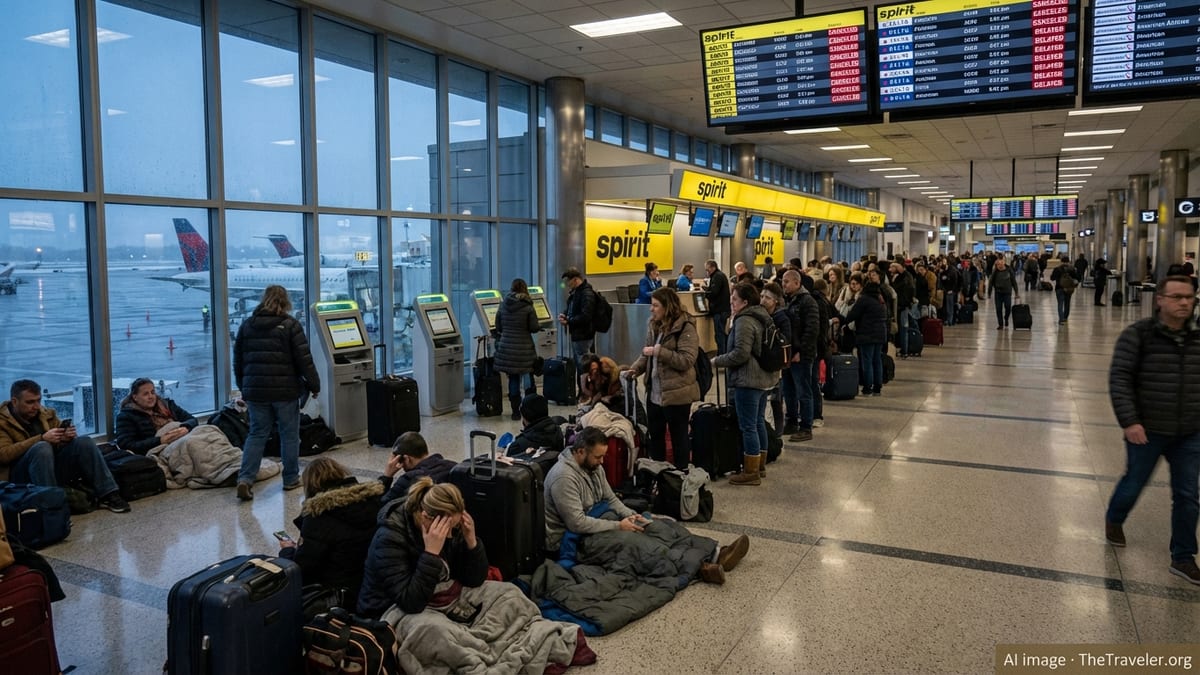
Spirit Airlines passengers across South Florida and other key markets have faced a bruising stretch of cancellations and delays in mid February, with more than 250 flights scrubbed since February 13 just as the busy Presidents Day weekend travel period peaked. The ultra low cost carrier has blamed a severe shortfall of available crew, including both flight attendants and pilots, for the mass disruption.
Operational data from tracking services show that cancellations have clustered around Spirit’s Florida strongholds, particularly Fort Lauderdale Hollywood International Airport, where the airline is a dominant player. With dozens of flights grounded on some days, gate areas have filled with stranded passengers, some forced to sleep on terminal floors as they wait for alternative options in a market where competing carriers have limited spare capacity.
The disruption comes at a critical moment for Spirit, which is working through its second Chapter 11 bankruptcy in a year and has been racing to cut costs while preserving its dense schedule. That combination has left the airline with little margin for error when illness, attrition or scheduling bottlenecks tighten crew availability. The resulting cancellations have exposed just how fragile the operation has become, especially at peak travel times.
In statements to local media, Spirit has emphasized that safety remains its top priority and that flights will not depart without the legally required complement of rested crew. For passengers, however, the explanation has offered limited comfort as they scramble to salvage vacations, family visits and business trips thrown into disarray.
Joining Delta and American in a Broader Crew Crunch
While Spirit’s crisis has been among the most visible this month, the carrier is not alone in grappling with crew shortfalls. Delta Air Lines and American Airlines have each endured their own staffing driven disruptions over the past year, reinforcing that even the largest, best capitalized carriers remain vulnerable to crewing pressures in an industry still recalibrating after the pandemic and a turbulent 2025.
At various points since last summer, Delta and American have trimmed schedules, particularly on regional routes and at congested hubs, citing difficulties in aligning pilot and cabin crew availability with ambitious flying plans. In some cases, weather events or air traffic control constraints have triggered cascading disruptions that quickly exposed thin staffing buffers, leading to crew members timing out under federal duty rules and forcing additional cancellations.
Executives at both major carriers have acknowledged that staffing continues to lag behind demand on some fleets and bases, despite aggressive hiring over the past two years. Training pipelines for pilots and cabin crew remain lengthy, and airlines are still contending with the aftershocks of early retirements, leaves of absence and training backlogs that piled up during the pandemic downturn. That has left operations more brittle, particularly during holiday peaks and around large weather systems.
Spirit’s entry into this group of carriers publicly battling crew shortages underscores that the problem is systemic rather than isolated to any single airline or business model. From ultra low cost operators to full service network giants, the industry is facing a prolonged period in which demand for trained aviation professionals outpaces the available supply.
Passengers Face Long Lines, Limited Rebooking Options and Rising Costs
For travelers caught in the middle, the practical consequences of the crew shortage are immediate and painful. At airports like Fort Lauderdale, Orlando and Tampa, passengers on canceled Spirit flights have reported waiting in lines stretching through terminals as they seek rebooking, refunds or accommodation. With many flights sold out due to the holiday period, same day alternatives have often been unavailable, forcing some customers to wait days to reach their destinations.
Complicating matters, other airlines have shown little appetite to honor Spirit tickets or offer deeply discounted rescue fares, particularly in constrained Florida markets where they are already operating near full capacity. Industry analysts note that with post pandemic demand still robust and planes generally flying full, carriers have fewer financial incentives to accommodate stranded passengers from a rival experiencing operational turmoil.
As a result, many affected travelers have resorted to last minute one way tickets on other airlines at steep prices, or turned to rental cars and long distance buses for journeys that were supposed to take a few hours by air. Social media has filled with accounts of missed cruises, abandoned resort stays and lost workdays, reinforcing how even a few days of disruption at a mid sized carrier can ripple across the broader travel ecosystem.
Consumer advocates warn that repeated episodes of staffing related cancellations could erode confidence in low cost travel options that depend on tight scheduling and high aircraft utilization. When a carrier like Spirit has little slack in its system, passengers may bear the brunt of any operational shock, whether from weather, air traffic control constraints or simple lack of rested crew.
Financial Strain and Labor Market Pressures Collide at Spirit
The crew shortage emergency comes at a financially precarious time for Spirit. The airline has been working through court supervised restructuring after filing for Chapter 11 protection twice in less than a year, following the collapse of its proposed mergers with Frontier and JetBlue and mounting losses tied to intense fare competition and high operating costs.
Bankruptcy filings and analyst commentary have highlighted how the airline’s ultra low cost model, built on dense seating and high daily aircraft utilization, leaves it unusually exposed to even modest operational shocks. When crews call in sick at higher than expected rates or training timelines slip, the carrier has limited reserves of spare personnel to step in without paying costly overtime or trimming the schedule.
At the same time, Spirit is competing for pilots, flight attendants and mechanics in one of the tightest aviation labor markets in decades. Larger carriers, including Delta and American, have inked record contracts with their unions over the past two years, raising wages and improving work rules for pilots and cabin crew. Those deals, while helping to stabilize staffing at the big airlines, have pulled the entire wage structure of the industry higher.
For a financially constrained carrier, matching those pay levels outright is difficult. Spirit has instead leaned on targeted incentives and schedule adjustments, but the events of February suggest that those measures have not been enough to safeguard operations during peak periods. As restructuring talks continue, the airline faces mounting pressure from both creditors and customers to show it can maintain a reliable schedule with the workforce it has.
National Air Traffic Control Shortages Add Strain to Airline Crews
Behind the individual airline crises sits a broader structural challenge in the U.S. aviation system: a persistent shortfall of fully certified air traffic controllers. Federal officials and independent analysts estimate that the Federal Aviation Administration is thousands of controllers short of its staffing targets, with more than 90 percent of facilities operating below recommended levels and many large hubs significantly understaffed.
That deficit has been years in the making, driven by a mix of budget constraints, uneven hiring, and training bottlenecks. The pandemic and the 2025 federal government shutdown further disrupted recruitment and training pipelines, as academy classes were paused and experienced controllers accelerated retirement plans. Even as hiring has ramped up, it can take two to five years for new recruits to become fully certified, meaning relief will be gradual at best.
The consequence for airlines is that when key air traffic control centers are short staffed, the FAA often slows the flow of traffic into congested airspace, particularly around New York, Florida and other busy corridors. Those flow restrictions trigger delays and schedule reshuffling, which in turn push airline crews toward their federally mandated duty time limits. Once a crew reaches its maximum hours, a flight cannot legally depart, even if passengers are already at the gate.
For carriers already operating with thin staffing margins, these knock on effects can quickly turn a manageable weather event or localized delay into a daylong operational crisis. Spirit’s mid February meltdown unfolded against this backdrop of national controller shortages and chronic congestion, which left the airline with less flexibility to swap crews and aircraft around the network when things went wrong.
How Delta and American Are Trying to Stay Ahead of the Curve
Delta and American, with larger balance sheets and more diversified networks than Spirit, have taken a range of steps to shore up staffing and mitigate the risk of large scale disruptions, though neither has been immune to crew related challenges. Both airlines have embarked on aggressive pilot and flight attendant hiring campaigns, expanded training capacity and introduced new scheduling and reserve policies designed to improve reliability.
Delta has highlighted investments in training centers and simulator capacity, as well as efforts to align its schedule more closely with available resources during peak travel periods. The carrier has also emphasized its practice of preemptively trimming flights ahead of major weather events to avoid having crews and aircraft out of position, a strategy that can reduce the risk of widespread knock on cancellations but may still frustrate customers facing early disruptions.
American, for its part, has been rebalancing capacity by pulling down some regional flying that has been hardest hit by pilot shortages, consolidating service on larger jets where staffing is more stable. The airline has negotiated new labor agreements with pilots, flight attendants and ground workers that include significant wage increases, which it argues will support recruitment and retention while underpinning a more robust operation.
Yet both carriers have experienced highly publicized meltdowns over the past two years when unexpected weather, air traffic restrictions and localized staffing issues converged. The fact that Delta and American have needed to adjust their schedules and staffing plans repeatedly underscores that even well resourced airlines are still adapting to a changed operating environment where slack in the system is limited.
What Travelers Can Expect in the Months Ahead
With Spirit’s latest disruptions drawing attention to ongoing crew shortages across the industry, travelers are asking whether this level of instability is the new normal. Aviation analysts say that while the worst of the post pandemic hiring crunch may be easing, several factors suggest that staffing related disruptions will remain a recurring feature of U.S. air travel through at least the next couple of years.
On the airline side, training backlogs for pilots and cabin crew are still working through the system, and demand for travel remains relatively strong, encouraging carriers to schedule aggressively. Any mismatch between planned flying and available crews is most likely to surface during peak periods such as spring break, summer holidays and long weekends, when there is little spare capacity to absorb shocks.
In air traffic control, the multiyear timeline for training new controllers means that even with ambitious hiring plans, many busy facilities will continue to operate with staffing levels below ideal thresholds. That reality makes strategic schedule reductions and better coordination between airlines and the FAA increasingly important tools for managing congestion and protecting reliability.
For passengers, experts advise building more flexibility into travel plans, particularly when flying on carriers that operate tight, high utilization schedules such as ultra low cost airlines. Booking earlier flights in the day, allowing generous connection times and monitoring airline notifications closely can help reduce the risk of missed events when disruptions occur. Spirit’s February turmoil is a reminder that in today’s aviation environment, labor and staffing issues are as central to reliability as aircraft maintenance and weather forecasts.