

More news on this day
Spirit Airlines’ new nonstop flights between Fort Lauderdale and Grand Cayman have briefly pushed fares to some of their lowest levels in years, turbocharging demand for Cayman Islands getaways even as the route faces an unexpectedly short lifespan.
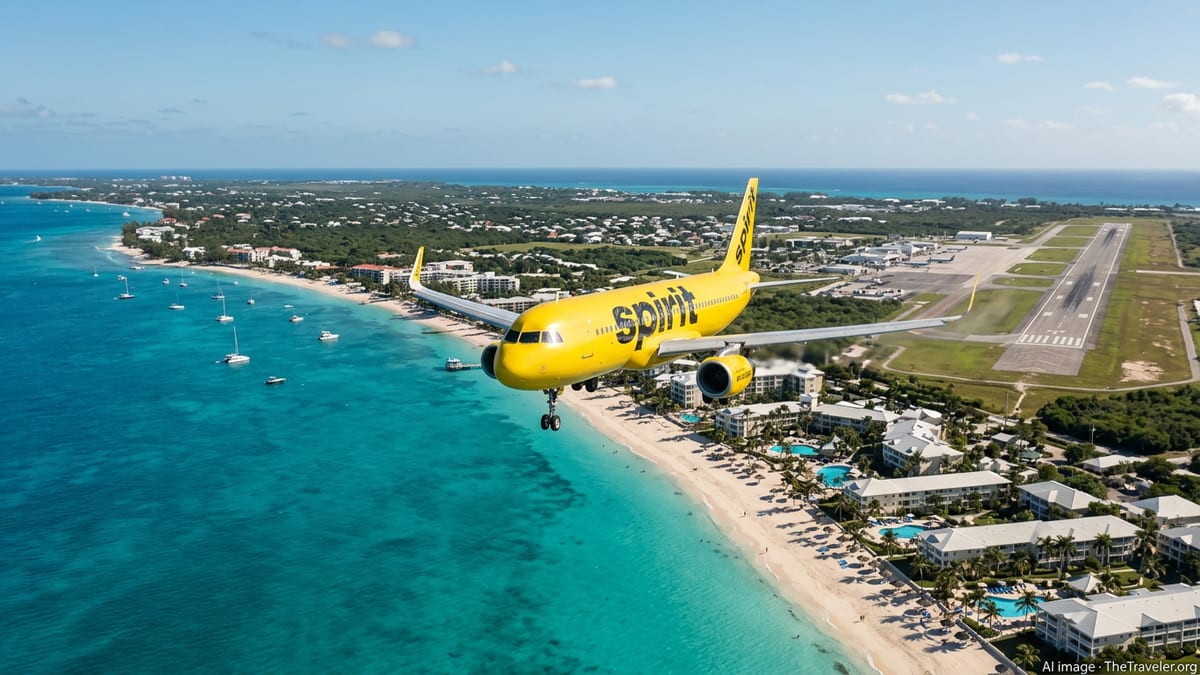
New Nonstop Link From South Florida to Seven Mile Beach
Spirit Airlines launched its latest Caribbean route in early December 2025, connecting Fort Lauderdale–Hollywood International Airport with Owen Roberts International Airport on Grand Cayman. The three-times-weekly service was positioned as a high-value option for travelers from South Florida and across the United States looking for a faster, cheaper way to reach one of the region’s most desirable beach destinations.
The airline scheduled flights on peak leisure days, typically Thursdays, Saturdays and Sundays, to align with long weekend escapes and seven-night vacation patterns. From Fort Lauderdale, Spirit’s network allowed one-stop connections from nearly two dozen U.S. cities, putting Grand Cayman within easier reach for budget-conscious travelers who previously had to route through Miami or rely on more expensive legacy carriers.
For the Cayman Islands, the new link represented a fresh chapter with a familiar brand. Spirit briefly served Grand Cayman in 2006 before exiting the market. Tourism officials welcomed the carrier’s return as part of a broader strategy to expand airlift ahead of the 2025–26 high season, adding more seats from key U.S. gateways and giving visitors additional flexibility on schedules and price points.
Ultra-Low Fares Spark a Short-Term Tourism Boost
True to its ultra-low-cost model, Spirit debuted the Fort Lauderdale–Grand Cayman flights with headline-grabbing introductory one-way fares starting around the mid-60 dollar range before taxes and fees. Those entry prices undercut many existing competitors on the route and quickly drew attention from both deal hunters and repeat Cayman visitors accustomed to paying a premium for the island’s upscale reputation.
Local tourism and hospitality stakeholders say the new service helped stimulate bookings across hotels, condos and tour operators during the crucial winter season. Affordable nonstop flights made it easier for younger travelers, families and repeat Caribbean visitors to consider Grand Cayman alongside more traditionally budget-friendly islands, especially for long weekends and shorter stays that are sensitive to ticket prices.
Industry analysts note that in the broader Caribbean marketplace, even a single new low-cost route can temporarily reset price expectations. Competing carriers often respond with targeted sales or modest fare reductions on overlapping city pairs, and package operators gain new flexibility to assemble air-and-hotel deals that appeal to value-focused travelers. For a high-spend destination like Grand Cayman, incremental arrivals from a budget carrier can translate into meaningful on-island spending on dining, diving and excursions.
Route Cut Highlights Volatility in the Budget Airline Market
The optimism around Spirit’s Grand Cayman expansion has been tempered by the carrier’s ongoing financial restructuring and rapid network shifts. Just a few months after the inaugural flights, Spirit confirmed that Fort Lauderdale–Grand Cayman is among several holiday-oriented routes scheduled to end in April 2026, part of a broader pullback as the airline prioritizes only its strongest-performing markets.
The swift reversal underscores how exposed leisure destinations can be to the business decisions of ultra-low-cost carriers. Routes built around discretionary travel are especially vulnerable when an airline grapples with higher fuel costs, intense competition and the need to improve yields. In practice, that means a route celebrated one season can disappear by the next, leaving tourism boards and local businesses scrambling to adjust.
For travelers, the change is a reminder that the cheapest options are often the least predictable. While Spirit’s fares temporarily expanded access to Grand Cayman, some passengers with late-spring travel plans are now facing schedule changes or cancellations as the airline winds down service. Consumer advocates advise anyone booked on the route to monitor their reservations closely, respond quickly to airline notifications and consider alternate carriers or nearby gateways such as Miami if their flights are disrupted.
What Travelers Need to Know About Fares, Fees and Flexibility
For those still looking to capitalize on the route before it ends, Spirit’s pricing structure remains a double-edged sword. Base fares can be significantly cheaper than those of full-service competitors, but flyers must budget for add-ons such as carry-on bags, checked luggage, seat selection and priority boarding. A ticket that starts at a promotional level can quickly approach legacy-carrier pricing if travelers opt in to multiple extras.
Seasonality also plays a major role. Winter and early spring are peak months for travel between South Florida and the Cayman Islands, with school breaks and holiday periods pushing demand and prices higher. Midweek departures and shoulder-season dates often offer the best availability of lower fares, though inventory can move quickly on a route slated to end.
Travel experts recommend booking as early as possible while keeping an eye on competing airlines serving Grand Cayman from South Florida and other U.S. hubs. Flexible travelers who can adjust dates, depart from alternate airports or accept longer connection times are more likely to find attractive fares even as Spirit pares back its network. Travel insurance or credit card protections that cover schedule changes and cancellations may also be worth considering for trips built around budget carriers.
Grand Cayman Tourism Looks Beyond a Single Carrier
Despite the uncertainty surrounding Spirit’s long-term presence, Cayman Islands tourism officials remain focused on the bigger picture: strengthening overall airlift and diversifying the mix of airlines and gateways feeding the islands. Recent seasons have seen new or expanded services from multiple North American carriers, along with commitments to increase frequencies during peak demand periods.
Tourism planners view the brief Spirit service as both a proof of concept for additional low-cost capacity and a signal of ongoing consumer appetite for more affordable access to Grand Cayman. Other airlines are already capitalizing on that interest, with regional and U.S. carriers marketing competitive fares, connecting itineraries and package deals that build on renewed visibility for the destination.
On the ground, hotels, resorts and tour operators say the short-lived ultra-low-cost link has reinforced the importance of resilience and market diversity. While a single budget carrier can deliver a quick spike in arrivals, long-term growth hinges on a stable mix of full-service and low-cost airlines, varied U.S. gateways and strong relationships with travel advisors and wholesalers. For travelers, the message is clear: Spirit’s Fort Lauderdale–Grand Cayman experiment may be brief, but the race to make Cayman more accessible is likely to continue well beyond this season.