

More news on this day
U.S. airlines are gearing up for a record 171 million passengers between March 1 and April 30, but a grinding federal government shutdown and the suspension of Global Entry risk turning the busy spring season into a stress test for the nation’s aviation system.
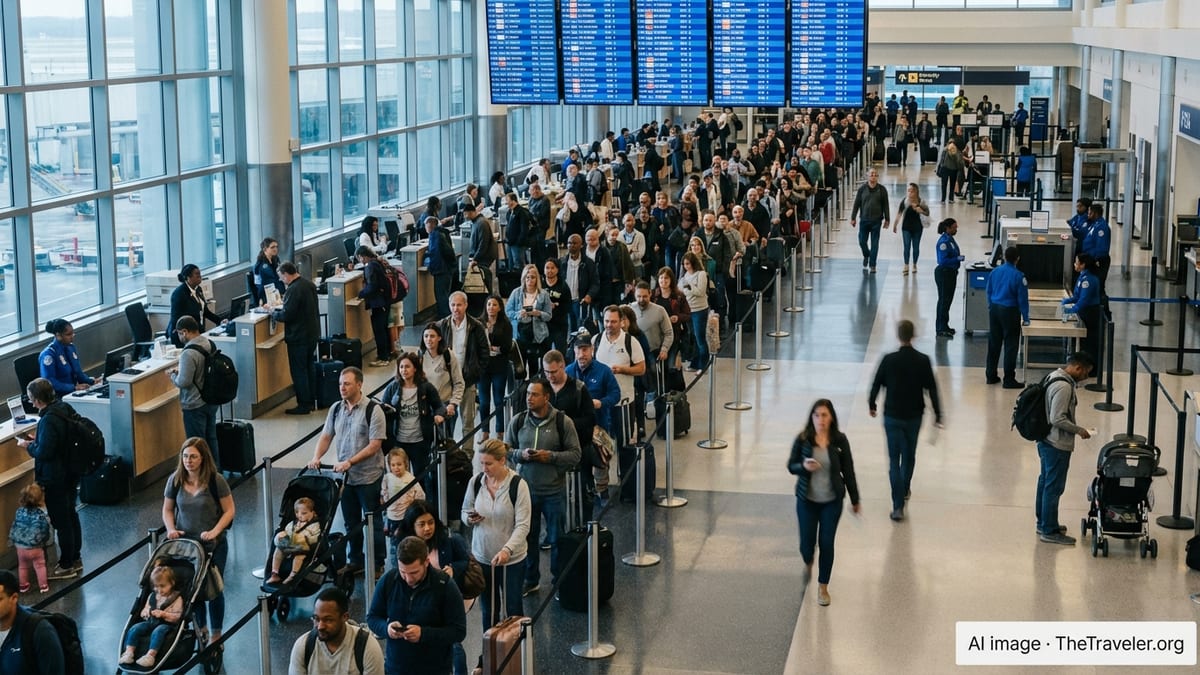
Record Spring Forecast Puts Pressure on U.S. Aviation
According to industry group Airlines for America, carriers are forecasting 171 million passengers will fly on U.S. airlines this spring, a four percent increase from the same period last year. That works out to roughly 2.8 million passengers each day over March and April, extending a travel boom that has pushed air volumes to fresh highs since 2024.
To meet the expected demand, airlines plan to operate about 26,000 passenger flights daily, offering an estimated 3.5 million seats. The combination of more flights and fuller planes has prompted carriers to ramp up staffing, ground operations and customer service resources in an effort to keep delays and cancellations in check.
Industry executives say the strong outlook reflects continued consumer appetite for both leisure and business trips, even as inflation and higher borrowing costs weigh on household budgets. Popular spring break routes to Florida, the Caribbean, Europe and Hawaii are already reporting robust bookings, while major domestic hubs are bracing for multiple peak days that could rival last summer’s record checkpoint volumes.
Behind the headline numbers, however, airline leaders warn that their preparations can only go so far if federal agencies responsible for security screening and border processing are constrained by politics.
Government Shutdown Casts a Shadow Over Spring Break
The partial shutdown of the federal government, which began on February 14 after lawmakers failed to reach a Department of Homeland Security funding deal, is adding fresh uncertainty to the spring travel outlook. Tens of thousands of DHS employees, including Transportation Security Administration screeners and U.S. Customs and Border Protection officers, are either working without pay or facing curtailed overtime and support.
While TSA checkpoints and air traffic control operations continue as essential services, the agency has warned that staffing flexibility could tighten if the impasse drags on. Past shutdowns have shown that sustained financial strain on front-line workers can lead to higher sick rates and localized bottlenecks at major airports, particularly during peak morning and evening banks.
Airlines for America and other travel industry groups have publicly urged Congress and the White House to reach a funding agreement, arguing that the shutdown effectively shifts political pressure onto travelers. They contend that a record spring season magnifies the risks of any disruption, since even modest slowdowns at checkpoints or customs halls can quickly cascade into missed connections, crowded gate areas and customer complaints.
For now, TSA PreCheck remains in operation, a partial relief for frequent domestic travelers who rely on the expedited lanes to navigate busy terminals more quickly. But industry officials caution that as passenger volumes climb in March, sustained uncertainty over agency budgets and staffing could still translate into longer lines and more variable wait times, especially at larger coastal hubs.
Global Entry Suspension Raises Concerns for International Flyers
The most visible impact of the shutdown on travelers so far is the suspension of Global Entry, the trusted traveler program that speeds vetted passengers through U.S. customs. The Department of Homeland Security halted Global Entry enrollments and kiosk processing as it shifted resources to core operations, leaving millions of members unable to access one of the few friction-reducing tools in the international arrivals process.
In 2025, some 18 million travelers used Global Entry, saving hundreds of thousands of officer hours at ports of entry by diverting low-risk passengers away from standard inspection lines. With the program paused just weeks before the spring surge, those travelers will be funneled back into regular queues, potentially lengthening wait times during already busy afternoon and evening arrival banks.
Airlines and airport operators say they are working with Customs and Border Protection to blunt the impact. Some gateways are promoting the Mobile Passport Control app, which allows travelers to submit passport and customs information via smartphone before arrival, while others are adjusting staffing patterns and queuing layouts to maintain flow at primary inspection booths.
Still, executives warn that there is no true substitute for Global Entry’s automated kiosks and dedicated lanes, especially at large international hubs that handle heavy volumes from Europe, Asia and Latin America. With spring break drawing families, study abroad travelers and cruise passengers into the system at the same time, even small slowdowns could be felt more acutely.
Airlines, Airports and Travelers Pivot to Mitigate Disruptions
Faced with structural constraints they do not control, airlines are focusing on the levers they can pull. Major carriers have been emphasizing schedule reliability over aggressive growth, pruning weaker routes and adding buffer time on high-traffic days to reduce the risk of rolling delays. Many are also investing in real-time rebooking tools within their apps, giving passengers more self-service options if irregular operations occur.
Airports, for their part, are leaning on data-sharing partnerships with TSA and Customs and Border Protection to anticipate stress points. Several large hubs are using predictive analytics to forecast queue lengths by hour and terminal, redeploying staff and opening additional security lanes when possible. Some are expanding wayfinding signage and multilingual announcements to move passengers more efficiently through check-in, security and border control.
Travel advisors and consumer advocates say individual flyers can also play a role in minimizing headaches. They recommend arriving earlier than usual, especially for international departures, building extra time into connections through major hubs, and using airline and airport apps that provide real-time updates on gate changes and wait times.
Even as the industry pushes for a political resolution to the shutdown and a swift reinstatement of Global Entry, executives stress that most trips are still expected to operate normally. The challenge, they say, lies in preserving that reliability across 171 million journeys during what could be one of the most politically fraught spring travel seasons in recent memory.
Broader Travel Boom Highlights Stakes of Policy Stalemate
The spring forecast does not exist in isolation. Globally, international tourism surpassed 1.5 billion arrivals in 2025, and U.S. airports set multiple single-day screening records last year, underscoring how quickly air travel has not only recovered but surpassed pre-pandemic volumes. Analysts expect that momentum to continue into the summer, when European and transpacific routes typically see their heaviest demand.
That broader boom raises the stakes of the current policy stalemate in Washington. Industry groups argue that as air travel becomes a backbone of economic activity, predictable funding for security and border functions is as essential as runway maintenance or air traffic control modernization. Repeated shutdown episodes, they warn, chip away at traveler confidence and the perception of U.S. airports as efficient, well-managed gateways.
For now, travelers booking spring break getaways and early summer holidays are watching developments in the capital as closely as weather forecasts. If Congress reaches a deal and Global Entry resumes operations before the busiest weeks in March, the record spring could largely unfold as a story of strong demand and operational resilience. If not, the season may be remembered just as much for its political turbulence as for its passenger records.