

More news on this day
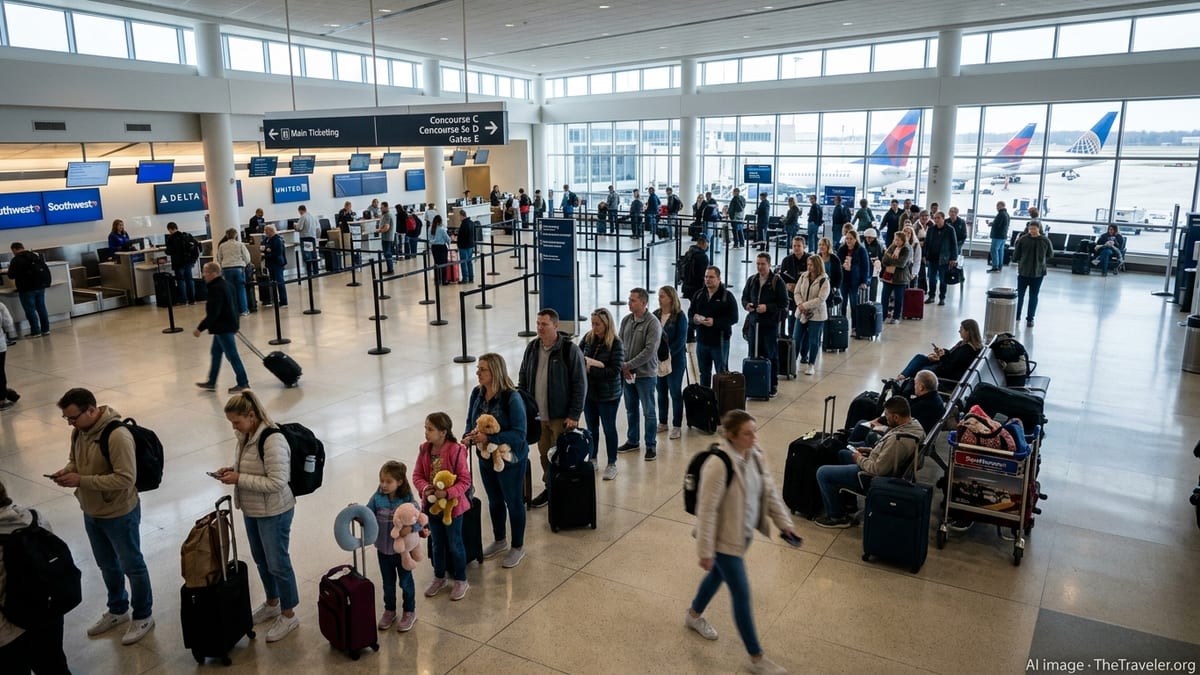
Wisconsin travelers heading out for spring break in March 2026 are being warned to expect some of the longest airport lines in years, as rising passenger volumes, federal staffing uncertainty and recent severe winter weather combine to squeeze Milwaukee and Madison terminals just as demand peaks.
Get the latest news straight to your inbox!
Surging Demand Meets Tight Capacity at Wisconsin Airports
Publicly available traffic data and planning documents indicate that Milwaukee Mitchell International Airport, the state’s busiest air hub, is handling significantly more passengers than just a few years ago, even as it remains classified as a medium hub serving much of southern and eastern Wisconsin. Forecasts prepared for airport bond investors project total passengers approaching or exceeding pre‑pandemic levels by 2026, with steady year over year growth. At the same time, Dane County Regional Airport in Madison continues to add routes and fill seats despite operating from a single compact terminal with a limited number of gates.
This growth is colliding with the concentrated timing of spring break. Many Wisconsin school districts and universities schedule breaks between mid March and late March, creating pronounced spikes on Thursdays, Fridays and weekend mornings. Similar patterns at Minneapolis Saint Paul International Airport, where officials have projected tens of thousands of daily spring break screeners, are a bellwether for upper Midwest travel conditions and suggest likewise intensified pressure on Wisconsin’s outbound flows.
For travelers, the result is that airports which usually feel manageable can suddenly behave like far larger hubs. Reports from frequent Madison flyers in recent spring periods describe security wait times that are normally under 15 minutes stretching significantly longer on peak mornings. In Milwaukee, increased use by travelers from across Wisconsin and northern Illinois, combined with more leisure routes to sun destinations, is expected to push check in counters, bag drops and Transportation Security Administration checkpoints close to their practical limits during the busiest hours.
Airline scheduling patterns are amplifying the crunch. Many carriers are clustering departures to warm weather destinations in narrow morning banks, which means hundreds of passengers converge on the same checkpoints and jet bridges at once. Without corresponding expansions in checkpoint lanes or holding areas, even minor slowdowns can rapidly produce snaking lines through ticketing halls and toward parking skywalks.
National Turmoil and Winter Weather Add to the Backlog
Wisconsin’s spring break airport rush is unfolding against a turbulent national backdrop. A prolonged federal funding standoff affecting the Department of Homeland Security has resulted in Transportation Security Administration officers across the country missing paychecks, and news coverage from multiple cities reports increased sick calls and staffing gaps. Some mid sized airports have so far avoided the worst delays, but guidance from aviation analysts indicates that any further disruption could cause ripple effects, including the temporary closure of dedicated precheck lanes and longer standard screening queues.
At the same time, the broader air network is still recovering from a series of powerful winter storms that have swept across the Midwest in January and again from March 13 to March 17, 2026. A major March blizzard brought several feet of snow and blinding conditions to parts of Minnesota and Wisconsin, leading to hundreds of flight cancellations and diversions at regional hubs and large connecting airports. Data from flight tracking services and national wire reports show that even days after the last flakes fell, airlines were still working through stranded aircraft and crew imbalances.
These weather disruptions matter for Wisconsin passengers even when local skies are clear. Many flights from Milwaukee and Madison rely on aircraft and crews rotating through hubs such as Chicago, Detroit, Atlanta and Minneapolis. If an inbound aircraft is delayed or a connecting crew times out due to earlier weather, the departure from Wisconsin can be late, and passengers who arrived early to beat security lines may still spend additional hours in crowded gate areas.
Travel analysts also point to the compounding impact of rolling delays. When one morning departure bank is disrupted, aircraft may arrive late for afternoon turns, and crew schedules can remain out of sync for days. For spring break travelers on tight vacation schedules or cruising itineraries, this dynamic raises the stakes for planning extra time and considering more conservative connections through weather sensitive hubs.
Parking Squeeze and Ground Access Challenges
Even before reaching the ticket counter, Wisconsin travelers are running into pressure on airport parking and ground transportation. Dane County Regional Airport implemented updated parking rates effective January 2026 under county ordinances, reflecting both strong demand and the need to manage limited garage and surface capacity. The airport’s own materials emphasize that parking is first come, first served, with no guarantee of space during peak periods.
Travel forums and local community discussions indicate that during past spring breaks, long term lots at Madison’s airport have approached capacity on popular departure days, forcing some drivers into higher cost options or onto city park and ride systems. University related events and conferences scheduled around the same period can further strain nearby parking supply. While Madison Metro Transit operates bus service between the airport, downtown and the University of Wisconsin campus, luggage and family groups often find it less convenient than driving, which in turn adds to garage congestion.
Milwaukee Mitchell International faces its own access pressures. Recent reports on regional development note that the airport served more than six million passengers in 2024, drawing flyers from Milwaukee, outstate Wisconsin and the northern Chicago suburbs. That catchment area funnels tens of thousands of spring break travelers into a single complex of garages, surface lots and curbside drop off lanes, much of it along heavily trafficked freeway corridors and adjacent commercial zones.
As volumes rise, small frictions quickly add up. Searches for parking, shuttles circulating between remote lots and terminals, and crowded curbfronts can add 20 minutes or more to the time it takes to reach a check in counter. For morning departures during a high demand travel week, those extra minutes are often the difference between an unrushed walk to security and a sprint down the concourse as boarding closes.
How Wisconsin Travelers Can Beat the Spring Break Rush
Travel industry guidance for spring 2026 points to a consistent theme for Wisconsin flyers: assume this season will be busier than any in recent memory and plan accordingly. National carriers, airport agencies and independent travel advisors are broadly recommending that domestic passengers during peak spring break periods arrive at least two hours before departure, even at smaller regional airports that typically require less time. For early morning departures between roughly 5 a.m. and 9 a.m., a cushion of two and a half hours is increasingly suggested, particularly for families, travelers checking bags or those unfamiliar with the terminal layout.
Security program enrollment remains one of the most effective tools for reducing stress, though it may not fully eliminate waits in an environment of federal staffing uncertainty. Travelers who already have access to trusted traveler programs are advised to confirm which lanes are operating at their specific airport and terminal, since published coverage from other cities indicates that some precheck services may be reduced temporarily during staffing shortfalls. Even in Madison and Milwaukee, where lines are usually shorter than at major hubs, precheck and clear style products can provide more predictable experiences if lanes remain open.
Ground access planning is equally important. Wisconsin travelers driving to Dane County Regional Airport or Milwaukee Mitchell during the core weeks of spring break should consider prepaying or reserving parking online where available, checking airport social channels and local news for alerts about full garages, and building in time to navigate potential freeway slowdowns or construction zones. Those originating in college towns or small cities may find that regional shuttle services to Milwaukee or Chicago are operating at or near capacity, making early booking crucial.
Finally, aviation observers stress the value of flexibility. Booking the earliest nonstop flight of the day, choosing midweek departures when possible, packing carry on only to avoid baggage check lines and monitoring weather forecasts across the broader national network can all materially reduce the chance of spring break headaches. For Wisconsin travelers in 2026, treating even familiar hometown airports as if they were major hubs, at least for the next several weeks, may be the most realistic way to turn a season of record lines into a smoother start to a long awaited getaway.