

More news on this day
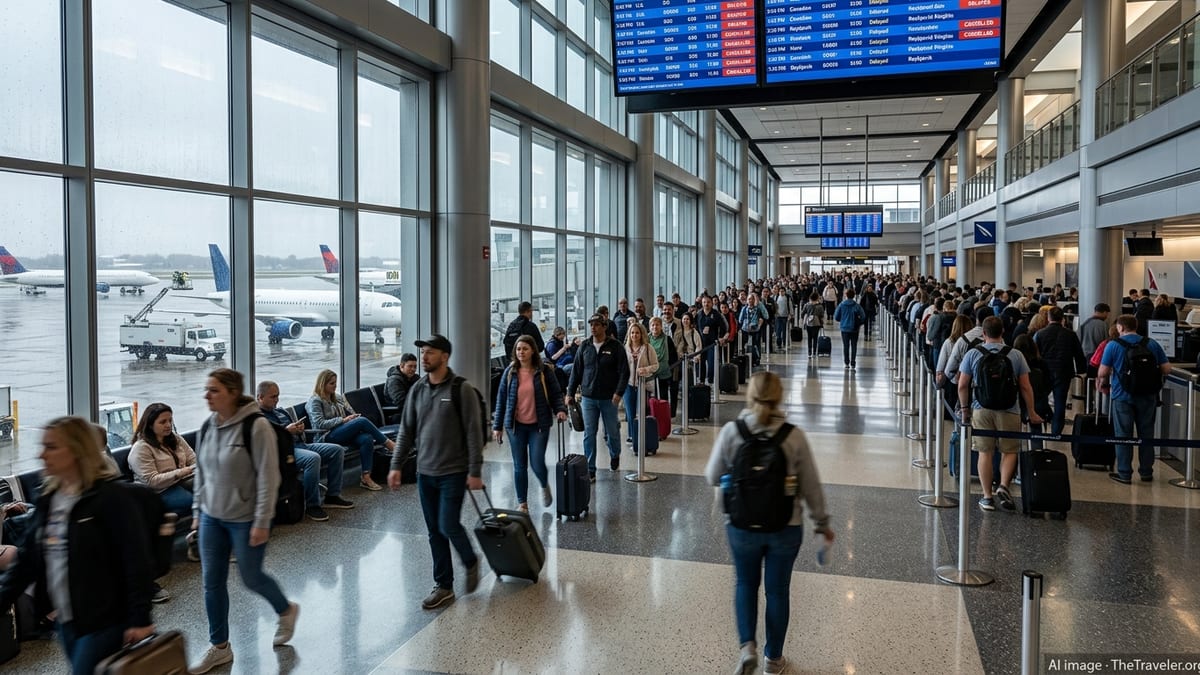
Air travelers heading across the United States, Canada, and Iceland for spring break are facing a volatile mix of severe weather, staffing pressures, and record passenger volumes, leading to widespread delays, cancellations, and last-minute schedule changes at key hubs on both sides of the Atlantic.
Get the latest news straight to your inbox!
Storm Systems and Shutdown Pressures Disrupt U.S. Skies
Publicly available flight-tracking data and recent news coverage show that a series of March storm systems has repeatedly disrupted major U.S. airports just as spring break demand peaks. A powerful storm complex sweeping the eastern half of the country in mid-March brought blizzard conditions to the Upper Midwest, high winds across the Plains, and thunderstorms from the Mississippi Valley to the Mid-Atlantic, triggering thousands of cancellations and delays at hubs such as Minneapolis–St. Paul, Chicago, Dallas–Fort Worth, New York, and Atlanta.
Reporting from national outlets indicates that more than 5,000 flights were cancelled across the United States on March 15 and the morning of March 16 alone as the latest system moved through, snarling connections nationwide. Earlier in the month, a separate round of winter weather in the Rockies and central states caused hundreds of additional disruptions at Denver and other mountain gateways, further stressing airline recovery efforts.
The weather turbulence has collided with a partial U.S. federal government shutdown that began on February 14, 2026. Transportation Security Administration employees have continued working, but as they approach the point of missing full paychecks in mid-March, travel analysts warn of mounting strain on security checkpoints. Longer lines at already-busy airports are contributing to missed flights and tighter connections at a time when schedules leave little room for error.
Academic research on the National Airspace System has also highlighted how security and air traffic control bottlenecks can now propagate through the network more visibly than before the pandemic. In practice, that means a ground stop or staffing shortfall at one large hub can ripple across dozens of downstream airports during peak travel days.
Canadian Airports Juggle Ice, Crowds, and Tight Connections
In Canada, major gateways including Toronto Pearson, Montreal–Trudeau, and Vancouver are also grappling with spring weather and heavy holiday traffic. Social media posts and traveler forums over the past week describe mounting concern about forecast ice storms in southern Quebec and Ontario and their potential to disrupt long-haul departures to Europe and the United States.
Passengers scheduled to depart Montreal for Europe in the coming days report monitoring forecasts that call for extended periods of freezing rain, raising the likelihood of deicing delays, missed connections, and overnight interruptions. Airlines are advising many travelers to keep contact details updated in their booking profiles and to watch for preemptive rebooking offers when significant weather is forecast.
Canada’s air passenger protection regime remains an important factor for travelers facing major delays or cancellations. Under Canadian rules, compensation and care obligations vary depending on whether a disruption is within the airline’s control, within its control but related to safety, or outside its control, such as most weather events. Consumer advocates stress that passengers should document communications, keep receipts for meals and hotels, and submit claims through official airline channels if disruptions extend overnight.
Industry observers note that, even on fair-weather days, Canada’s busiest airports are operating close to capacity during peak spring break periods. That leaves limited slack when one or two heavily used runways must briefly close for snow and ice clearance, or when an arriving aircraft is delayed by conditions in the United States. Those knock-on effects can quickly cascade through transborder and domestic networks.
Iceland Links Strained by North Atlantic Weather and Full Flights
Across the North Atlantic, flights between North America and Iceland are also feeling the seasonal squeeze. Recent posts from travelers show multiple Iceland-bound services from U.S. cities such as Denver being cancelled or retimed due to adverse weather near Keflavik and along the polar route. Some passengers heading to Iceland for spring break report being rebooked by a full day or more, with limited options because many departures are already heavily booked.
Carriers serving Keflavik, including Iceland-based airlines and North American partners, routinely adjust schedules in winter and early spring to account for strong winds, icing conditions, and changing demand. A schedule bulletin issued earlier in the season outlined planned frequency changes between Iceland and various U.S. and Canadian zones, signaling a leaner but more concentrated roster of flights during shoulder weeks.
For travelers, this means that a single cancellation on a popular route can be harder to recover from than in high summer, simply because there are fewer alternative departures on the same day. Travel forums in recent days describe long call-center wait times, busy online chat queues, and frustration when trying to secure hotel vouchers or rerouting during weather-related interruptions at Keflavik.
Passenger-rights frameworks can offer some relief, depending on the circumstances. When flights operate to, from, or within the European Union or associated jurisdictions, certain consumer protections may apply if a disruption is within an airline’s control. However, when the cause is clearly weather-related or tied to air traffic control restrictions, compensation is often more limited, though meals, hotel stays, and rebooking assistance may still be provided on a case-by-case basis.
What Passengers Should Do Before Heading to the Airport
With conditions changing quickly this spring, travel experts emphasize preparation and flexibility. Airlines across the United States, Canada, and Iceland are issuing periodic travel waivers for regions expecting storms, allowing customers to move trips to nearby dates without change fees or fare differences in specific booking windows. Passengers planning to travel between mid and late March are encouraged to check whether any waivers apply to their origin or destination, especially along the U.S. East Coast, the Upper Midwest, or transatlantic gateways.
Airport and airline communications indicate that this spring break period is one of the busiest since before the pandemic, with Orlando, Las Vegas, Phoenix, Denver, and several coastal airports expecting record or near-record passenger volumes on peak days. In Orlando, for example, local forecasts and airport messaging point to single-day passenger counts surpassing last year’s spring break highs, putting additional stress on security lines and baggage systems.
Travel planners generally recommend arriving significantly earlier than usual, particularly for families, large groups, and anyone connecting to or from international flights. At some hubs, online commentary from airport staff and frequent flyers suggests that three hours may no longer be a generous cushion when lines periodically spill into the terminal and secondary screening is in effect. Building in extra connection time between flights can also reduce the risk of misconnecting if the first leg is held by deicing or ground stops.
Digital tools are proving especially valuable during this period of frequent change. Airline apps and text alerts often carry the earliest notices of gate shifts, rolling delays, or proactive rebookings. Flight-tracking services and airport social channels can provide additional context, such as ground stops due to lightning or runway closures for snow clearance, helping travelers make faster decisions about re-routing or overnight stays.
Planning Ahead for the Remainder of Spring Break Season
Looking ahead to the final weeks of the spring break window, meteorological outlooks suggest that additional storm systems are likely to cross North America, with late-season snow still possible in northern states and provinces and strong thunderstorms in the central and eastern United States. Combined with continuous high demand and ongoing staffing pressures in some parts of the aviation system, that points to a continued risk of rolling disruptions rather than a quick return to completely smooth operations.
Air travel analysts advise that passengers booking last-minute trips should scrutinize connection patterns and consider nonstop flights where possible, even if the fare is higher. Routes that rely on weather-sensitive hubs or tight banks of connections are more exposed when storms or ground delays occur. Travelers planning complex itineraries that link domestic segments with long-haul flights to or via Iceland may want to schedule an overnight stop rather than a short same-day transfer during this unsettled period.
For those who must travel on fixed dates, flexible planning on the ground can also ease stress. Reserving airport hotels with free cancellation, choosing fully refundable or changeable rental car bookings, and identifying alternative airports within driving distance can all help when flights are retimed or rerouted at short notice. Families traveling with children, in particular, may benefit from packing essential medications, a day’s worth of extra clothing, and portable chargers in carry-on bags in case of extended time in terminals.
While the current wave of disruptions is frustrating for many, observers note that airlines and airports are adjusting staffing, opening overflow security lanes, and adding customer-service support in anticipation of the heaviest spring break weekends. For travelers prepared to monitor conditions closely and adapt plans on the fly, it remains possible to navigate the season successfully, even as storms and system pressures continue to challenge air travel across the United States, Canada, and Iceland.