

More news on this day
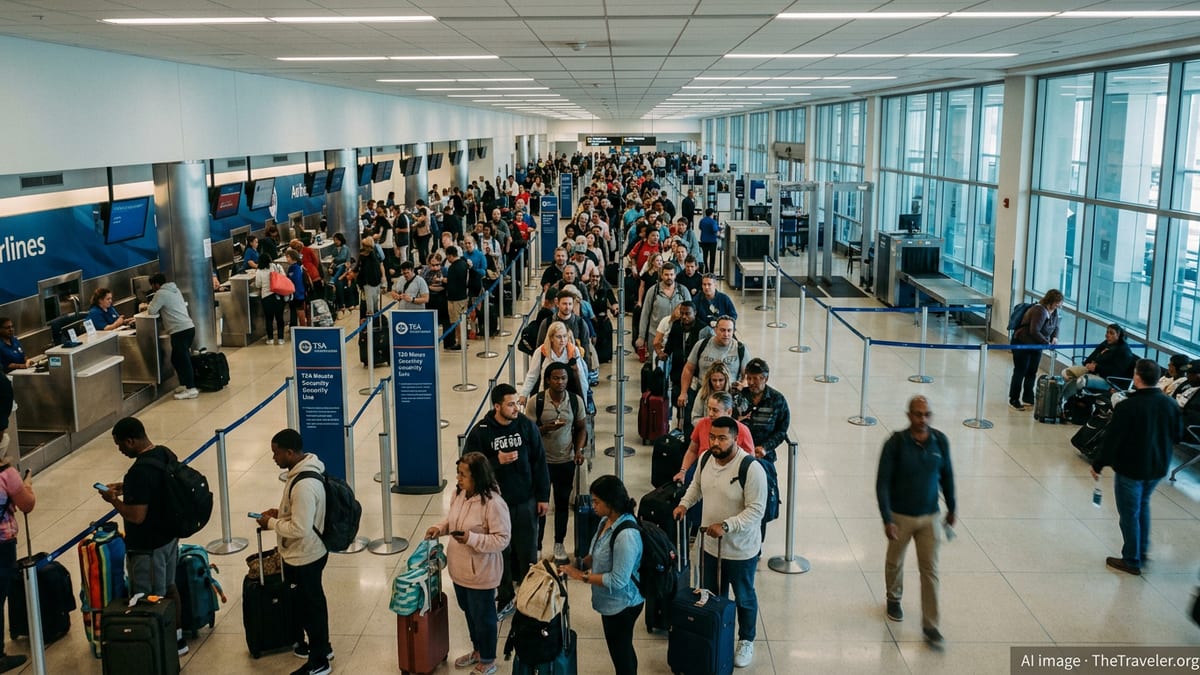
Spring break crowds are colliding with a partial U.S. government shutdown to create what travelers describe as a nightmare at airport security checkpoints, with hours long lines, missed flights and mounting frustration reported at airports across the country.
Get the latest news straight to your inbox!
Shutdown Fallout Meets Peak Travel Season
Publicly available information shows that a partial shutdown of the Department of Homeland Security, in effect since mid-February, is now hitting Transportation Security Administration staffing just as spring break travel surges. Many TSA officers are working without pay, and travel industry coverage indicates that some checkpoints have seen higher rates of unscheduled absences and last minute staffing gaps.
The timing is particularly stark. March is traditionally one of the busiest months for U.S. leisure travel, with airlines and airports preparing for three overlapping waves of spring breakers: early trips for college students, followed by private and then public school holidays. This year, those familiar crowds are moving through a system constrained by frozen federal funding and suspended trusted traveler programs.
According to published coverage from national outlets, TSA PreCheck and Global Entry services were temporarily halted or curtailed as resources were redirected to core screening operations. The changes mean more passengers are funneled into standard security lanes, amplifying bottlenecks at airports that were already operating near capacity during peak hours.
Travel analysts note that the current situation differs from typical holiday congestion. Instead of short lived spikes concentrated around a few days, the combination of policy gridlock and sustained seasonal demand is producing rolling delays that could persist through late March, affecting millions of passengers.
Hours Long Lines at Key Hubs and Vacation Gateways
Reports from major hubs and leisure focused airports suggest a patchwork of conditions, with some facilities experiencing extreme waits while others largely avoid the worst of the disruption. Local coverage and traveler accounts indicate that airports in Houston, New Orleans, Atlanta and Charlotte have recently seen security queues stretching well beyond normal checkpoints, with some passengers waiting multiple hours to reach screening.
In Houston, coverage of operations at Hobby Airport describes travelers facing particularly severe backups as TSA staffing shortages intersect with peak spring break demand and large local events. Similar scenes have been noted at airports feeding popular beach and theme park destinations, especially routes into Florida and Texas resort areas that are heavily favored by families and college students.
Other cities have reported intermittent surges. Recent accounts from Denver and Boston describe early morning lines that snake through ticketing halls and around terminal corners, even as wait times later in the day ease somewhat. In several cases, informal updates from airport workers and passengers point to choke points when multiple heavily booked departures are scheduled within tight windows.
At the same time, some airports are highlighting comparatively smooth operations. Coverage from Dallas Fort Worth and Dallas Love Field, for example, notes that both facilities are handling millions of spring break travelers with only sporadic delays, aided by multiple security checkpoints and more flexible terminal designs. Regional and smaller airports such as those in Richmond, Long Beach and Pasco have also reported near normal throughput despite the national strain.
Uneven Impact Exposes Structural Weaknesses
The current wave of congestion is underscoring how differences in airport design, staffing models and local demand patterns shape passenger experience during national crises. Transportation reporting points out that hubs with centralized checkpoints and limited overflow space are more vulnerable when lines swell, while facilities with multiple dispersed screening areas can shift passengers more easily during sudden surges.
Policy reporting has also renewed attention on airports that participate in the federal Screening Partnership Program, which allows them to contract private firms for screening under TSA oversight. A minority of U.S. airports operate under this model, and early indications suggest that some of these sites have been less affected by shutdown related staffing disruptions, though data remains incomplete.
Industry analysts note that trusted traveler programs, typically a key pressure valve for busy checkpoints, have lost some of their buffering power during the shutdown. With Global Entry temporarily paused and PreCheck enrollment and renewal slowed, more travelers are being processed through standard lanes. Even where dedicated PreCheck or CLEAR lines remain open, the sheer volume of passengers limits their ability to offset overall congestion.
Aviation advocacy groups are using the moment to highlight longer running concerns about federal funding models for aviation security. Publicly available policy briefs argue that tying TSA staffing and pay directly to annual appropriations leaves the system exposed whenever political negotiations stall, a risk that is magnified during predictable peak seasons such as spring break and summer holidays.
Travelers Scramble to Cope as Missed Flights Mount
As lines lengthen, so do the personal and financial stakes for travelers. Airline and airport social media channels, along with local news segments, are filled with accounts of passengers who arrived the traditional two hours before departure only to be trapped in security queues and miss flights. Families traveling with children, older travelers and infrequent flyers appear especially vulnerable when terminal layouts are confusing or wait time information is outdated.
Some airports and carriers are urging passengers to arrive even earlier than usual, particularly for early morning and late afternoon departures when banks of flights tend to leave in quick succession. Public facing guidance in several markets now recommends arriving up to three hours ahead for domestic travel and even more for international routes, although actual wait times still vary widely by day and hour.
Travel experts speaking through published columns are advising passengers to take practical steps within their control. Common suggestions include traveling with carry on bags only when possible to skip check in counters, monitoring real time airport updates before leaving home, and using alternative checkpoints within the same airport if signage indicates shorter lines nearby.
There is also renewed interest in enrolling in trusted traveler programs despite current processing delays, with commentators emphasizing that once federal funding is restored, PreCheck and Global Entry are likely to remain valuable tools for reducing future wait times. However, prospective applicants are being cautioned that approvals may take weeks or longer under the current conditions.
Industry Pressure Builds for a Policy Fix
The aviation sector is intensifying calls for a political resolution as the shutdown drags on. According to business coverage from national outlets, the chief executives of several major U.S. airlines have publicly urged lawmakers to act quickly to restore Department of Homeland Security funding and ensure continued pay for airport workers, including TSA officers and air traffic control personnel.
Airports and tourism organizations warn that prolonged uncertainty risks dampening demand during what should be a lucrative travel period. Missed connections, rebooked itineraries and rising passenger dissatisfaction can translate into real economic costs, from lost hotel and restaurant revenue in destination cities to additional staffing expenses at strained hubs.
Policy commentators note that the current disruption is reviving debate over more durable protections for critical aviation roles during future funding lapses. Proposals discussed in public forums range from automatic funding backstops for specific categories of workers to broader reforms aimed at insulating transportation security operations from partisan standoffs.
For now, travelers planning to fly in the coming days face a difficult reality: security lines at U.S. airports are likely to remain unpredictable, with pockets of relative calm punctuated by sudden spikes in congestion. Until lawmakers in Washington resolve the shutdown and restore normal funding streams, the spring break rush will continue to play out against the backdrop of a system stretched to its limits.