

More news on this day
Spring break travelers heading through major Southern hubs including Houston, Atlanta, and New Orleans are encountering unusually long airport security lines this March, as a partial federal government shutdown and severe weather compound delays at already busy terminals.
Get the latest news straight to your inbox!
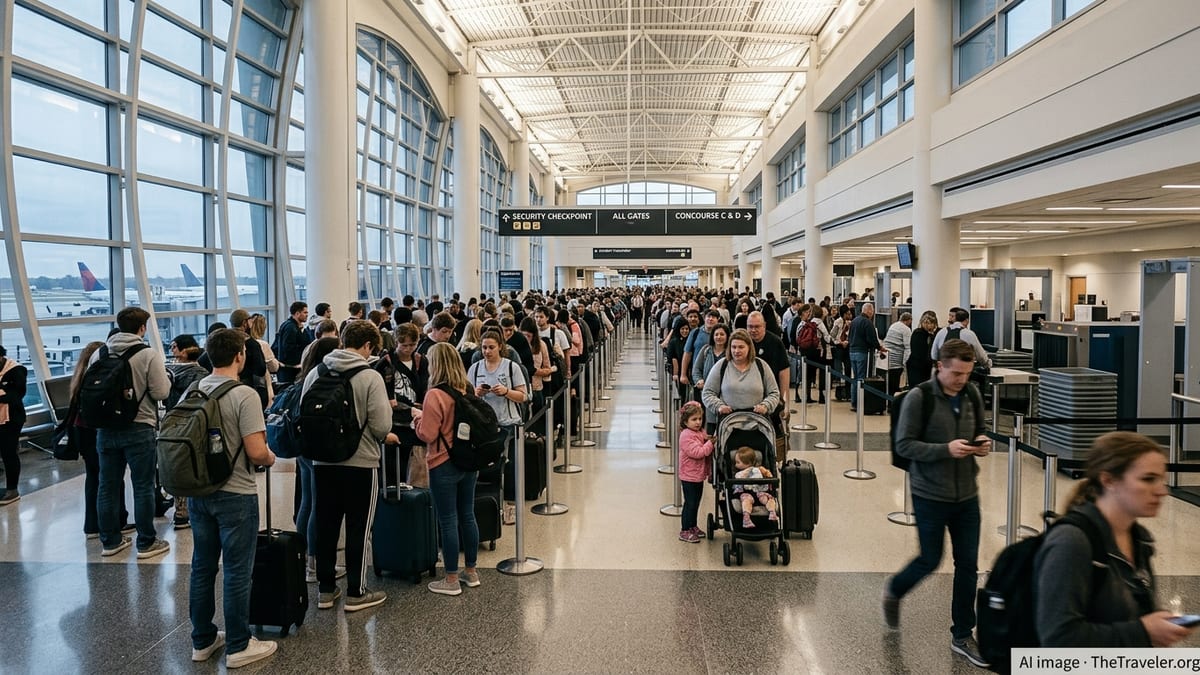
Southern Hubs Under Pressure as Spring Break Peaks
Publicly available data and local coverage show that security bottlenecks have become a defining feature of spring break air travel in 2026, particularly at key connection points in the South. In Atlanta, Houston, and New Orleans, wait times at Transportation Security Administration checkpoints have periodically stretched to an hour or more, with some travelers reporting multi-hour lines on peak days.
A partial shutdown of the U.S. government that began on February 14 has left tens of thousands of screening officers working without pay, contributing to staffing shortages and sporadic checkpoint closures. Reports indicate that the impact is uneven from day to day and airport to airport, but heavily trafficked hubs have been especially vulnerable as student and family travel surges.
At the same time, powerful storm systems sweeping across the eastern half of the country in mid-March have snarled flight operations. Coverage from national outlets notes that Atlanta’s Hartsfield-Jackson International Airport alone has seen hundreds of cancellations and delays over several days, creating crowding at terminals and additional pressure on security checkpoints as passengers are rebooked.
Travel industry trackers and airport advisories suggest that the result for many passengers is a less predictable experience at security. While some travelers report moving through checkpoints in minutes, others at the same airports during different peaks have encountered lines stretching into parking structures and public areas.
Houston: Early-Morning Surges and Hourslong Lines
In the Houston area, the most severe disruptions have centered on William P. Hobby Airport, though both of the city’s major facilities have reported busy checkpoints during spring break. A recent roundup from a regional news outlet highlighted Hobby as one of several airports where travelers encountered nearly three-hour waits on one of the main spring break Sundays, with security lines described as winding extensively through the terminal.
Follow-up coverage indicates that the worst of the congestion has tended to occur in early-morning waves, when large numbers of leisure departures converge. During some periods later in the same day, wait times have fallen sharply, demonstrating how volatile staffing levels and passenger flows have become under current conditions.
Houston’s experience reflects a broader pattern identified in national travel reporting: the combination of unpaid screening staff, variable attendance, and concentrated spring break schedules can turn a routine departure window into a choke point with little advance warning. For travelers, that volatility means that past experience at a given airport is a poor guide to how long security might take in the weeks ahead.
Airport communications reviewed by TheTraveler.org emphasize familiar guidance but with heightened urgency. Travelers are being urged through public messaging to arrive significantly earlier than they might have in previous years, especially for morning departures and on weekends when spring break demand is highest.
Atlanta: Weather Disruptions Add to TSA Strain
At Hartsfield-Jackson Atlanta International Airport, the world’s busiest passenger hub, the spring break crunch has collided with disruptive weather and federal staffing challenges. According to national wire reports, storms that moved across the Midwest and East earlier this month led to thousands of cancellations and delays nationwide, with Atlanta among the hardest-hit airports.
Coverage from regional outlets describes a mix of factors behind the congestion: storm-related ground stops, lightly staffed checkpoints linked to the federal funding lapse, and a temporary closure of at least one security checkpoint. Data cited from flight-tracking services shows hundreds of disrupted flights into and out of Atlanta over several days, keeping terminals crowded even outside traditional rush periods.
Security wait times at Atlanta have varied widely. On some mornings during the mid-March storm and shutdown period, reports indicate that passengers faced waits approaching or exceeding an hour, particularly at the main checkpoints used by domestic leisure travelers. During other parts of the day, especially after operational backlogs eased, wait times were closer to typical spring levels.
Atlanta’s role as a primary connecting hub magnifies the effect of any slowdown. Many travelers passing through the city during spring break are on tight layovers to popular beach and resort destinations. Longer-than-expected security or re-screening times can therefore cascade into missed connections, heightening anxiety for passengers who might otherwise treat Hartsfield-Jackson as a routine stop.
New Orleans: Social Media Warnings and Parking Garage Lines
Louis Armstrong New Orleans International Airport has emerged as another flashpoint in the current wave of security delays. According to coverage in national newspapers and regional broadcasters, the airport used its public social media channels in early March to warn departing travelers of unusually long TSA lines and to recommend arriving at least three hours before departure.
Travel and local news outlets describe scenes in which security lines on a Sunday in early March extended from the checkpoint area into the airport’s parking garage levels, with reported waits of 60 to 120 minutes at peak. At one point, the line was said to reach the fourth floor of the facility, catching many spring break travelers off guard.
Subsequent updates from New Orleans indicate that conditions have not been uniformly severe. On certain weekdays, passengers have reported clearing security in just a few minutes. But the contrast between light midweek traffic and heavy Sunday and Monday spikes has added to the perception of unpredictability, especially for travelers flying out to beach destinations along the Gulf Coast and Caribbean.
Local commentary gathered in public forums suggests that the worst waits tend to occur during the early morning and late-afternoon banks of flights, particularly on weekends. The airport’s public messaging continues to stress early arrival, with a three-hour lead time recommended for many departures while the federal shutdown and associated staffing constraints persist.
How Spring Break Travelers Can Reduce Their Risk of Delays
Travel guidance from national newspapers, aviation analysts, and airport advisories converges on a few practical strategies for those flying through Houston, Atlanta, New Orleans, and other busy hubs in the coming days. The most consistent recommendation is to arrive at the airport earlier than usual, building in additional time beyond standard guidance, particularly for morning flights and weekend departures.
Experts cited in recent coverage recommend that passengers departing from major hubs during the current shutdown and spring break period treat two hours before departure as a minimum for domestic travel, and three hours as a safer target at airports that have recently reported long waits. For travelers with checked bags, families with young children, or those unfamiliar with a given airport layout, adding even more buffer may reduce the risk of missed flights.
Publicly available tools can also help travelers make more informed decisions. Several airports and third-party services publish live or estimated security wait times, while social media accounts for airports and airlines often share real-time updates about crowding and checkpoint changes. Monitoring these channels starting a day before departure can provide early warning of developing issues.
Finally, travel industry reporting notes that programs such as TSA PreCheck and CLEAR, where available, can significantly reduce screening times, though they are not a guarantee when staffing is strained. Even passengers with expedited screening are being advised to arrive early, as some airports have temporarily consolidated or closed specialty lanes during the shutdown. For now, flexibility and extra time remain the most reliable tools for managing spring break travel through Houston, Atlanta, New Orleans, and the broader U.S. airport network.