

More news on this day
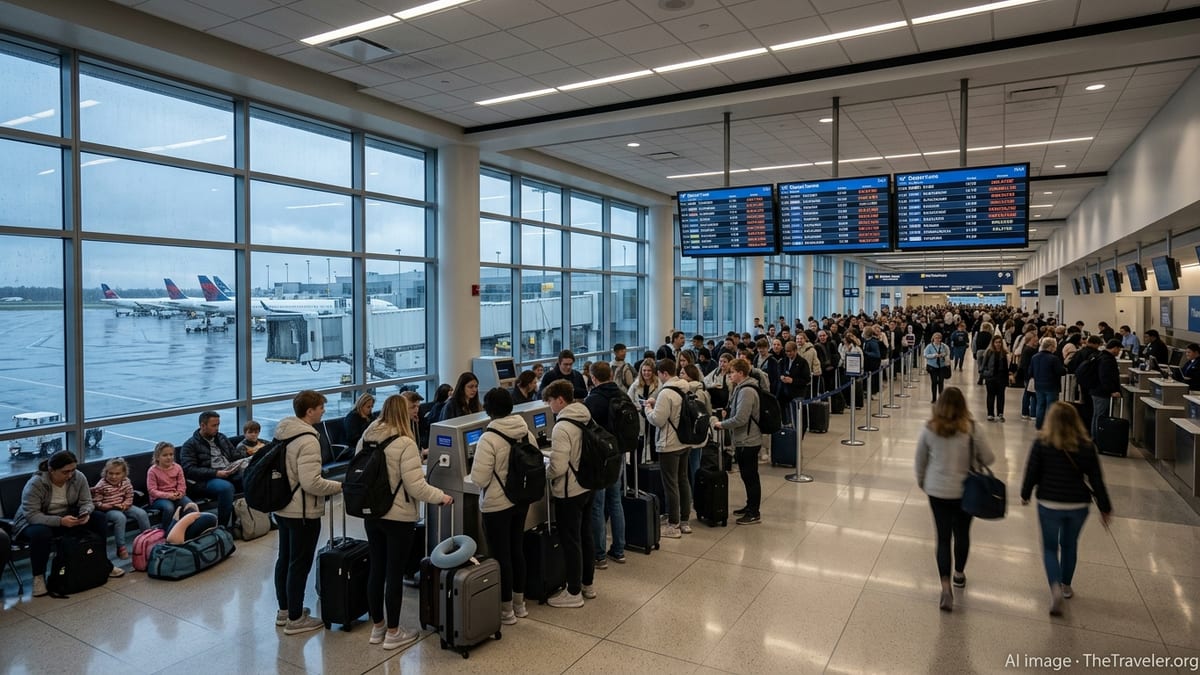
Spring break travelers across the United States, Canada and Iceland are facing a difficult start to the holiday period, as severe weather, heavy passenger volumes and operational constraints combine to trigger large numbers of flight delays and cancellations at major hubs and transatlantic gateways.
Get the latest news straight to your inbox!
Storm Systems and Spring Break Crowds Converge
In the United States, publicly available tracking data and recent news coverage show thousands of flights disrupted this week as a powerful mid-March storm system swept across the Midwest and into the eastern half of the country. The same weather pattern that produced heavy snow, strong winds and tornado risk has also reduced airport capacity and slowed operations at key hubs.
Large airports serving popular spring break routes, including New York, Chicago and Atlanta, have reported some of the highest concentrations of delays and cancellations as carriers work through backlogs. Reports indicate that even when skies clear, the effects can linger for a day or more as aircraft and crews are repositioned and tightly packed schedules attempt to absorb earlier disruptions.
The timing is especially challenging because the storm arrived just as schools and universities in the United States and Canada begin staggered spring recesses. This seasonal peak sends leisure traffic surging toward Florida, the Gulf Coast, the Caribbean, Mexico and popular city destinations, leaving less slack in airline networks to recover from unexpected weather or airspace constraints.
In Canada, major airports such as Toronto, Vancouver and Montreal are also handling elevated passenger numbers. Published airport and airline updates highlight weather-related slowdowns and congestion at security and customs, especially during early morning and late afternoon peaks when transborder and long-haul departures are clustered.
Iceland Flights Hit by High Winds and Cancellations
Conditions have been particularly difficult in and around Iceland, where strong winds and adverse weather in recent days have prompted widespread cancellations of flights into and out of Keflavik International Airport. Local media coverage and traveler reports describe near-total suspensions of service on some days, affecting both transatlantic connections and regional links to mainland Europe and North America.
For North American travelers, this has disrupted not only trips to Iceland itself but also onward itineraries using Keflavik as a connection point between the United States, Canada and Europe. Passengers booked on Iceland-focused carriers have reported rolling cancellations, busy call centers and tight availability on replacement services as airlines attempt to consolidate passengers onto later departures once conditions improve.
Publicly available operational updates from airlines serving Iceland emphasize that safety remains the determining factor for whether flights can operate in high winds and rapidly changing conditions. These updates also note that weather-linked cancellations can limit the compensation that travelers are entitled to under European and Icelandic regulations, even as carriers arrange rebooking and basic care such as hotel accommodation and meal vouchers where required.
Travel forums and social media posts from the past 48 hours suggest that some passengers are being moved to departures several days later than originally planned. Others are being rerouted via other European hubs such as London or Amsterdam, underscoring the importance of flexible planning for anyone traveling across the North Atlantic during this unsettled period.
Government Data Shows Weather and System Strain
Recent analytical work drawing on US Bureau of Transportation Statistics delay data points to a growing role for weather and national aviation system factors in pushing out departure and arrival times. Academic research examining trends from 2010 to 2024 highlights how storms, congestion in busy air corridors and security screening bottlenecks have become increasingly visible in overall delay patterns.
Separate oversight reports made public by the US Department of Transportation describe how air traffic management restrictions, staffing limits and ground holds can ripple through the system, particularly when traffic is already at or near capacity, as is typical during spring break. These analyses note that once a large disruption day occurs, late arriving aircraft can continue to affect schedules for multiple days afterward.
In Canada, national transportation statistics and airline performance summaries show a similar mix of causes. Winter and shoulder-season storms across the Prairies, the Great Lakes region and Atlantic Canada often interact with crowded hub operations at Toronto Pearson and Montreal Trudeau, creating knock-on effects that spread to sun destinations and US connections very quickly.
For Iceland, aviation-focused studies and airport performance data underline its exposure to wind and rapidly changing North Atlantic weather. Even with robust winter operations experience, patterns of delays and diversions can escalate when sustained high winds or severe icing conditions coincide with peak departure waves to and from North America and Europe.
What Air Travelers Can Do Right Now
For passengers preparing to fly in the coming days, industry guidance and recent coverage from travel and aviation outlets strongly emphasize the value of monitoring flight status early and often. Airlines frequently adjust departure times overnight as they match aircraft and crew to routes, and additional changes can appear on the day of travel as weather forecasts and air traffic control programs are updated.
Travel experts also recommend checking airport departure boards and airline apps for gate changes and rolling delays, rather than relying solely on the time printed on a boarding pass. If a major disruption is unfolding, rebooking through an airline’s mobile app or website may be faster than waiting in line at an airport service desk, especially when call centers and social media channels are experiencing high demand.
Public information from regulators in the United States and Canada notes that passenger rights differ depending on whether a delay is considered within the airline’s control. Operational or crew-related issues may trigger meal vouchers, hotel stays or refunds, while severe weather or national aviation system constraints often fall outside compensation rules, even though carriers still work to provide basic rebooking options.
For itineraries involving Iceland, travel advisories and local tourism channels encourage visitors to build extra buffer time into their plans, keep accommodation bookings flexible where possible and ensure that travel insurance includes coverage for weather-related delays and missed connections. Given the current pattern of cancellations, travelers connecting through Keflavik to onward European destinations may want to consider longer layovers or alternative routings until conditions stabilize.
Security, Documentation and Arrival Bottlenecks
Beyond the flights themselves, security and border processing are adding to delays for many spring break passengers. Publicly available reporting from US airports points to longer lines at Transportation Security Administration checkpoints, particularly in the early morning when many leisure departures are scheduled. Similar crowding has been noted at Canadian screening points as travelers converge on flights to the United States and international destinations.
Recent travel technology coverage explains that tools such as TSA PreCheck, Global Entry, NEXUS and Mobile Passport Control can significantly reduce wait times at some airports, but adoption and availability remain uneven. Not all terminals support every program, and some ports of entry have yet to fully implement mobile-based processing or maintain dedicated lanes at all hours.
For arrivals back into the United States and Canada, customs bottlenecks are an additional consideration, especially at large hubs where transatlantic flights from Iceland and Europe arrive in tight banks. When those flights are delayed by weather or air traffic restrictions, waves of passengers can reach immigration and baggage claim simultaneously, occasionally overwhelming available staffing even when flights themselves operate relatively close to schedule.
Travelers are being urged by airlines and airports through public advisories to arrive early, have passports and required documents ready and build generous connection times into itineraries that involve a change of terminal or a fresh security screening. With storms, high winds and full flights likely to continue shaping operations through the heart of spring break, patience and contingency planning are emerging as essential tools for anyone flying across North America and the North Atlantic this week.