

More news on this day
Spring break air travel across the United States is being thrown into disarray as a partial U.S. government shutdown collides with the escalating Iran conflict, driving long security lines, global flight disruptions, and sharp spikes in ticket prices just as millions of Americans head for beaches and overseas getaways.
Get the latest news straight to your inbox!
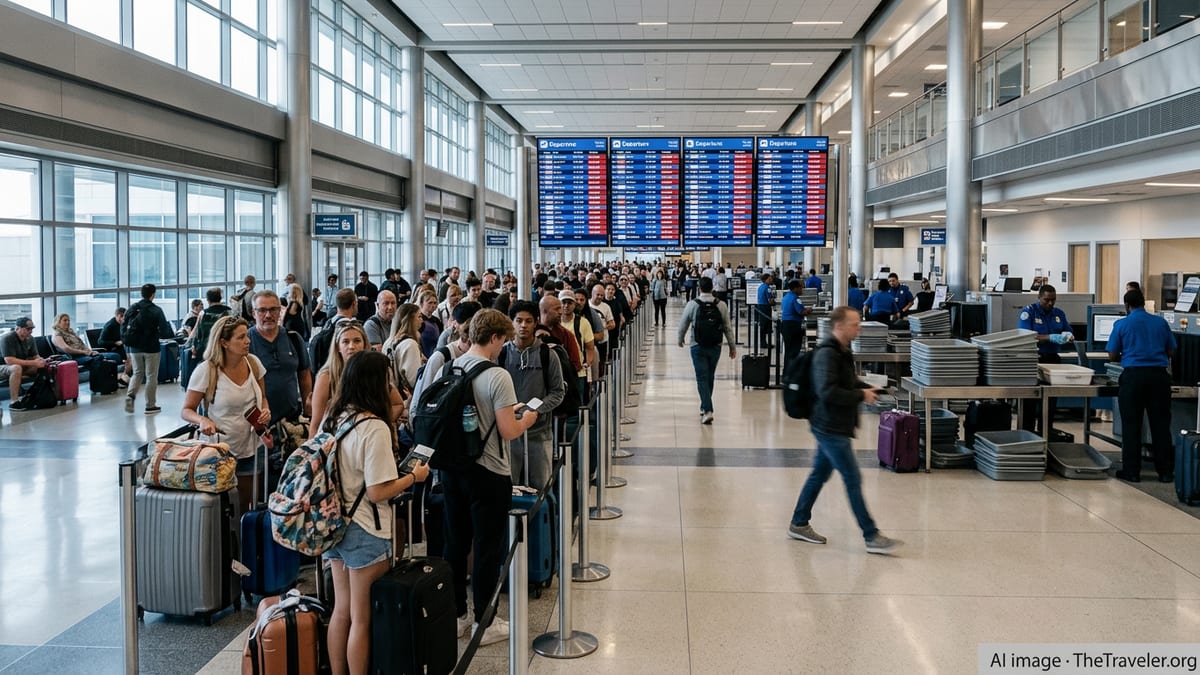
Shutdown Strains TSA as Spring Break Crowds Build
At major U.S. hubs from Houston to Washington, security lines have stretched for hours this week as Transportation Security Administration officers work without pay during the latest partial government shutdown. Airports have urged passengers to arrive as much as four to five hours before departure, turning the usual spring break rush into a stressful test of endurance for families and students trying to make their flights.
The staffing crunch is already visible at checkpoints where some lanes remain closed and officers are being shuffled between terminals. Industry groups warn that the longer the shutdown drags on, the greater the risk that unpaid screeners will call in sick or seek other work, compounding delays just as passenger volumes climb through late March.
Airports that use private contractors under federal supervision have reported fewer bottlenecks so far, highlighting a patchwork system in which some travelers breeze through security while others are stuck in snaking queues that spill into baggage halls and parking garages.
With spring break typically unfolding in three distinct waves through the end of the month, aviation analysts say the system is entering its most vulnerable period yet under the shutdown, with little room to absorb additional shocks.
Iran Conflict Chokes Key Hubs and Drives Global Cancellations
Those additional shocks are already arriving from overseas. The Iran war has triggered airspace closures and missile and drone attacks across the Gulf region, repeatedly targeting Dubai International Airport and other major hubs that normally handle hundreds of thousands of passengers a day. Flight activity through Dubai, Abu Dhabi, Doha and Bahrain has plunged as airlines reroute or cancel services to avoid contested skies.
The knock-on effects have rippled far beyond the Middle East. Global carriers have axed or diverted routes linking Europe, Asia and Oceania that typically pass over or connect through the Gulf. By early March, tens of thousands of flights had been canceled worldwide since the conflict escalated, leaving cruise passengers stranded in Dubai, backpackers marooned in transit hotels and business travelers scrambling for scarce alternative connections.
In India and other large aviation markets, carriers have reported thousands of cancellations and significant revenue hits as lucrative West Asia corridors shut down. Longer detours around closed airspace mean extra fuel, higher crew costs and complex rescheduling, all of which are feeding into higher fares and reduced capacity on key long haul routes used by American travelers heading to Africa, South Asia and beyond.
Travel economists warn that if the conflict persists, inbound arrivals to the wider Middle East could fall sharply this year, eroding a crucial transfer network that underpins global connectivity and leaving aircraft and crews out of position across multiple continents.
Oil Price Surge Sends Airfares Soaring
The Iran conflict has also pushed jet fuel prices sharply higher after attacks and threats effectively choked off the Strait of Hormuz, a vital passage for global oil and gas shipments. Airlines that were paying under 90 dollars a barrel for fuel before the latest escalation now face prices that some carriers say have surged well above 150 dollars, forcing emergency reviews of financial forecasts.
Several international airlines have already announced fare hikes, surcharges or capacity cuts in response. While many of those moves originate abroad, U.S. travelers are feeling the impact through higher prices on connecting itineraries to Europe, Asia and Africa, as well as reduced availability of award seats and low promotional fares that often underpin budget spring break trips.
For students and families who booked late, the combination of fuel-driven increases and constrained capacity is translating into sticker shock. Routes that once offered multiple daily options through Gulf or Levant hubs are now limited to a handful of longer, more expensive alternatives via Europe or direct U.S. services, with remaining economy seats snapped up quickly.
Analysts say that if oil prices remain elevated into the summer, the current surge in spring break fares could be a prelude to broader pricing pressure across the peak vacation season, squeezing household budgets already strained by higher costs in other parts of the travel experience.
Domestic Weather and Staffing Woes Add to the Gridlock
The turmoil is being magnified by more familiar aviation headaches on U.S. soil. Severe storms across parts of the Midwest and South in recent days have led to hundreds of cancellations and thousands of delays, triggering ground stops at busy hubs such as Chicago and Atlanta just as aircraft and crews were needed most for holiday rotations.
These weather disruptions are hitting an air traffic system that continues to grapple with chronic staffing shortages. While the Federal Aviation Administration is funded during the current shutdown, controller ranks remain thin in several key facilities, leaving airlines with little flexibility when storms, equipment issues or runway closures ripple through the network.
When combined with security slowdowns at the front of the journey and international reroutes at the back end, even routine operational hiccups are now more likely to cascade into missed connections, overnight stays and lost vacation days. Airline operations centers are juggling multiple layers of disruption, from out-of-position aircraft to crew duty time limits, often with few spare resources to plug the gaps.
For travelers, that means that a single delay on a domestic leg to a coastal gateway can be enough to derail a carefully planned long haul itinerary, particularly when onward flights are already operating on reduced schedules because of the Iran conflict.
Travelers Scramble for Workarounds as Industry Braces for Prolonged Pain
On the ground, passengers are adopting a siege mentality. Social media is awash with images of overflowing security lines, departure boards filled with cancellations and crowds clustered around customer service desks. Many travelers report arriving at airports before dawn for midday flights, booking backup itineraries on separate carriers or even driving to alternate airports in the hope of dodging the worst of the chaos.
Travel agents and online booking platforms say they are fielding a surge in last minute changes as customers abandon itineraries that rely on Gulf connections in favor of more direct routes, even when those options are significantly more expensive. Some are choosing to postpone or shorten trips altogether, concerned that the risk of getting stranded outweighs the reward of a few days in the sun.
Within the industry, lobbying has intensified for a swift political resolution to the shutdown and for clearer contingency planning around essential aviation functions during future budget standoffs. Airline and airport executives are also closely watching developments in the Iran conflict, warning that a prolonged war or further escalation around key oil and air corridors could undermine what had been a fragile but encouraging recovery in global travel demand.
For now, airline planners are working on near term schedules in a climate of radical uncertainty, recalibrating routes and fuel hedges week by week. With both Washington gridlock and Middle East conflict showing few signs of rapid resolution, this spring break is shaping up as a stress test for the resilience of the global travel system and the patience of the passengers who rely on it.