

More news on this day
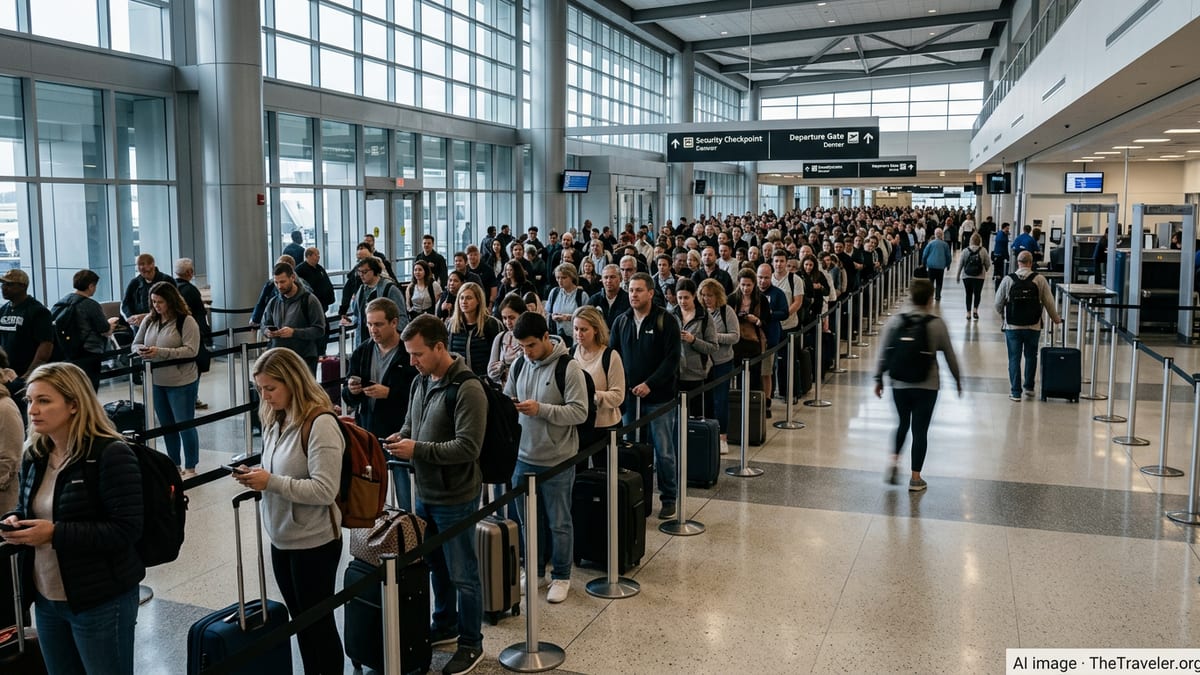
Spring break travel across the United States has tipped into full-blown disruption, as marathon security lines, weather‑related cancellations and a monthlong federal funding lapse leave millions of passengers facing missed flights, abrupt itinerary changes and hourslong waits at airport checkpoints.
Get the latest news straight to your inbox!
Shutdown, Record Crowds and Weather Collide
The growing turmoil is unfolding at the peak of the spring break rush, with U.S. airlines expecting about 171 million passengers to fly between March 1 and April 30, 2026, according to industry projections cited in recent travel coverage. Airline and airport planning for heavy demand has been complicated by a partial shutdown of the Department of Homeland Security that began on February 14 and is now entering its fifth week, leaving many Transportation Security Administration officers working without pay.
Publicly available information from major outlets indicates that the shutdown has contributed to staffing shortages and heightened burnout at some checkpoints. Reports describe hundreds of officers resigning or calling in sick, while those remaining on duty work extra shifts to keep lanes open. In previous shutdowns, air travel largely continued with moderate delays, but the overlap with a record spring break surge in 2026 has sharply magnified the impact.
The situation has been further strained by a powerful storm system sweeping across the Midwest and into the East Coast in mid-March. National Weather Service alerts and airline operational updates point to thousands of delays and cancellations concentrated over the weekend of March 14–15, compounding the bottlenecks already building at security. Passengers in some hubs are being urged through public advisories and airport social channels to arrive at least three hours early, even for domestic flights.
In congressional hearings and public statements, lawmakers from both parties have acknowledged that the funding lapse is fueling mounting frustration among travelers and aviation workers. Airline executives have echoed those concerns in open letters, warning that prolonged uncertainty over pay and staffing at security checkpoints could undermine the resilience of the broader air travel system just as the country heads into its busiest leisure travel months.
Hourslong Lines Reported From Houston to Orlando
The most severe reports of spring break gridlock have emerged from popular leisure gateways and major connection points. Coverage from regional outlets and national travel desks highlights early week scenes in Houston, New Orleans and Florida hubs where standard TSA wait times climbed toward three hours or more, forcing airlines to rebook passengers who missed departure windows despite arriving well before their flights.
In Houston, local reporting cites airport estimates that more than 2 million spring break travelers will move through the city’s two main airports during the March peak, even as security lines at Hobby Airport recently stretched to three to three and a half hours at times. Similar accounts from New Orleans describe queues backing into parking structures, with some travelers documenting the backups in photos and videos shared on social media.
Florida, a perennial magnet for college students and families in March, has become a particular pressure point. Travel industry coverage focused on Orlando and Miami notes severe TSA congestion on some days, with serpentine lines winding through terminals and past food courts. Orlando International is forecasting daily passenger counts exceeding 200,000 at the height of the break period, an increase from last year that is testing both terminal capacity and checkpoint throughput.
Other major hubs, including Charlotte, Denver and Boston, have reported fluctuating but elevated wait times, especially during early morning departure banks. At Charlotte Douglas International, advisories warn of longer than normal queues at dawn as the shutdown and spring break demand converge. Denver’s airport, which routinely handles more than 80,000 passengers a day at security during March, has cautioned travelers that sporadic spikes in wait times are likely while aviation workers remain unpaid.
Not All Airports Hit Equally Hard
Despite the dramatic scenes circulating from some facilities, the disruption is far from uniform. Coverage from regional newsrooms and airport bulletins indicates that several mid-sized and secondary airports have so far avoided the worst of the meltdown. In cities such as Richmond, Midland and some parts of the Midwest, recent reports describe lines that are longer than average but still moving steadily, with wait times generally under an hour.
Even among the nation’s largest hubs, the picture is uneven. Dallas Fort Worth International and Dallas Love Field, for example, are expecting roughly 4.7 million travelers between March 5 and March 24, yet local reporting suggests that, to date, both have largely sidestepped the extreme delays plaguing other cities. Airport managers attribute that relative stability in public statements to early planning, flexible staffing and infrastructure upgrades completed in the past few years.
Social media posts and traveler forums paint a similarly mixed map. While some passengers recount lining up before 5 a.m. and still inching forward an hour later, others flying through the same airports on different days say they cleared security in minutes. Variability in school calendars, regional weather, airline scheduling and local staffing decisions is creating sharp peaks and troughs in congestion, sometimes within the same terminal over the course of a single day.
This patchwork experience complicates efforts by national organizations to issue simple guidance. Travel advisories now tend to emphasize city- or airport-specific recommendations rather than nationwide averages, urging passengers to check real-time security wait dashboards where available and to monitor local news coverage for the latest conditions at departure and connection points.
Travelers Scramble to Cope With Unpredictable Waits
For passengers on the ground, the combination of marathon security lines and cascading delays is forcing rapid improvisation. Travel columns in major newspapers and specialist outlets are filled with advice on navigating the chaos, recommending not only earlier arrivals but also backup routing plans, flexible ticket options and the use of trusted traveler programs where available.
The strain is particularly acute for families with young children, student groups and travelers unfamiliar with large hub airports. Reports from Orlando, Austin and other popular spring destinations describe crowded checkpoints filled with strollers, oversized carry-ons and infrequent flyers still learning the basics of security screening. Each small delay multiplied across thousands of passengers adds friction to an already overloaded system.
Business travelers and frequent flyers are leaning heavily on services such as TSA PreCheck and private fast-track lanes, where they remain available despite temporary shutdown-related pauses in enrollment. According to recent coverage, airports are also directing travelers toward underused checkpoints or alternative terminals when possible, though shuttle transfers and terminal changes can introduce new complications for those on tight connections.
Cruise ports and rail stations in Florida and along the East Coast are also feeling the ripple effects, as delayed flights cause passengers to miss embarkation windows or onward connections. Travel agencies and corporate travel managers have begun circulating internal alerts, advising clients to build in additional buffer time between flights and ground segments during the remainder of March and into early April.
Industry Presses for Funding Fix and Long-Term Reforms
As the spring break crunch intensifies, aviation and travel industry groups are ramping up pressure on policymakers to resolve the funding impasse at the Department of Homeland Security. A joint statement released in February by airlines, airports, travel agencies and tourism associations warned that prolonged uncertainty over TSA staffing could disrupt travel for millions of passengers and damage the country’s reputation as it prepares for major events later in 2026.
Recent reporting shows airline chief executives publicly urging Congress to restore full funding for Homeland Security and provide back pay assurances for aviation workers, including security officers and air traffic control staff. They argue that essential safety and security roles should be insulated from future political standoffs, pointing to the current spring break turmoil as evidence of systemic vulnerability when federal paychecks stop.
Policy discussions in Washington and among industry analysts are increasingly focused on structural reforms. Proposals circulating in think tank reports and trade publications include allowing more airports to contract private screening companies under federal oversight, expanding the use of risk-based screening and identity-verification technology, and creating dedicated reserve funds to keep critical aviation workers paid during any future shutdowns.
In the short term, however, the outlook for travelers remains uncertain. Forecasts from weather agencies and airline scheduling data suggest that additional storms, combined with sustained high demand through late April, could keep pressure on security checkpoints well beyond the peak of college and school holidays. For millions of Americans and international visitors hoping for a simple spring escape, the 2026 season is increasingly defined not by beach sunsets or city breaks, but by the anxious calculation of just how long the line will be at the airport door.