

More news on this day
U.S. travelers heading into spring break are being hit from two sides, as Florida gasoline prices climb toward 4 dollars a gallon while data and forecasts point to sharply higher airfares for the peak summer season.
Get the latest news straight to your inbox!
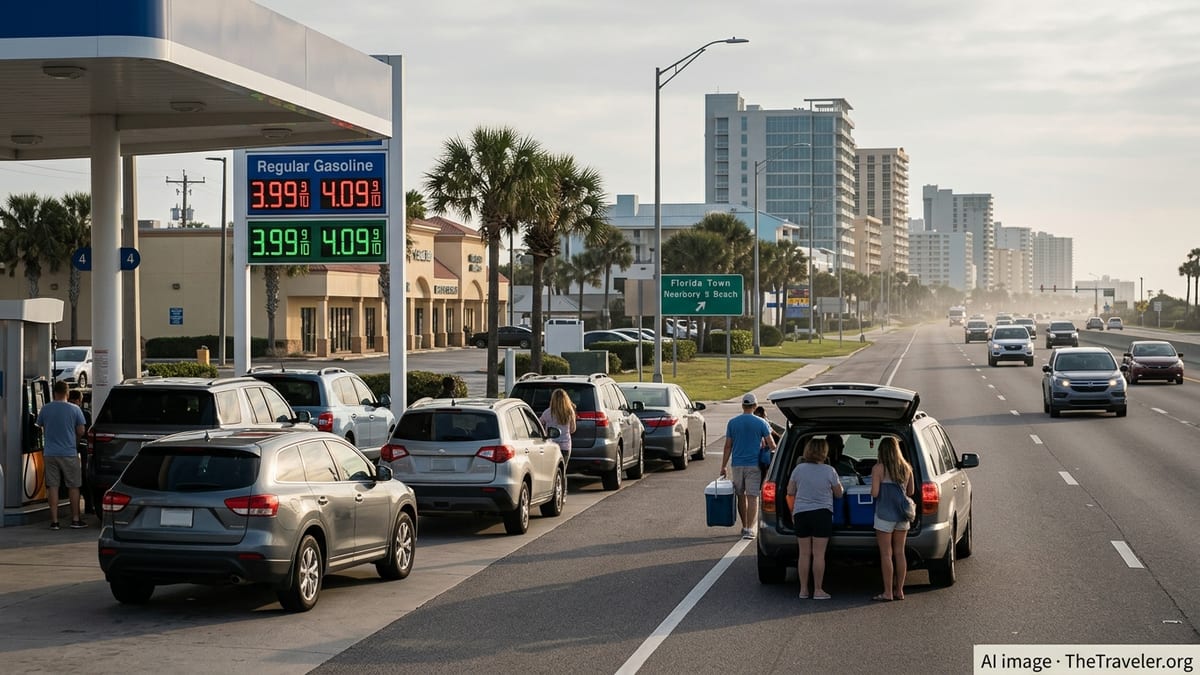
Florida Drivers Confront Fast-Rising Prices at the Pump
Florida motorists are entering spring break with gasoline prices marching toward the 4 dollar mark across much of the state, creating a sudden and highly visible strain on drive-to vacations. Reports from consumer price-tracking apps and local coverage indicate that stations in parts of Central and North Florida are already posting prices just above 4 dollars for regular unleaded, with many others in the high 3 dollar range. The surge has unfolded within just a couple of weeks, amplifying the shock for families who locked in their spring travel plans earlier in the year.
Publicly available data from fuel price aggregators show Florida running above the national average, reflecting both strong seasonal demand and broader energy market volatility linked to global supply concerns. The state’s heavy reliance on road travel for tourism intensifies the impact, as millions of visitors drive to beach destinations from neighboring states during March and April. For many households, gasoline now represents a larger share of their overall trip budget than they anticipated when they booked lodging and attractions.
Compared with the record highs seen in 2022, the statewide average remains somewhat lower, but the current spike is arriving at a more sensitive moment for consumer finances. After several months of moderating inflation, households had begun to rebuild discretionary spending, and the abrupt jump in pump prices is forcing a rapid recalculation of how far their travel dollars will go.
Summer Airfares Track Higher as Demand Stays Strong
The pressure is not limited to the roads. Airline ticket data and recent travel price trackers suggest that U.S. airfares for the upcoming summer are climbing again after a period of moderation. Industry analyses that blend government statistics with booking-platform data show domestic ticket prices running noticeably higher than a year ago, with some outlooks pointing to increases in the high teens percentage range on popular summer routes compared with pre-pandemic norms.
Recent reports on travel inflation indicate that overall travel costs, including air tickets, have risen faster than general consumer prices over the past year. While official government numbers for early 2026 show airfares up by single digits year over year, forward-looking forecasts from airline consultants and corporate travel agencies anticipate steeper effective increases once peak-season surcharges, reduced discount inventory and ancillary fees are included. For leisure travelers shopping for school-holiday dates in June, July and early August, this translates into noticeably higher totals at checkout than the headline averages might imply.
Capacity constraints on certain domestic and transatlantic routes are also contributing to fare pressure. Despite steady growth in overall seat numbers, aircraft remain heavily booked during peak periods, and carriers have little incentive to discount heavily on nonstop flights to major leisure destinations. Analysts note that while inflation-adjusted fares may still compare favorably with earlier decades, many travelers experience the cost as higher because they now routinely pay additional charges for seat selection, checked bags and schedule flexibility.
Double Hit for Spring Breakers and Early Summer Planners
The intersection of rising Florida gasoline prices and higher expected airfares is creating a double financial hit for U.S. travelers. Families driving from the Southeast or Mid-Atlantic to Florida beaches are seeing their fuel budgets swell by 50 dollars or more on a typical round trip, depending on vehicle type and itinerary. At the same time, those weighing a switch from road to air in hopes of avoiding gas price spikes often discover that last-minute spring or early summer flights carry premium price tags of their own.
Travel budgeting guides suggest that transportation can easily consume one-third or more of a typical family vacation budget. With both air and road costs rising at once, that share is edging higher, leaving less room for dining, entertainment and experiences once travelers arrive. In the spring break period, this may show up as shorter stays, fewer paid excursions or a pivot toward lower-cost accommodations away from beachfront hotspots.
Households planning ahead for June and July report facing stark trade-offs: accept higher airfares on preferred nonstop routes, shift to inconvenient connections or alternative airports, or revert to lengthy road trips that expose them to further fuel price swings. The result is a sense that no option feels truly inexpensive, even if broader inflation data suggests that travel prices have cooled from their post-pandemic peak.
Tourism Hubs Brace for Budget-Conscious Visitors
Tourism-dependent communities in Florida and beyond are preparing for a season in which visitors arrive more price sensitive than in recent years. Publicly available commentary from hotel operators and destination marketing organizations highlights expectations that travelers will continue to come, but with tighter spending patterns once on the ground. Higher transport costs are likely to encourage greater interest in bundled deals, all-inclusive pricing and loyalty-program redemptions that help blunt the immediate cash impact.
In coastal Florida markets where driving remains the dominant mode of arrival, gasoline near 4 dollars a gallon could subtly reshape traffic flows. Some visitors may choose beaches closer to home, opt for fewer day trips once they arrive, or favor walkable town centers where they can park the car and avoid additional fuel costs. Others may shift plans toward shoulder-season dates in May or September, hoping to secure better air and hotel prices while still enjoying warm weather.
Airline and airport statistics from recent quarters show that demand for leisure travel remains robust, particularly on routes linking major metropolitan areas with sun-and-sand destinations. However, if transportation costs continue to climb into the summer, travel economists caution that some price-sensitive segments, including student groups and large families, could scale back or postpone trips, affecting everything from attraction attendance to restaurant traffic.
Strategies Travelers Are Using to Cope With Rising Costs
With both gas and airfares putting pressure on budgets, many travelers are turning to tactical adjustments rather than abandoning trips entirely. Trip-planning platforms and consumer finance outlets report increased interest in flexible-date searches, alternate airport combinations and fare alerts that help households pounce on temporary price dips. For those committed to driving, fuel-rewards programs, warehouse club stations and careful route planning are emerging as tools to shave a few cents per gallon off the total bill.
Some travelers are also reconsidering distance, trading long-haul flights for regional road trips that keep overall mileage manageable even at higher fuel prices. Others are consolidating multiple shorter getaways into a single, longer trip to reduce the number of separate journeys they must fund. Travel budget advice increasingly emphasizes building in a larger contingency line for transportation, recognizing that both gasoline and airfare can move quickly in response to geopolitical events and demand spikes.
For now, the combination of strong travel demand and rising transportation costs suggests that the spring break squeeze could extend into the core summer months. Unless energy markets and airline pricing trends ease significantly, many U.S. travelers will continue to face difficult choices about how, when and how far they can afford to go in 2026.